
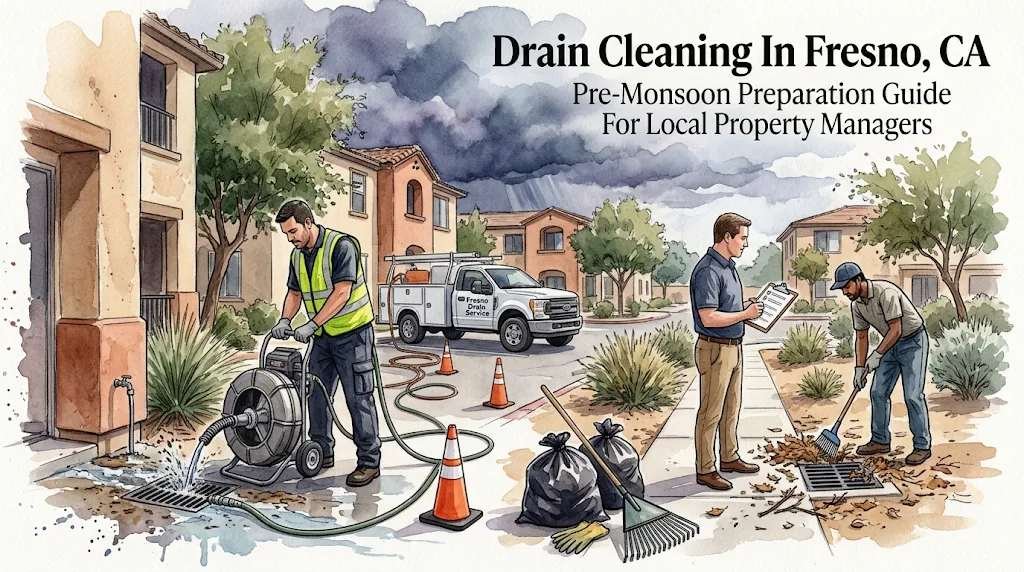
Rain events in Fresno can turn a minor plumbing concern into a major headache for property managers overseeing apartment complexes or commercial buildings. As the dry season ends, months of debris, roots, and sediment accumulate in drain lines, setting the stage for sudden backups when the first heavy downpour hits. Property managers often find themselves responding to tenant complaints about slow drains, foul odors, or even flooding in ground-level units. The California Department of Water Resources flood readiness guide is a reminder that localized flooding can affect properties anywhere in the state. Addressing these issues just before the monsoon season can prevent emergency calls, costly repairs, and property damage, making early drain cleaning and inspection a practical necessity for anyone managing Fresno properties.
Fresno Weather Patterns And Commercial Plumbing Vulnerabilities

Fresno’s climate is defined by long, dry summers followed by short, intense rainy periods. The National Weather Service office in Hanford tracks these seasonal swings for the San Joaquin Valley. This pattern creates unique stress points in commercial plumbing systems. During the dry months, tree roots often grow into underground pipes, searching for moisture, and debris such as leaves and dust settle in outdoor drains. Once heavy rains arrive, this buildup quickly clogs main drain lines, leading to overflows and water damage in parking areas or basements. Understanding these seasonal risks allows property managers to anticipate which plumbing sections are most likely to be vulnerable and plan preventive measures accordingly.
For buildings with older clay or cast-iron pipes, the risk of intrusion and blockage is especially high. Routine visual inspections and maintenance can help identify early warning signs, such as slow-draining exterior grates or pooling water during test flushes. Reviewing the impact of seasonal root growth on drain pipes can help clarify why certain properties experience more severe issues after the first major rain event.
Inspecting Sewer Lines Before Seasonal Heavy Rains Arrive
Timely sewer line inspection is a critical step in pre-monsoon preparation. Using specialized inspection cameras, property managers or their contractors can check underground pipes for cracks, offsets, or root intrusions without excavation. These camera inspections reveal hidden problems that may not show up in daily use but can lead to sudden backups once stormwater adds extra pressure to the system. The EPA’s sanitary sewer overflow FAQ explains how roots, grease, and stormwater entering through cracked lines can overload a sewer.
Property manager drain cleaning Fresno professionals often recommend scheduling inspections at least a month before the monsoon season begins. Any blockages or vulnerabilities discovered during these inspections can then be addressed through targeted cleaning or repairs, reducing the risk of unexpected emergencies. According to best practices for commercial sewer line inspection, documenting inspection results not only supports maintenance planning but also helps in budgeting for future repairs or upgrades.
Routine Hydro Jetting Strategies For Fresno Multifamily Properties
Hydro jetting uses high-pressure water streams to clear out accumulated debris, grease, and roots from drain lines without damaging the pipes. For multifamily properties in Fresno, this technique is particularly effective when performed as part of a routine maintenance schedule, especially before the rainy season begins. Hydro jetting not only restores full drain capacity but also helps prevent recurring blockages that commonly affect older buildings with shared sewer systems.
Arranging for Drain Cleaning in Fresno, CA using hydro jetting provides property managers with a proactive solution that can extend the life of their plumbing infrastructure. This service is well-suited for properties with large parking lots or landscaped areas where leaf litter and sediment often wash into storm drains. A well-timed hydro jetting appointment can make the difference between uninterrupted operations and costly post-storm repairs that disrupt tenants and damage property.
Emergency Response Protocols For Local Property Managers During Storms
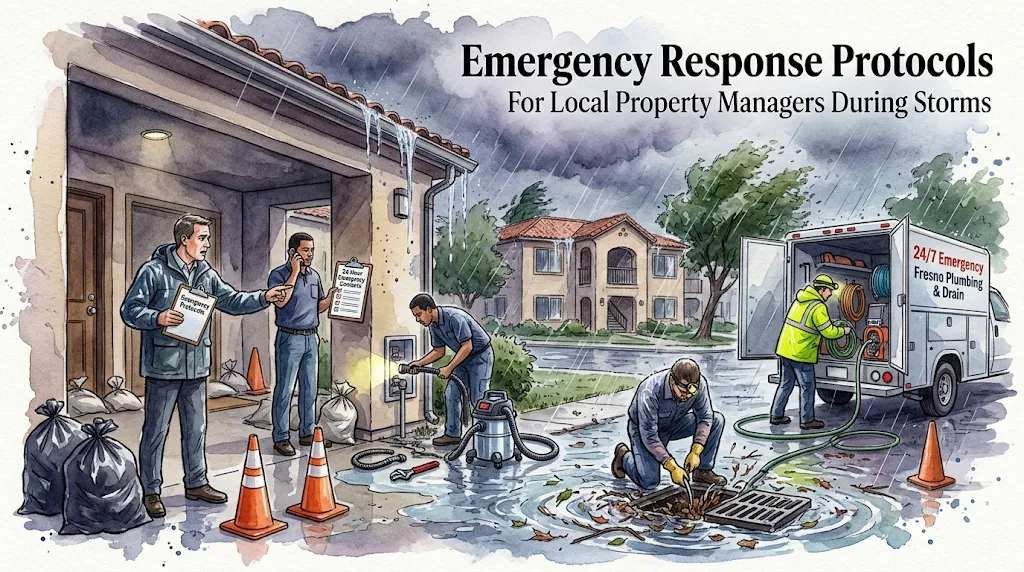
Even with thorough preparation, sudden clogs or flooding can occur during intense storms. Property managers should develop clear emergency response protocols to address urgent plumbing failures. This includes maintaining a list of 24-hour plumbing contacts, training staff on how to quickly shut off water valves, and having basic tools on hand for initial mitigation, such as drain snakes and wet vacuums. The Ready.gov flood preparedness page offers a useful framework for planning what to do before, during, and after a flood.
Communication plans should also be in place to quickly inform tenants of ongoing repairs or hazards. Coordinating with professional drain cleaning services for rapid response can help minimize water damage and restore normal operations faster. Reviewing emergency procedures for storm-related plumbing issues ensures that protocols meet current safety and legal standards for multifamily and commercial properties.
Conclusion
Assess your property’s most vulnerable drains and schedule professional inspections or hydro jetting before the monsoon season arrives. Early action reduces the risk of backups and helps property managers maintain safe, functional buildings no matter how heavy the Fresno rains may get.
Disclaimer: This article is for general information only. Plumbing systems and local codes vary, so consult a licensed plumber before scheduling inspections, hydro jetting, or repairs.