


Homeowners in Portland often face the challenge of replacing an old water heater, only to discover that specific safety upgrades are now required before the new unit can be installed. One critical requirement is the use of seismic strapping, metal bands designed to secure water heaters against movement during an earthquake. Without this installation, not only is a property at greater risk of damage in a seismic event, but the work itself may fail inspection, delaying utility restoration or occupancy. Portland plumbing codes water heater strapping regulations are enforced citywide, meaning every replacement project must address these standards to pass final inspection and keep homes safe.
Ignoring these requirements can result in failed inspections, insurance complications, and increased risk of water damage or gas leaks during seismic activity. Compliance is not just a bureaucratic step; it is a vital measure to protect both property and occupants. Understanding the specifics of these mandates helps homeowners and contractors complete water heater replacements that meet Portland’s unique safety expectations.
Portland Plumbing Regulations For Water Heater Seismic Retrofitting

The City of Portland enforces municipal and state plumbing codes that explicitly require seismic strapping for water heaters installed in homes and businesses. These regulations ensure that water heaters are anchored securely to withstand the lateral forces produced by earthquakes, which are a recognized risk in the Pacific Northwest. According to current code, at least two metal straps must secure the water heater, one placed in the upper third and one in the lower third of the tank’s height.
Inspectors verify that the strapping is tightly fastened to wall studs or other structural members, not just drywall or paneling. Homeowners should be aware that simply replacing an old unit with a new one is not enough; seismic strapping must be brought up to code each time a new unit is installed. For clarity on exact requirements, reviewing Portland’s plumbing permit guidelines can help avoid costly missteps and re-inspections.
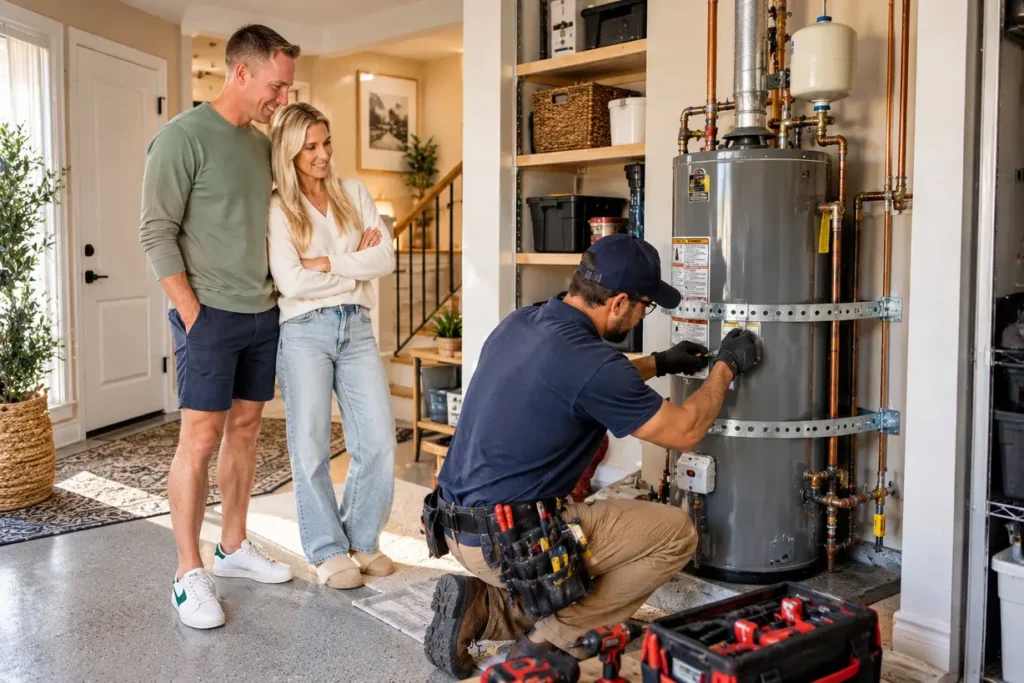
Local code enforcement officers check for proper bracket types, fastener length, and strap placement during the final inspection. If a water heater fails this inspection due to improper seismic strapping, the installation cannot be approved until corrections are made. This step applies to all permit-based Water Heater Replacement in Portland, Or projects, reinforcing the need to use approved strapping methods on every job.
Oregon Building Code Requirements For Earthquake Straps
The Oregon Residential Specialty Code outlines statewide standards for securing water heaters, which Portland adopts within its local code framework. These requirements specify the use of heavy-duty straps, commonly galvanized steel or equivalent, installed at both the upper and lower portions of the water heater. The straps must be anchored directly to solid framing, such as wall studs or masonry, to ensure they can resist the shaking forces of an earthquake.
Instructions for proper installation are detailed in the state code, including guidelines for strap tension and the number of fasteners required per bracket. Most manufacturers include installation diagrams, but city inspectors may refer to Oregon seismic safety codes for final judgment on compliance. It’s important for homeowners to confirm that any contractor or installer follows these published standards, as deviations can result in failed inspections regardless of the strap’s appearance.
Portland plumbing codes water heater strapping rules are harmonized with these state-level requirements to ensure consistent enforcement across the region. This means even if a water heater is installed in a detached garage or accessory dwelling unit, the same seismic strapping mandates apply.
Risks Of Non-Compliance During Water Heater Installation In Portland

Failing to meet seismic strapping requirements during water heater replacement can create serious safety and financial risks. If a water heater is not properly braced and secured to framing, an earthquake can cause it to tip over, rupture plumbing connections, or break gas lines, resulting in water damage, potential fire hazards, and even structural compromise. Insurance providers may also deny claims related to earthquake damage if code-mandated strapping was not in place at the time of the event.
Non-compliance can also delay occupancy or utility service activation after installation. City inspectors routinely check for seismic strapping during final inspections, and if deficiencies are found, the project will require correction and a second inspection before approval. In some cases, fines or additional permit fees may be assessed for repeated violations or unpermitted work.
Adhering to Portland plumbing codes water heater strapping rules is more than a formality; it is a proactive safety measure that protects property and lives during seismic activity. Ensuring the work is done correctly the first time prevents both immediate and long-term headaches for homeowners.
Hiring Certified Plumbers For Code-Compliant Water Heater Upgrades

Choosing a certified and licensed plumber familiar with Portland and Oregon building codes is the most reliable way to ensure code-compliant water heater installation. Certified professionals understand the nuances of seismic strapping, from selecting the correct hardware to anchoring straps in the right locations. Homeowners should always confirm that a plumbing contractor pulls the required permits and schedules the necessary inspections before starting work.
Certified plumbers also have access to the latest manufacturer-approved seismic strapping kits, which are designed to meet both local and state codes. This reduces the risk of improper installation and subsequent inspection failures. If you are unsure about the qualifications of a contractor, verify the license on the state registry and ask about their experience with Portland plumbing codes water heater strapping projects.
Relying on a professional not only ensures compliance but also provides peace of mind that the installation will withstand both inspection and potential seismic events. Homeowners who invest in experienced, credentialed plumbers minimize their risk of both code violations and post-installation safety concerns.
Summary
Before scheduling a water heater replacement, verify that your installer understands and implements Portland’s seismic strapping requirements. Request documentation of permit approval and inspection results to confirm compliance. Taking this proactive approach helps ensure your home is both safe and up to code after every upgrade.
Disclaimer: This article is general information, not professional plumbing or legal advice. Code requirements change, so confirm current rules with Portland Permitting and Development or a licensed Oregon plumbing contractor before any work begins.