

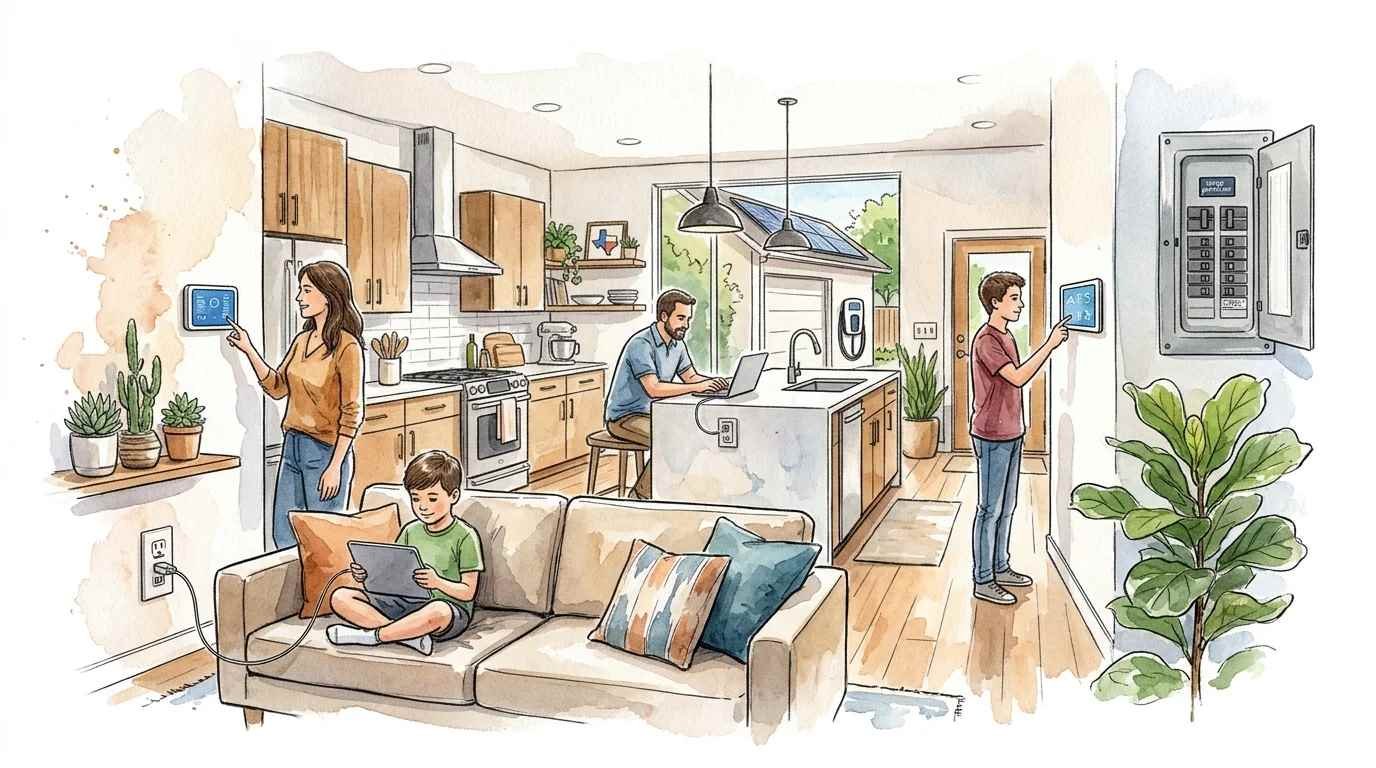
Family life has changed quite a bit over the last few years. Between charging electric vehicles, working from home, keeping up with household appliances, and making sure everyone’s devices stay powered, today’s homes have more electrical demands than ever before. For families in Austin, Texas, keeping up with those demands can mean taking a closer look at the electrical systems behind the walls.
Whether you live in an older home near Hyde Park, have a growing family in South Austin, or recently purchased a house in one of the newer communities around the Austin metro area, your electrical system plays an important role in everyday comfort and safety. An electrical panel that worked perfectly well 20 years ago might not be the best fit for a household with modern appliances, home office equipment, an electric vehicle, and plans for future renovations.
The good news is that you don’t necessarily need a major renovation to make your home more functional. Sometimes, a few well-planned electrical upgrades can make a noticeable difference in how your family uses its space.
At Tejas Electric, helping homeowners understand their electrical options starts with looking at how they live today and what they may need tomorrow. Here are seven electrical upgrades worth considering if you want your Austin home to be ready for modern family life.
1. Upgrade Your Electrical Panel To Keep Up With Your Household
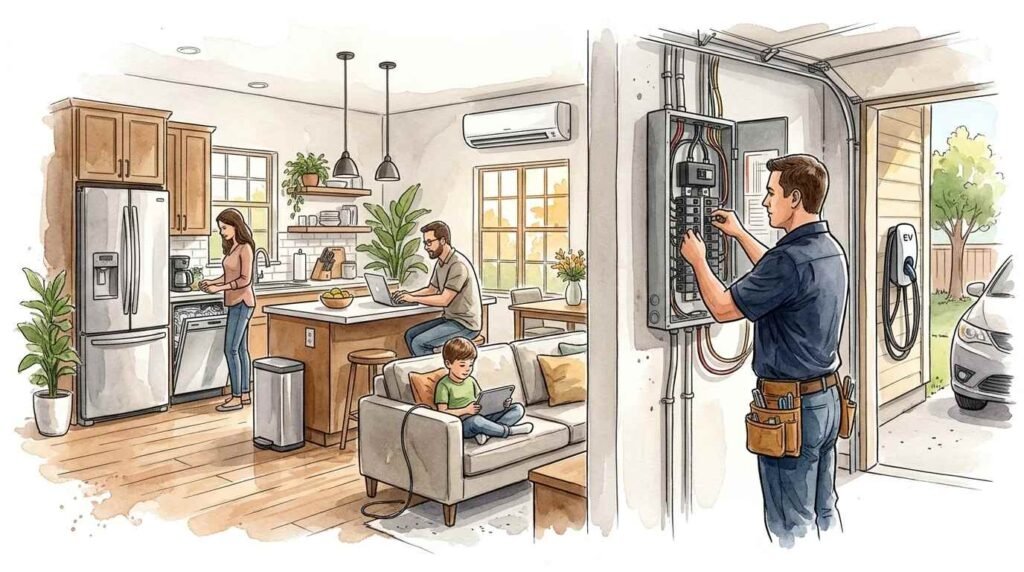
Think about everything your family uses electricity for in a typical day. The refrigerator runs around the clock, the air conditioner works hard during a Texas summer, and someone might be running the dishwasher while another family member finishes a load of laundry. Add a home office, newer kitchen appliances, or an electric vehicle charger, and your electrical demands can increase considerably.
Your electrical panel distributes power throughout your home and provides circuit protection. If your household’s needs have changed since the panel was installed, it may be worth having a licensed electrician evaluate whether your existing system can handle the additional load.
An electrical panel upgrade may be worth considering if you’re:
- Remodeling your kitchen or adding new appliances.
- Converting a spare bedroom into a home office.
- Installing an EV charger or planning to purchase an electric vehicle.
- Adding a workshop, outdoor kitchen, or other dedicated living space.
- Experiencing frequently tripping breakers or other signs of electrical trouble.
It’s important to understand that having empty breaker spaces doesn’t automatically mean your panel has enough capacity for additional equipment. An electrician needs to evaluate the service rating, existing electrical load, circuit requirements, and the condition of the equipment before recommending an upgrade.
Austin’s hot summers are another reason to pay attention to electrical capacity. Air conditioning can account for a significant portion of a home’s electricity use, especially during extended periods of high temperatures. If you’re planning to add equipment that draws substantial power, it makes sense to evaluate your electrical system before installation.
A panel upgrade isn’t necessary for every home, but a professional assessment can help you understand whether your current setup is appropriate for your family’s needs.
2. Consider Whole-Home Surge Protection For Valuable Electronics
Modern households have plenty of electronics worth protecting. Televisions, computers, gaming systems, smart home devices, refrigerators, and other appliances can represent a substantial investment over time.
Electrical surges can occur for several reasons, including utility-related switching, lightning activity, and the operation of certain electrical equipment. A large surge can damage sensitive electronics, while smaller surges may contribute to equipment wear over time.
Whole-home surge protection is designed to help limit damaging voltage surges entering your home’s electrical system. Depending on the installation, it can provide an additional layer of protection for equipment connected to different circuits throughout the house.
For families in Austin, this can be a useful consideration when upgrading an older electrical panel, renovating a home, or investing in new appliances and electronics.
A licensed electrician can determine which surge protection device is appropriate for your electrical system and install it according to applicable requirements. Whole-home protection can also be complemented by appropriately rated point-of-use surge protectors for sensitive equipment.
Keep in mind that no surge protector can guarantee protection against every electrical event. Proper installation, suitable equipment, and an overall electrical safety plan all matter.
If your family depends on computers for work or school, or you have invested in a home entertainment system, discussing surge protection with your electrician is a practical step toward protecting that investment.
3. Make Electrical Safety A Priority With Child-Safe Outlets
When you have young children at home, safety often comes down to the little things. You might install cabinet locks, secure furniture to the wall, and keep cleaning supplies out of reach. Electrical outlets deserve the same attention.
Traditional outlets can present hazards when children insert objects into them. Modern tamper-resistant receptacles are designed with internal shutters that help prevent foreign objects from being inserted into the receptacle openings unless a compatible plug is inserted correctly.
These outlets are a useful safety feature in family homes, particularly in playrooms, bedrooms, living areas, and other spaces where children spend a lot of time.
If your home has older outlets, a licensed electrician can inspect them and determine whether replacing them with modern tamper-resistant receptacles makes sense. The electrician can also check for loose outlets, damaged wiring, improper grounding, and other issues that may not be obvious during everyday use.
Ground-fault circuit interrupter (GFCI) protection is another important consideration. GFCI protection helps reduce the risk of electric shock in locations where electricity and moisture may come into contact, such as bathrooms, kitchens, garages, and outdoor areas. The specific requirements depend on the location, existing installation, and applicable electrical code.
Families should also pay attention to outlets that feel warm, show discoloration, spark repeatedly, or produce a burning smell. These aren’t normal conditions and should be evaluated promptly.
Can You Install Child-Safe Outlets Yourself?
Some homeowners are comfortable replacing basic electrical devices, but comfort with a screwdriver doesn’t necessarily mean an installation is safe. Incorrect wiring, loose connections, and improper grounding can create hazards that remain hidden after the cover plate is replaced.
For families who want peace of mind, having a qualified electrician handle outlet replacements and electrical safety improvements is a sensible choice.
4. Get Your Home Ready For An Electric Vehicle Charger
Electric vehicles are becoming a more common sight on Austin roads. If you’re considering an EV or already have one parked in the driveway, home charging may be one of the most convenient upgrades you can make.
Instead of planning regular trips to public charging stations, you can charge your vehicle at home while you’re sleeping, working, or spending time with your family.
However, installing a home charging station requires more planning than simply mounting a device on the garage wall.
A Level 2 EV charger typically requires a dedicated circuit and may draw enough power to affect the available capacity of your existing electrical service. The right setup depends on the charger’s specifications, your vehicle, your household’s electrical demand, and the location of the charging equipment. The U.S. Department of Energy’s guide to charging electric vehicles at home is a helpful starting point for understanding the different charging levels.
Before purchasing a charger, consider having an electrician evaluate:
- Whether your existing electrical panel can support the additional load.
- Whether a panel upgrade or other capacity improvements may be necessary.
- The distance between the panel and the proposed charging location.
- Whether the installation requires new wiring, conduit, or other electrical components.
- Indoor or outdoor mounting requirements and exposure to the elements.
Austin homes vary widely, from older properties with detached garages to newer homes with attached garages and more modern electrical systems. Those differences can affect the installation’s complexity and cost.
It’s also worth thinking ahead. If you’re planning to purchase a second EV or install other high-demand equipment in the next few years, tell your electrician before the work begins. Planning for future needs may help you avoid unnecessary modifications later.
An EV charger is not a good candidate for an improvised DIY installation. The circuit, wiring, overcurrent protection, and charging equipment must be suitable for the application. A Texas-licensed electrician can assess the requirements and complete the installation in accordance with applicable codes and manufacturer instructions.
5. Improve Everyday Comfort With Better Indoor And Outdoor Lighting

Lighting has a bigger effect on family life than many homeowners realize. A well-lit kitchen makes meal preparation easier, good lighting in a home office helps create a more functional workspace, and thoughtful outdoor lighting can make it easier to navigate the property after dark.
If your home still relies on outdated fixtures or rooms feel dim despite having several lights switched on, upgrading your lighting may be worthwhile.
Inside the home, popular improvements include recessed lighting, pendant lights over kitchen islands, under-cabinet lighting, and dimmable fixtures in living rooms and bedrooms. These upgrades can make spaces feel more inviting while allowing you to adjust lighting to different activities.
For households with children, brighter and more consistent lighting in hallways, stairways, and entryways can also improve visibility during busy mornings and nighttime routines.
Outdoor lighting is particularly useful for Austin families who enjoy spending time on their patios, entertaining guests, or letting the kids play in the backyard before sunset.
Consider improvements such as:
- Pathway lighting to make walkways easier to see.
- Motion-activated lights near garages and side entrances.
- Patio and deck lighting for evening gatherings.
- Security lighting around entrances and darker areas of the property.
- Energy-efficient LED fixtures for frequently used spaces.
Smart lighting controls can add another layer of convenience. Depending on the system, you may be able to control lights through a phone, set schedules, or use dimmers to adjust brightness without replacing every fixture.
Before making changes, consider the way each room is used. A bright overhead fixture may work well in a kitchen, while layered lighting may be more comfortable in a family room.
Some simple lighting changes can be handled by experienced homeowners when the equipment and installation are appropriate. However, adding new circuits, relocating wiring, installing recessed lights, or working in ceilings and outdoor areas can introduce additional risks. When the project involves new wiring or changes to the electrical system, a licensed electrician is the safer option.
6. Check Smoke Alarms And Learn To Recognize Electrical Warning Signs
Electrical upgrades aren’t always about adding something new. Sometimes, the most valuable improvement is making sure the safety equipment already in your home is working properly.
Smoke alarms are essential for giving your family an early warning when a fire develops. Depending on the home and applicable requirements, you may need alarms in bedrooms, outside sleeping areas, and on each level of the house. Carbon monoxide alarms are also important where required and appropriate, particularly in homes with fuel-burning appliances or attached garages. The National Fire Protection Association offers practical smoke alarm safety guidance for families.
If your home has older alarms, check their age, manufacturer instructions, power source, and operating condition. Many smoke alarms have a limited service life, commonly around 10 years, although the manufacturer’s instructions should always be followed. Test alarms regularly and replace batteries or units as directed.
Hardwired smoke alarms may require electrical work when replacing or relocating them. If you’re renovating a home, adding bedrooms, or changing the layout, ask your electrician whether the existing alarm arrangement still meets applicable requirements.
It’s equally important to recognize warning signs from your electrical system.
Pay attention to:
- Breakers that trip repeatedly.
- Lights that flicker or dim unexpectedly.
- Outlets or switches that feel unusually warm.
- Buzzing sounds from electrical equipment.
- Burning odors or visible scorch marks.
- Damaged cords, exposed wiring, or outlets that no longer hold plugs securely.
Some flickering can be caused by a failing bulb or an ordinary equipment issue, but persistent or unexplained symptoms deserve attention. A breaker that trips repeatedly should never be treated as an inconvenience to work around.
If you notice smoke, active sparking, or a burning smell, keep away from the affected equipment. If it is safe to do so, shut off power without approaching a hazard, and contact emergency services if there is a fire or immediate danger. Otherwise, arrange a professional electrical inspection.
Routine attention to these details can help identify problems before they become more serious.
7. Plan For Power Outages With A Safe Backup Power Solution
Anyone who has lived through a Texas storm knows that losing electricity can disrupt an entire household. Even a relatively short outage can be frustrating when the air conditioning stops, food is sitting in the refrigerator, and phones and other devices need charging.
For families in Austin, backup power planning is worth considering before an outage happens. Ready.gov’s power outage preparedness guide covers what to do before, during, and after an outage.
The right solution depends on your priorities. Some homeowners want enough power for a refrigerator, a few lights, internet equipment, and essential electronics. Others want a system capable of supporting selected major household loads or a larger portion of the home.
Options may include portable generators, standby generators, and battery-based backup systems. Each has different installation requirements, costs, capabilities, and limitations.
A portable generator can provide temporary power for selected equipment, but it must be operated outdoors and away from windows, doors, and other openings to prevent carbon monoxide poisoning. Never operate a generator inside a home, garage, or enclosed space, even with the door open.
If you want to connect a portable generator to selected household circuits, a properly designed generator inlet and compatible transfer equipment or an approved interlock arrangement may be appropriate, depending on the electrical panel and installation. These devices help prevent dangerous backfeeding into utility lines when installed and used correctly.
A standby generator offers a different approach. Depending on its size and configuration, it can supply designated circuits or a larger selection of household loads when utility power fails. Installation generally involves electrical work, and fuel connections may require additional qualified professionals.
Battery backup systems are another option for certain households, particularly those interested in storing energy from a compatible solar system or providing backup power without operating a fuel-burning generator.
Before selecting a system, think about what your family actually needs during an outage. Is keeping the refrigerator running the priority? Do you need to power medical equipment, internet service, or cooling equipment? Would you prefer automatic backup power, or would a portable solution be sufficient?
A licensed electrician can help assess the electrical requirements, determine which circuits can be supported, and recommend appropriate transfer equipment.
Backup power equipment should never be connected to a home’s electrical system using improvised cords or unsafe wiring. Proper installation protects your household and helps prevent dangerous electrical feedback into utility lines.
Should You Handle These Electrical Upgrades Yourself Or Hire A Licensed Austin Electrician?
DIY projects can be rewarding, and many homeowners enjoy taking care of routine maintenance around the house. Painting a bedroom, assembling furniture, or replacing a cabinet handle can be a reasonable weekend project. Electrical installations, however, deserve a different level of caution.
Texas has specific licensing requirements for electrical contracting and electrical work, with certain exemptions and limitations. The Texas Department of Licensing and Regulation (TDLR) oversees electrician licensing in the state. Whether a homeowner may legally perform particular work on their own residence depends on the circumstances, the applicable rules, and any local permitting requirements.
That means it’s important not to assume that every residential electrical project is automatically permitted as a DIY job simply because you own the home.
Electrical panel replacements, new EV charging circuits, generator connections, new wiring, and other substantial electrical modifications should be evaluated and performed by appropriately qualified professionals. These projects involve hazards that may not be visible once the work is complete, including shock risks, overloaded circuits, loose connections, and fire hazards.
Even smaller projects can become complicated if the existing wiring is old, damaged, improperly grounded, or inconsistent with modern requirements.
When hiring an electrician, ask whether the professional holds the appropriate Texas license, carries suitable insurance, and understands the local permitting and inspection requirements for your project. You should also receive a clear explanation of the recommended work, equipment, and expected costs.
At Tejas Electric, homeowners can discuss their electrical concerns and priorities before deciding which upgrades make sense. The goal should be to find a practical solution that supports your household without recommending work you don’t need.
Make Your Austin Home Work Better For Your Family
Every family uses its home differently. One household may need a panel upgrade before remodeling the kitchen, while another may be ready to install an EV charger or improve outdoor lighting. A family with young children might prioritize tamper-resistant outlets, while homeowners who have experienced repeated outages may want to explore backup power.
The best approach is to look at your home as a whole rather than treating every electrical project as a separate decision.
When considering electrical upgrades for your home, families in Austin, Texas rely on the electricians from Tejas Electric for professional guidance on electrical panel upgrades, whole-home surge protection, EV charger installations, and other residential electrical needs.
If you’re unsure where to start, consider scheduling an electrical assessment. A qualified electrician can review your existing equipment, discuss your family’s plans, and help you prioritize improvements based on safety, capacity, convenience, and budget.
Tejas Electric understands that Austin homeowners want electrical systems that work reliably in the background while they focus on the things that matter most: spending time with family, working comfortably from home, and enjoying their property.
Whether you’re planning a renovation, preparing for an electric vehicle, or simply making sure your home’s electrical system is ready for another Texas summer, the right upgrades can help you make more informed decisions about your home.
A little planning today can make everyday life easier tomorrow.
Disclaimer
This article is for general information only and is not professional electrical advice. Electrical work can be dangerous and may require permits and a licensed electrician. Always consult a qualified, Texas-licensed electrician before starting any project.