

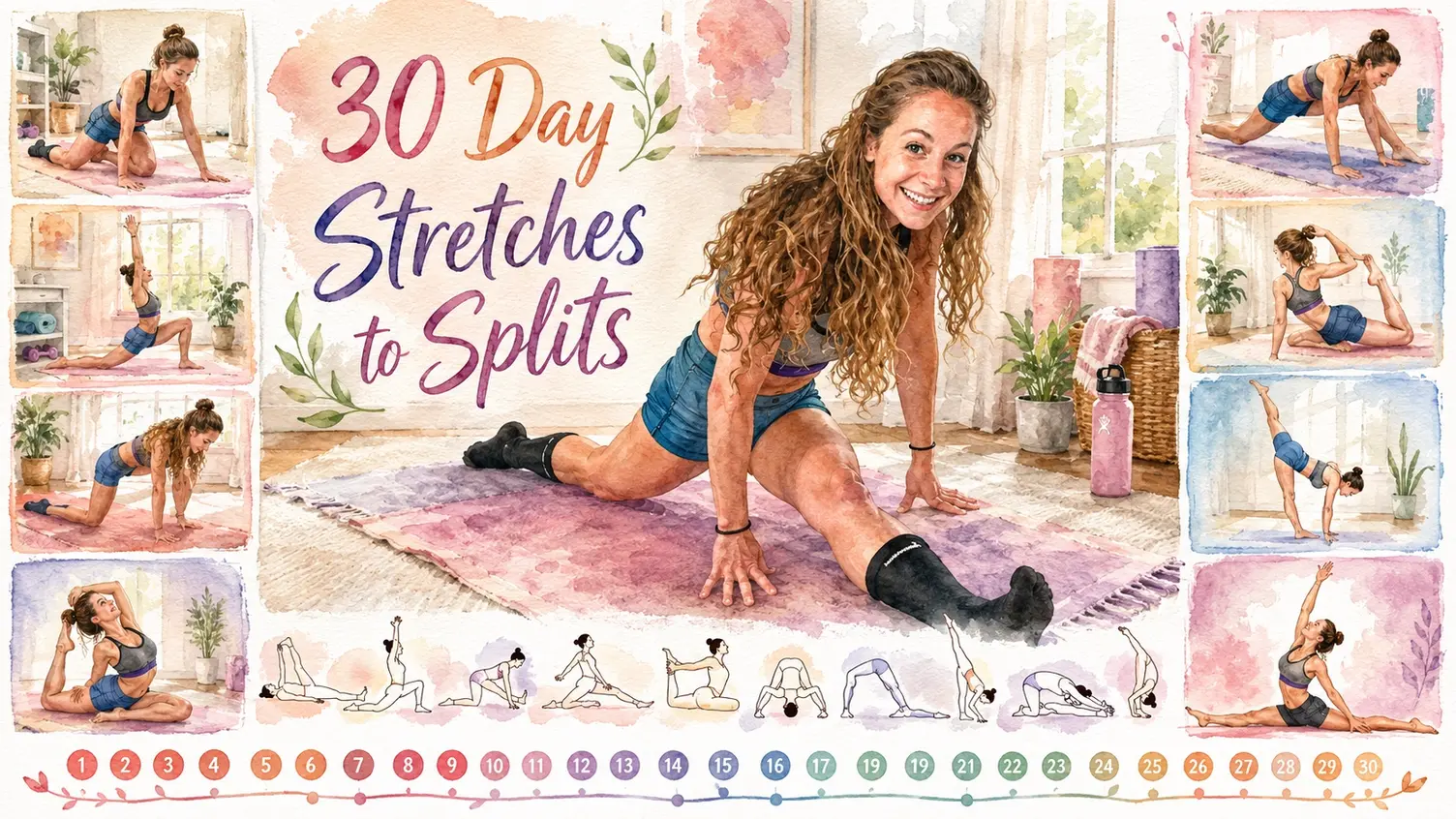
On day six, I made the mistake that changed the whole point of my 30-day splits challenge.
It was just after 9 p.m. The kitchen was finally clean, the house had gone quiet, and I had about twenty minutes before I wanted to get ready for bed.
I rolled out my mat in the living room and opened the progress photo from day one on my phone.
I had decided that night would be the night I made a visible jump.
Instead of treating the session like normal stretching, I treated the floor like a finish line.
I moved farther into a front-split position than my body wanted to go. I felt the normal pulling through my legs, then a sharper warning that made me come out of the position immediately.
Nothing dramatic happened, but the message was clear.
I had stopped stretching to become more mobile.
I was stretching to win against a photograph.
That was the moment my 30-day stretches to splits journey stopped being about reaching the floor by day thirty.
It became a lesson in patience, motherhood, recovery, and how easily a healthy goal can become less healthy when a deadline starts making the decisions.
I Started Because I Missed Feeling Flexible
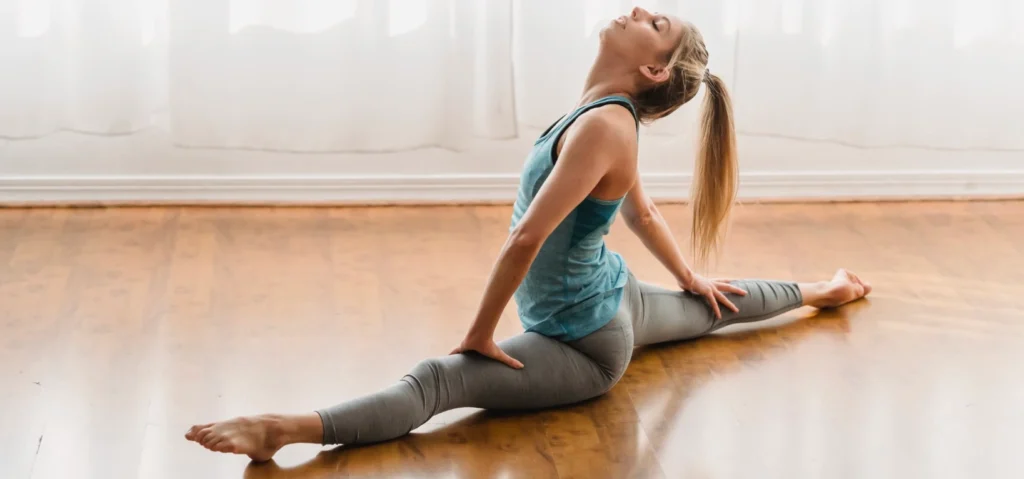
I did not wake up one morning desperate to do the splits.
The idea had been sitting quietly in the back of my mind for months.
As a mom, a lot of my movement happens because something else needs doing. I carry bags, bend to pick things up, move laundry, drive, clean, walk through stores, and spend long stretches sitting while working.
I was active in the ordinary sense, but I did not feel especially mobile.
I noticed it most when I sat on the floor.
My hips felt tighter than I remembered. Reaching toward my legs felt less natural, and getting up sometimes made me feel much older than I expected.
That bothered me more than whether I could perform a perfect split.
Still, “improve my hip and hamstring flexibility over time” did not sound exciting enough.
“30 days to splits” did.
That is where the first mistake began.
The Calendar Made Me Think Progress Should Be Predictable
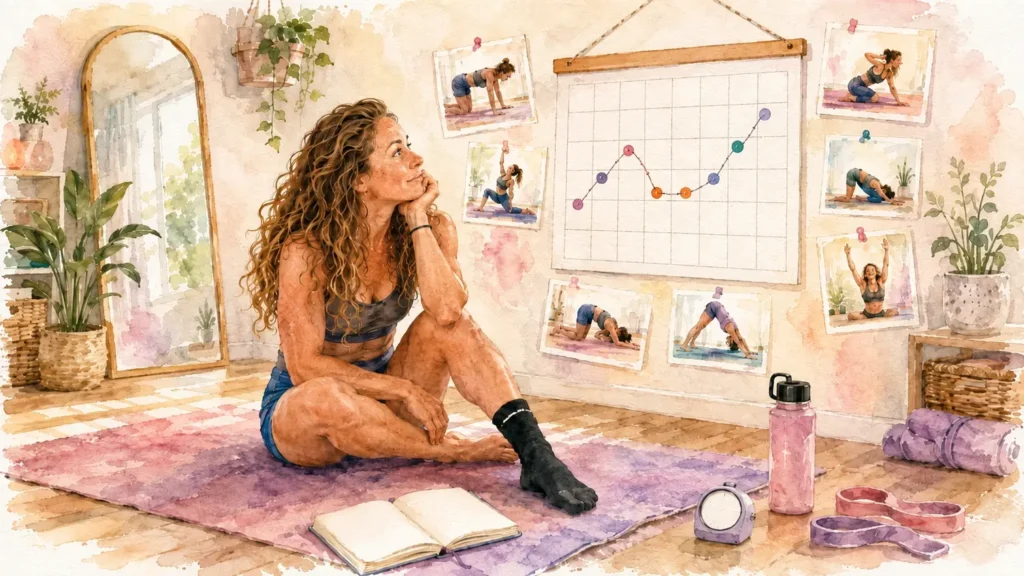
I created a note on my phone with thirty boxes.
Every day, I planned to mark another one complete.
It looked organised and motivating.
The problem was that I quietly attached an expectation to every box.
Day five should look better than day three.
Day ten should look clearly different from day one.
By day twenty, I thought I should be close.
The body does not make agreements with calendars.
Flexibility depends on many things, including the starting range of motion, previous training, individual anatomy, activity level, recovery, and how consistently a person has trained over a much longer period.
A 2025 expert consensus on stretching found that static and PNF stretching can improve long-term flexibility, but the recommendations focus on appropriate training volume and consistency rather than promising a specific position by a fixed date. The researchers’ practical recommendations on stretching helped me understand why a deadline and a body adaptation are not the same thing.
I could control whether I showed up.
I could not honestly control the exact date my body would reach a split.
I Had Been Stretching Cold Because I Was a Busy Mom
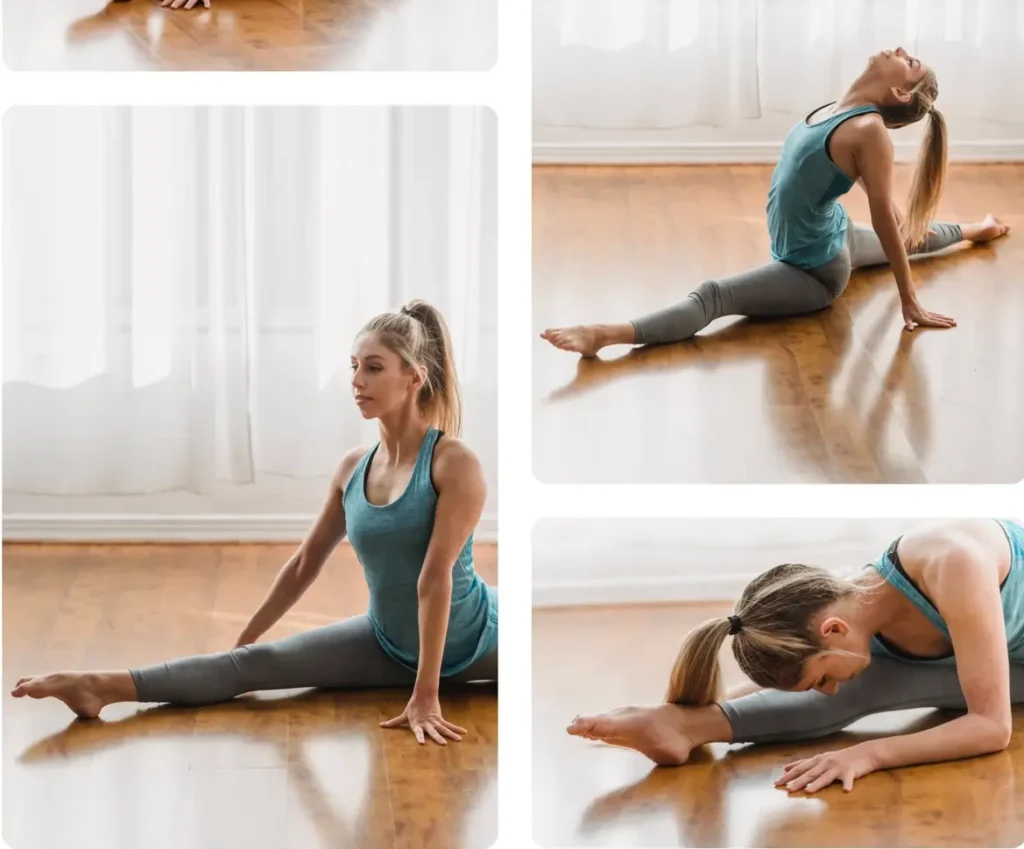
My first few sessions happened whenever I could fit them in.
Sometimes that was after walking.
Sometimes it was after spending forty minutes sitting at my desk.
I treated those situations as equal.
They were not.
On one particularly rushed morning, I moved from answering emails straight onto the floor and immediately started holding deep stretches.
My legs felt stiff, so I assumed I needed to push farther until they “opened.”
That logic was backwards.
The American Academy of Orthopaedic Surgeons advises warming up before stretching and moving slowly rather than bouncing or forcing a position. Its warm-up and flexibility guidance also says stretching should not hurt.
Mayo Clinic gives similar advice in its stretching safety guidance: expect tension, not pain, and back away if a stretch hurts.
After day six, I stopped treating a cold body as a challenge to overcome.
A short period of ordinary movement before stretching became part of the session.
That one change made the whole experience calmer.
The Sharp Pull Was More Useful Than a Progress Photo
I am glad I stopped when I felt that warning on day six.
Earlier in the challenge, I had been using discomfort as proof that the stretch was effective.
I would think, “If I can feel it strongly, something must be changing.”
That idea is dangerous because discomfort has different meanings.
A mild stretching sensation and pain are not interchangeable.
Hospital for Special Surgery recommends moving through flexibility work without straining and using dynamic movement before activity, with static stretching better placed after the body is warm. Its flexibility advice helped me stop treating intensity as the main measure of quality.
After my day-six mistake, I wrote 1.Anchor in my notes: the goal was to increase comfortable range, not prove how far I could force myself today.
That sentence became more important than the thirty boxes.
Motherhood Made Consistency Look Different
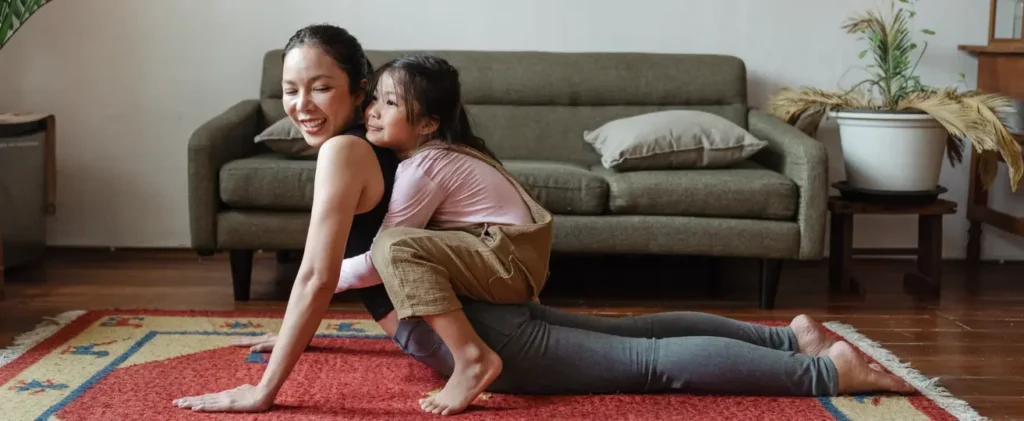
There were nights when I planned to stretch and did not.
Someone needed something.
Dinner ran late.
I was tired.
One evening I sat on the couch after putting everything away and realised I did not want to turn another peaceful twenty minutes into something I had to complete.
At first, skipping a session felt like failure.
Then I noticed something.
The missed day did not erase the previous days.
I was still moving more regularly than I had before starting.
That mattered.
The NHS encourages people beginning flexibility work to build up gradually rather than treating exercise as something that must begin at a high level. Its gentle flexibility guidance is written around steady movement, not an all-or-nothing challenge mentality.
That felt much closer to real mom life.
My schedule did not need to look like an athlete’s training calendar to count.
It needed to be repeatable.
This reminded me of FsiBlog’s article on how better sleep supports physical recovery and mental sharpness. I had been willing to stay up later just to tick off a stretching session, even though being rested was also part of taking care of myself.
I stopped trading sleep for a flexibility challenge.
I Stopped Photographing Every Session
The progress photos began innocently.
I wanted a day-one image and a day-thirty image.
Then I took one on day three.
And day four.
And day five.
Soon, I was examining tiny changes in the distance between my hips and the floor.
The photos were changing my behaviour.
If I did not look lower, I wanted to stretch deeper.
If the camera angle looked worse, I felt as though the session had failed.
I eventually reduced the photos.
I started noticing other changes instead.
Sitting on the floor felt easier.
My legs felt less stiff after long periods at my desk.
I could move into some stretches without the same feeling of resistance I had during the first week.
Those were useful changes even though they were harder to post in a before-and-after image.
MedlinePlus describes flexibility exercise as movement that helps muscles and joints move through a greater range, rather than defining success by performing one extreme position. Its overview of flexibility exercise helped me put the splits back into perspective.
The split was one expression of flexibility.
It was not the definition of flexibility.
I Learned That Dynamic and Static Stretching Have Different Jobs
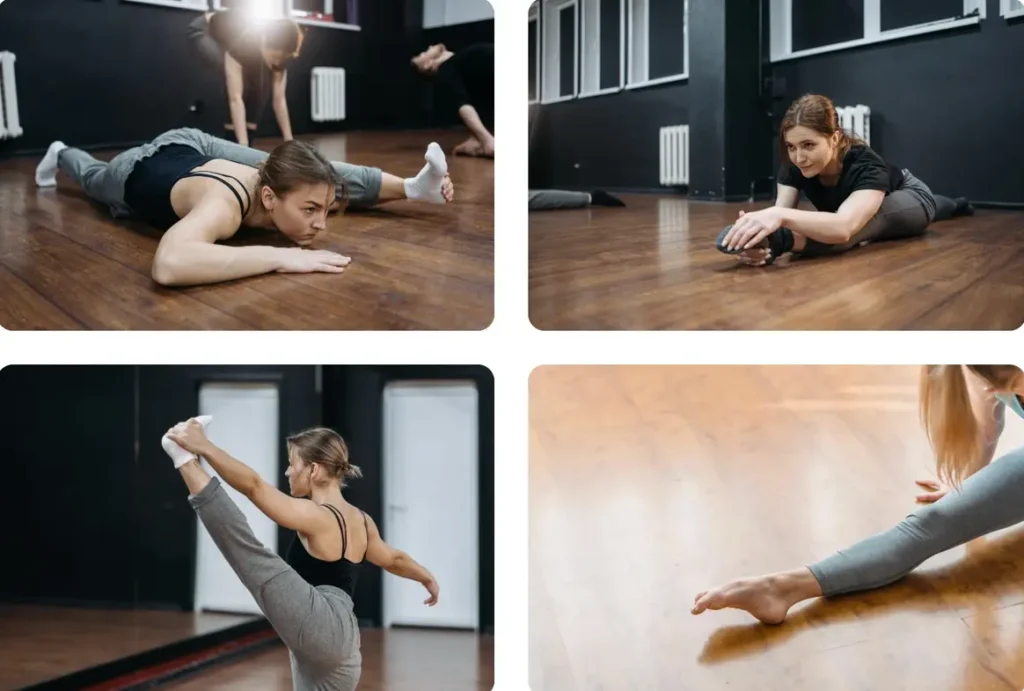
Before the challenge, stretching was all one category in my mind.
You pulled something until it felt stretched.
That was about as technical as my understanding went.
As I read more, I started separating dynamic movement from longer static holds.
Cleveland Clinic explains the difference clearly in its dynamic versus static stretching guidance. Dynamic movements can help prepare the body for activity, while static stretching involves holding a position and is often better suited to flexibility work when the body is warm.
That did not mean I needed a complicated training plan.
It meant I stopped dropping directly into my deepest position.
I moved first.
Then I worked gently through the ranges I was trying to improve.
The whole session felt less like pulling and more like moving.
I Stopped Copying People Who Were Starting From Somewhere Else
Social media made the 30-day goal look wonderfully simple.
Day one: far from the floor.
Day thirty: full split.
The missing information was everything that happened before day one.
Someone may have danced as a child.
Someone may already practise yoga.
Someone may naturally have much greater hip mobility.
Someone may have trained the position before filming the challenge.
Someone may simply have anatomy that makes one type of split easier.
I had no way to know.
I was comparing my real starting point with someone else’s edited starting point.
Harvard Health notes in its guide to the importance of stretching that flexibility develops through regular work and that muscles should be warmed before deeper stretching.
Nothing in that advice says I should match a stranger’s progress photo.
I began measuring my own experience instead.
Was I moving more comfortably?
Could I stretch without bracing or holding my breath?
Could I finish a session and feel normal afterward rather than sore because I had forced it?
Those questions were far more useful.
My Kids Accidentally Made the Goal Better
One afternoon, I was stretching in the living room when one of my kids asked what I was doing.
“I’m trying to get more flexible,” I said.
The answer surprised me because a week earlier I would have said, “I’m trying to do the splits.”
That small change in language showed me that my goal had already changed.
The kids joined me for a few minutes, mostly turning the moment into their own game.
I did not ask them to copy my deeper positions.
Instead, we moved around, laughed, and then they disappeared to do something else.
It reminded me of what I like about family movement.
It does not always need a result.
That idea fits with the spirit of FsiBlog’s Classroom 15x family story, where everyday moments can become useful learning without turning home into a formal lesson.
My kids did not care how close I was to the floor.
They cared that Mom was doing something funny on a mat in the living room.
That was healthier energy than the progress photos had given me.
Day Fifteen Was When I Stopped Calling It a Challenge
Halfway through the month, I changed the title of the note on my phone.
It had originally said:
“30 DAYS TO SPLITS.”
I changed it to:
“30 Days of Flexibility.”
That felt like a small wording change, but it removed a lot of pressure.
One version required an outcome.
The other required participation.
I could complete thirty days of learning even if a full split never happened.
This mattered because not every body needs a full split.
A split is an advanced range of motion. It is useful in some sports and arts, but it is not a basic health requirement.
General flexibility can support ordinary movement without a person ever reaching that position.
The American College of Sports Medicine has long recommended flexibility work as one part of broader physical fitness rather than presenting maximum flexibility as the goal. A clinical review summarising ACSM stretching recommendations describes regular, controlled static stretching as part of a balanced exercise program.
That gave me permission to stop treating the floor as a medical measure of success.
I Also Learned That More Flexible Is Not Always Better
Another thing I had never considered was that flexibility is only one quality.
Strength and control matter too.
Being able to move a joint farther is not especially useful if I cannot control that range.
That became obvious when some passive positions improved faster than movements where I had to support myself.
The lesson was not to keep stretching harder.
It was to respect the difference between flexibility and mobility.
Hospital for Special Surgery discusses mobility as a combination of movement and active control, not simply passive range. Its mobility training explanation helped me understand why I wanted my body to feel capable, not simply bend farther.
I stopped chasing the deepest possible position at the end of each session.
I cared more about whether my everyday movement felt easy.
Day Twenty-One Was Boring, and That Was Good
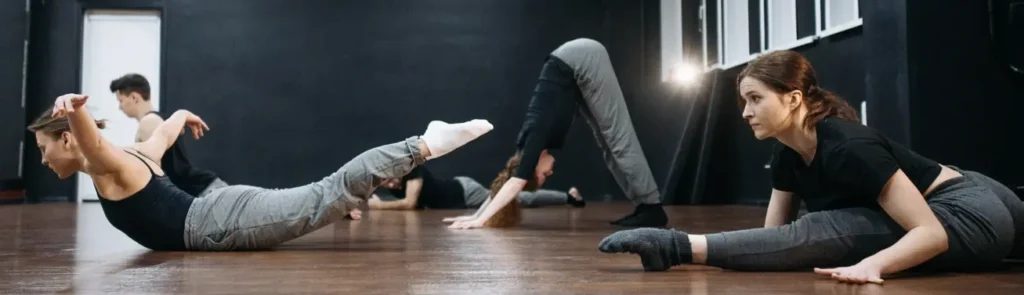
There was no breakthrough on day twenty-one.
No dramatic new range.
No exciting photograph.
I moved, stretched gently, finished, rolled up the mat, and made dinner.
It may have been the healthiest session of the entire month.
The activity had stopped feeling like a performance.
It had become something ordinary.
I think this is where many thirty-day projects become useful or useless.
If the challenge helps a person build a sustainable habit, the thirty days may be valuable.
If the challenge creates pressure to rush a physical change that normally takes longer, the deadline becomes the problem.
I no longer needed each session to prove something.
That gave me much more room to listen to how I felt.
Recovery Became Part of Progress
At the start, I thought stretching sessions created progress and everything between them was empty time.
I do not think about it that way anymore.
Sleep, ordinary movement, nutrition, stress, and recovery affect how I feel when I return to the mat.
On days when I had slept poorly, my body often felt different.
On days when I had been sitting for hours, I needed more time before deeper flexibility work felt comfortable.
That is one reason I began paying more attention to the FsiBlog discussion of sleep and physical recovery. A challenge was not worth making my normal wellbeing worse just to preserve a streak.
Rest was not time stolen from flexibility.
It was part of a sensible physical routine.
Did I Get the Splits in Thirty Days?
No.
And that is the most useful part of the story.
On day thirty, I was closer to the position than I had been on day one.
More importantly, I could move toward it with less tension and much less urgency.
I took one final photo.
Then I put the phone down and sat on the mat for a minute.
A month earlier, I would have looked at the remaining distance and thought, “I failed.”
Instead, I saw thirty days in which I had learned where my body resisted, what happened when I rushed, why warming up mattered, and how quickly a goal could become less healthy when I treated pain as progress.
That felt like a better result than forcing myself onto the floor for one photograph.
What I Would Tell Another Mom Thinking About a 30-Day Splits Goal
I would not tell her that thirty days is enough.
I would not tell her which day she should reach a certain depth.
And I definitely would not tell her to push through pain.
I would tell her to decide what she actually wants.
If the real goal is easier movement, better mobility, or making a little time for herself, then a full split may not need to be the measure.
If the split itself matters because she dances, practises a sport, or simply enjoys flexibility training, I would still remove the deadline from the body.
Warm up.
Move gradually.
Do not bounce or force a position.
Stop when something feels painful rather than treating pain as evidence of commitment. Both Mayo Clinic’s stretching guidance and AAOS flexibility advice make that point clearly.
And if there is an existing injury, unusual joint instability, significant pain, or another physical concern, individual advice from a qualified healthcare or movement professional makes more sense than following a generic internet challenge.
The Lesson I Kept After Day Thirty
I still stretch.
I just do not call every session a step toward the floor.
Some days I feel flexible. Some days I do not.
Sometimes motherhood gives me twenty quiet minutes.
Sometimes it gives me six.
I no longer turn the shorter day into proof that I am failing at fitness.
My 30-day stretches to splits journey started because I wanted to achieve one visible position.
It ended by changing the way I think about progress.
The best thing I gained was not a perfect split.
It was the ability to stop when my body said enough, return another day, and understand that slow progress still counts even when there is no impressive day-thirty photograph.