

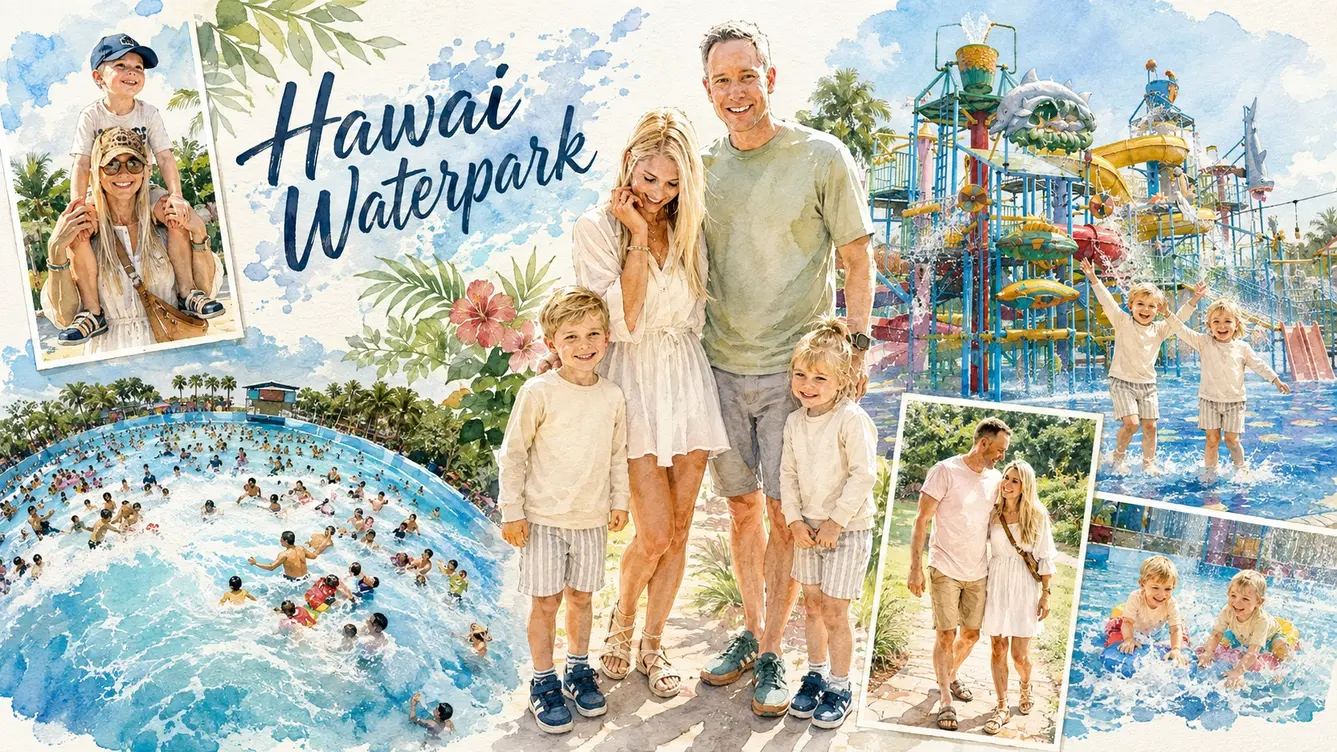
By Shenne’ Davies
The mistake I made on our July trip to Hawai Waterpark was believing that a waterpark day begins when you walk through the entrance.
With Bentley and Harley, it started much earlier.
It started while I was checking bags for the third time, looking for sunscreen that I was certain I had already packed, reminding everyone about dry clothes, and trying to decide whether we really needed another towel.
By the time our family was properly ready to enjoy Hawai Waterpark in Malang, I was already thinking about time.
I had seen that the park was listed as open until 5 p.m., so part of me had relaxed a little too much about making every minute count. I assumed the closing time meant we could keep treating the attractions as a full-day option right until the end.
That turned out to be the wrong way to plan a family waterpark day.
Current 2026 visitor information lists Hawai Waterpark as operating from 9 a.m. to 5 p.m., but Traveloka shows the last ticket redemption at 4 p.m., while a July 2025 visitor review also reported that some water attractions had stopped operating around 4 p.m. rather than remaining active until the park itself closed.
That does not mean every ride closes at exactly the same time every day. Operational times can change.
It does mean I would never again look only at the front-gate closing hour and assume it tells the whole story.
That was the first lesson Hawai Waterpark gave me.
The rest of the lessons came from two boys who could somehow want completely different things from the same pool, wet sandals that never seemed to be where I left them, a wave pool that instantly changed the energy of our day, and the strange way a family trip becomes most memorable in the moments you never thought to plan.
Why Hawai Waterpark Made It Onto Our July Family Plans

When I plan something with Bentley and Harley, I have learned not to ask only one question.
“Will the kids like it?” is not enough.
I also need to know whether there is enough variety for different moods, whether we can slow down when someone needs a break, whether I will spend half the day carrying things nobody wanted to carry themselves, and whether the activity still works after the first hour of excitement disappears.
That is one reason Hawai Waterpark interested me.
The waterpark is in Banjararum, Singosari, in Malang Regency, East Java. Current listings place it in the Graha Kencana area, and the park is open daily from 9 a.m. to 5 p.m. according to its current business listing and 2026 ticket information.
It is not a small hotel pool with a couple of slides.
Current visitor information describes a large collection of water attractions, including Waikiki Beach, Hawai Waterhouse, Waimea Stream River, Mavi Island, Hula Slide, Wailele and other faster rides.
That variety mattered because Bentley and Harley do not experience a family day in exactly the same way.
Bentley has always been full of energy and curiosity. He tends to notice the action first.
Harley often gives me a completely different view of the same place. He may take a little more time with something, notice details I walked past, or become interested in the part I assumed would be a five-minute stop.
Motherhood has taught me not to decide in advance which child will love which part of a day.
They are very good at proving me wrong.
I wrote about that same lesson in My Classroom 15x Journey as a Mom to Bentley and Harley. Travel gives me another version of it because a new place brings out sides of children that normal home routines do not always show.
The First Thing I Would Change Is Our Timing
If I could redo one part of our Hawai Waterpark day, I would protect the first two hours more carefully.
Family mornings have a habit of stretching.
One person needs the bathroom when someone else is ready to leave. A bag gets opened again because something may have been forgotten.
Then there is the moment when I ask whether everybody has what they need and immediately realise that I am the person who cannot find her own phone.
None of this is serious.
Together, however, those little delays eat into an attraction day.
Hawai Waterpark is currently listed as opening at 9 a.m.
If I were planning the same day again, I would treat that opening hour as valuable rather than optional.
Wanderlog’s current visitor summary also recommends arriving early, and a recent visitor specifically warned that some water attractions may stop before the park’s advertised closing time.
That matches what I now believe about waterparks in general.
You want the children fresh when the lines are still manageable.
You want time to understand the layout before everyone is hungry.
You want to find the changing area, toilets, food, lockers and meeting points before they become urgent.
Most of all, you do not want the afternoon clock deciding which attraction gets skipped.
I have written before about practical family travel planning, but Hawai Waterpark gave me a more specific rule.
For a normal city attraction, arriving an hour later may only mean changing the order of the day.
For a waterpark, late arrival can affect almost everything.
I Thought I Had Packed Light Until We Started Carrying It
My waterpark bag looked sensible in the room.
It felt much less sensible once I was carrying wet things.
There is a strange transformation that happens to a family bag near water. The same towel that weighs almost nothing when dry suddenly feels like it was made from concrete.
Swimwear gets wet.
A shirt someone insisted they would wear is now being carried by me.
Sunscreen has moved from the pocket where I thought I put it.
There are water bottles, dry clothes, phones, little personal items and the things children collect because they are absolutely sure they will need them later.
The lesson was not to pack nothing.
It was to separate what we needed at the water from what we needed only when leaving.
A small waterproof or water-resistant pouch for the things I could not afford to soak would have made my day easier.
So would a more disciplined approach to dry clothing.
My earlier FsiBlog piece on packing for a longer trip without carrying a full wardrobe came from the same basic mistake. Parents often pack around imagined situations rather than the moments that will actually happen.
At a waterpark, I now care much more about a clean dry outfit at the end than about having extra outfit choices during the day.
The Park Felt Bigger Once We Were Inside It
Photographs can make waterparks look strangely compact.
You see a wave pool in one image, a tall slide tower in another and a children’s play area in the next. Your mind quietly places all of them beside each other.
Then you arrive and realise that changing rooms, food areas, pools, stairs, slides, walking paths and places to sit all take real space.
Hawai Waterpark occupies a substantial site, and current ticket information describes twelve water attractions across the property.
I quickly realised that our family did not need to keep crossing the whole park every time someone changed their mind.
I started thinking in areas instead.
We could spend time somewhere, actually enjoy it, then move when we were ready.
That sounds obvious.
I am not always good at it.
There is a travel voice in my head that says, “We came all this way. We should see everything.”
Children do not care about that sentence.
They care whether they are having fun right now.
Our family day at the Montshire Museum of Science taught me the same thing in a completely different setting. Children do not need a parent constantly moving them toward the next attraction.
Sometimes the place they already found is the place they want.
Waikiki Beach Is the Part People Talk About for a Reason
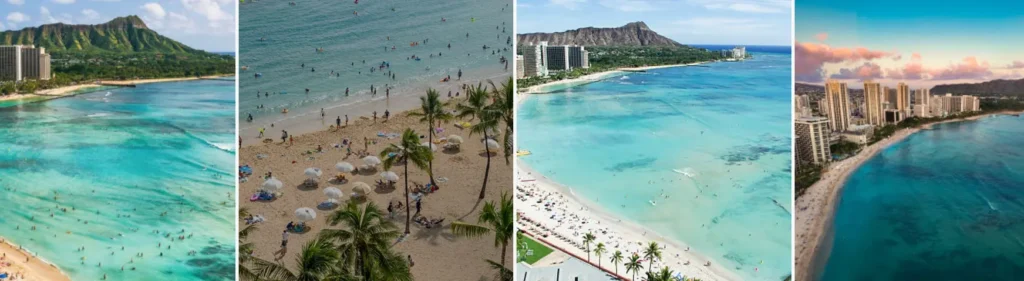
Even before our visit, Waikiki Beach kept appearing whenever I looked up Hawai Waterpark.
It is the park’s wave-pool attraction, often called the Tsunami Pool.
The official Hawai Waterpark material describes artificial waves with different levels, with the highest level promoted as reaching up to about 3.5 metres.
That sounds exciting on a website.
It feels very different when you are a mum standing beside two children and watching the water change.
The atmosphere shifts when a wave pool starts.
People move.
Children become louder.
Everyone’s attention goes toward the same section of water.
This is exactly the kind of moment where the fun can make adults less careful because everybody is watching the attraction.
I became more careful.
The American Academy of Pediatrics published updated waterpark safety advice for families in July 2026. It recommends active supervision and says young children or weak swimmers may need properly fitted life jackets, while adults still need to stay close even when those jackets are being worn.
That sentence about supervision matters.
A lifeguard is not a replacement for a parent watching their own child.
A wave pool is also not the place where I want to be checking photos on my phone.
I Learned to Stop Looking at Both Boys as One Unit

This is something I am still learning as a mother.
When you have two children, it is easy to say, “The kids are fine.”
But Bentley being comfortable does not automatically mean Harley is comfortable.
Harley enjoying something does not mean Bentley needs to stay there.
A waterpark makes those differences obvious.
One child may want another round.
The other may want to sit down.
One may be ready for deeper water.
The other may be happy exactly where they are.
This is where my job changes from “we are all doing the same thing” to “I know where both of my children are and how each one is doing.”
The American Red Cross gave similar advice in its July 2026 waterpark safety guidance, recommending constant supervision, a buddy system and respect for posted ride restrictions.
I like the buddy idea, but with children I still keep the adult layer on top of it.
Bentley and Harley can look out for each other.
I am still the mum.
Hawai Waterhouse Was the Kind of Attraction That Changes the Pace
Waterparks need places that are exciting without asking a family to commit to a major thrill ride every time.
Hawai Waterhouse fills part of that role.
Current 2026 attraction information describes it as a large interactive water-play structure with multiple slides and a giant tipping bucket.
That type of space works well for family travel because there is not one single way to enjoy it.
Children can move between water features.
They can repeat the same small slide.
They can watch the big bucket.
They can change their minds.
As a mum, I like attractions that let children make small choices without requiring us to restart the whole day.
It is also the kind of place where I have to remind myself that “children’s area” does not mean “parent can switch off.”
Wet surfaces, steps, moving children and falling water still require attention.
One of the simplest safety lessons from another major family waterpark, Wet’n’Wild Hawaii, is also one of the best: walk rather than run on wet surfaces and follow the rules posted for each attraction.
The parks are different businesses in different countries.
The parenting rule travels well.
The Smaller Kids’ Areas Matter More Than They Look in Photos

Mavi Island is currently described as a colorful water-play area aimed at younger children.
Before becoming a mum, I would have looked at a children’s splash area and thought of it as the part you use until the real rides begin.
I think very differently now.
The smaller areas are often where a family resets.
They give children somewhere to enjoy water without the build-up of a major slide.
They give parents time to notice whether somebody is cold, hungry, tired or overstimulated.
They also create some of the nicest family memories because nobody is trying to reach the next thing.
I cannot tell you which part of a waterpark your child will remember.
That is one of the strange things about family travel.
You can pay for the big attraction, take the big photograph and organise the whole day around it.
Three weeks later, the child may still be talking about the small fountain near the walkway.
The Lazy River Was When the Day Finally Slowed Down
Every family waterpark needs an attraction that asks less from me.
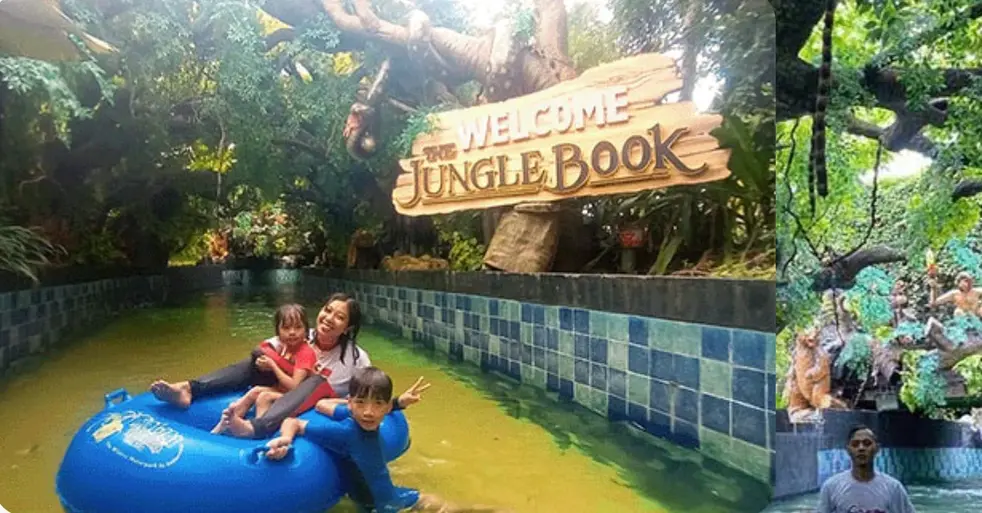
Waimea Stream River is Hawai Waterpark’s lazy-river-style attraction. Current visitor information describes a long route with themed surroundings and water effects.
By the time a family reaches a lazy river, nobody is actually lazy.
We have walked.
We have changed.
We have waited.
We have reapplied sunscreen.
Someone has asked for food.
Someone else has changed their mind about food.
A floating section can feel like the first time all day when everybody stops making decisions for a few minutes.
That was one of the parts I appreciated much more as a mother than I would have before having children.
Still, floating does not remove the need for water awareness.
The Red Cross recommends constant adult supervision around pools and waterpark attractions even when lifeguards are present.
Relaxed is not the same as distracted.
That distinction stayed with me.
The Big Slides Look Different When Your Children Are Watching Them
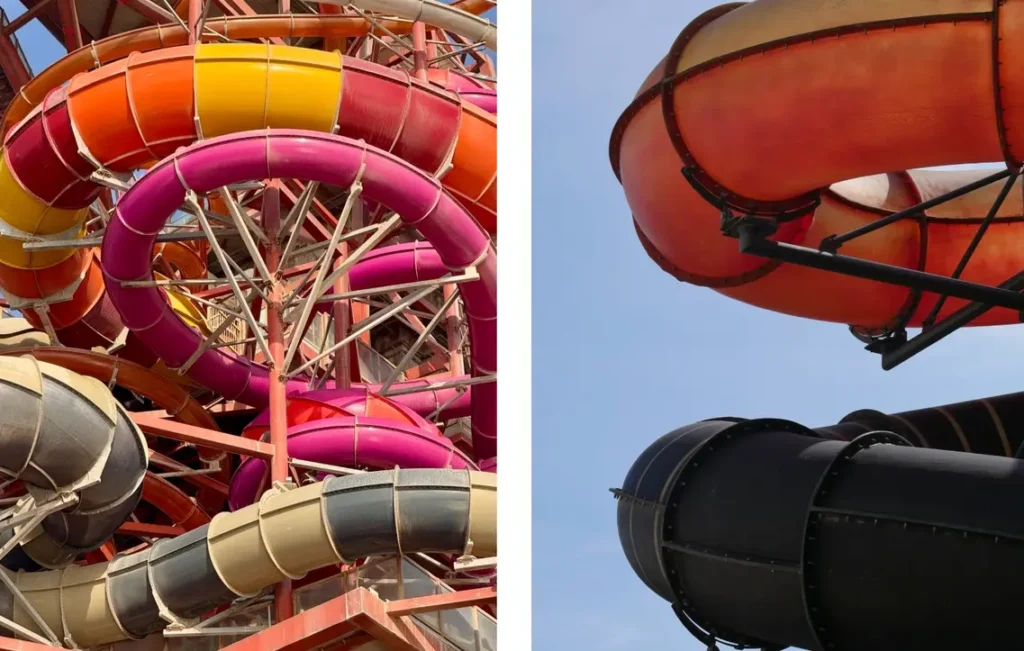
Hawai Waterpark is not only a children’s splash park.
Current attraction information includes faster rides such as Wailele, Hula Slide and Jet Coaster. Traveloka describes the Jet Coaster as one of the park’s major thrill attractions, while the park’s own Wailele page describes a steep slide and lists rider restrictions.
This is where I become very boring in the best possible way.
I do not negotiate safety rules.
If a sign says a person does not meet the height, weight or other ride condition, that is the end of the conversation.
It is not a challenge to find another employee.
It is not a sign that the child needs to stand taller.
It is not something I change because “he’s almost there.”
Ride limits exist for the equipment being used.
The Red Cross specifically recommends following all posted height and age restrictions at waterparks.
I want Bentley and Harley to grow up seeing that fun and rules can exist together.
You do not lose the day because one ride is not for you yet.
There is always something else to do.
I Did Not Expect the Wave Pool Schedule to Matter So Much
One detail I would check immediately on a return visit is the day’s Waikiki Beach wave schedule.
Current Hawai Waterpark visitor information says the wave attraction operates at selected times rather than continuously all day.
That changes planning.
If the main attraction your family wants runs at set times, you do not want to be changing clothes, waiting for lunch or standing at the opposite side of the property when it begins.
I would now ask at arrival:
When are the wave sessions?
Which rides have scheduled operating periods?
Is anything closed for maintenance today?
Do any attractions stop before the park closes?
Those four questions could save more time than a detailed plan made at home.
I have become much more comfortable asking staff simple questions while traveling.
A map tells me where something is.
A person working there may tell me what is actually happening today.
Lunch Was When I Realised How Hungry Water Makes Children
There are certain parenting facts I apparently have to relearn on every trip.
One is that children can say they are not hungry and become extremely hungry ten minutes later.
Water seems to speed up that transformation.
Current Hawai Waterpark information lists restaurant and food facilities inside the attraction, while visitor reviews also mention food options around the park.
Older visitor reviews mention restrictions on bringing food from outside, and current ticket information also advises visitors to plan money for food and drinks inside.
Because policies can change, I would check the park’s current rules directly before packing food for a future visit rather than relying on an old review.
That is important for families managing food allergies or medical needs.
If somebody in my family had a serious dietary restriction, I would contact the venue before arriving and ask exactly what can be brought inside.
Another waterpark’s detailed policies are actually what made me think more carefully about this issue. Wet’n’Wild Hawaii, for example, tells visitors with medical or allergy-related food needs to contact guest relations in advance rather than assuming normal outside-food rules will cover their situation.
Different park, but a very sensible planning habit.
I Should Have Treated Shade as Part of the Day
Water can fool me into thinking we are cooler than we really are.
If I am standing on dry pavement in the sun, I notice the heat.
If I am in or beside water, the day feels easier.
The sun has not disappeared.
The World Health Organization recommends using shade, protective clothing, sunglasses and sunscreen as parts of sun protection, particularly when UV levels are high.
At a waterpark, sunscreen needs even more attention because water, towels and movement can remove or disturb it.
For our family, a shade break became useful for more than skin protection.
It was when I could actually look at both boys and ask how they felt.
Were they tired?
Were they thirsty?
Were they ready for food?
Did anyone need the bathroom?
Did somebody have a rubbing sandal or sore foot?
Parents sometimes need to remove the fun for ten minutes so the fun can continue for another two hours.
Sunscreen Is Not a Morning-Only Job
I packed sunscreen.
That did not mean I had completed the sunscreen job.
This is another waterpark lesson that sounds painfully obvious after the fact.
The CDC advises reapplying sunscreen regularly during outdoor activity, especially when children are sweating or spending time in water.
I now connect sunscreen with breaks instead of waiting until I happen to remember it.
We stop.
We drink.
We check everybody.
We reapply according to the product directions.
Then we continue.
The tops of feet are one of the places I pay more attention to now.
So are shoulders, ears and the areas around swimwear that can become exposed when fabric moves.
A full waterpark day is not the time to learn which body part you forgot.
Hydration Was Easy to Forget Because We Were Surrounded by Water
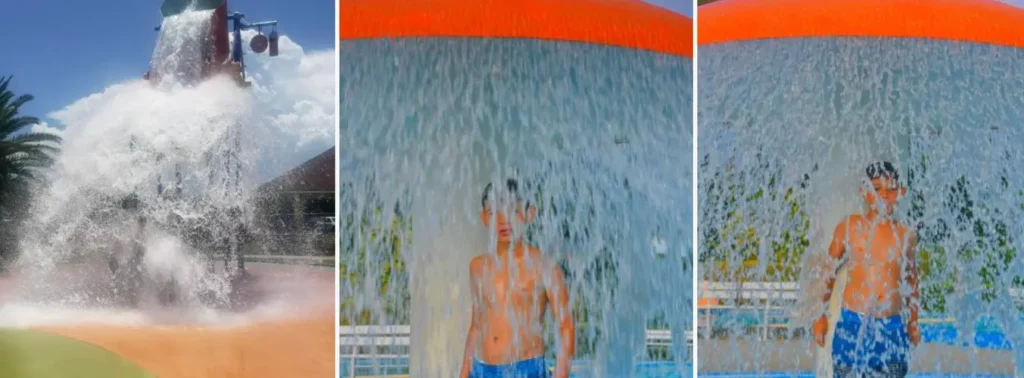
You can spend half the day wet and still need to drink.
Bentley and Harley were busy enough that I could not depend on them to interrupt a fun attraction and announce that it was time for water.
That responsibility was mine.
The CDC says young children rely on adults to keep them cool and hydrated during hot weather. It also lists symptoms such as weakness, dizziness, headache, nausea, unusually heavy sweating and muscle cramps among possible signs of overheating.
I did not want to wait for anyone to feel bad.
Regular drinks were easier than trying to repair a day after somebody became overheated.
The same principle appears in my FsiBlog article on practical family travel tips. The basics often matter more than the clever packing trick.
Children need water.
They need food.
They need rest.
The destination does not cancel those needs.
I Became the Water Watcher Without Calling Myself One
I had never used the phrase “water watcher” during our normal family outings.
The idea is simple.
Someone is actively watching the children around water rather than assuming every adult in the group is generally paying attention.
The American Academy of Pediatrics recommends an adult provide focused supervision, with young children and weaker swimmers kept within close reach as appropriate.
That matters in a place like Hawai Waterpark because distraction is everywhere.
Music.
Slides.
People.
Bags.
Phones.
Photos.
Food.
A child saying something while another child is moving toward the water.
It is very easy for a parent to be physically beside a pool but mentally somewhere else.
There were moments when I deliberately put the phone away.
Not in my hand.
Not ready for a photograph.
Away.
There will always be another photo.
Some of My Favorite Photos Were Not the Big Ride Photos Anyway

There is a version of family travel that exists mostly for the camera.
Perfectly coordinated swimwear.
Everyone looking toward the lens.
Water frozen in the background at exactly the right moment.
That is not what most of my actual family day looks like.
Harley may be looking somewhere else.
Bentley may have already moved.
My hair is doing whatever water has decided it should do.
Someone is carrying a towel that does not match anything.
Those are usually the pictures I end up loving.
The FsiBlog article on packing for two weeks without repeating the same photo outfit talks about travel photos from a style perspective.
A waterpark makes me care much less.
At Hawai Waterpark, the story mattered more than the outfit.
Wet Floors Changed My Opinion About Water Shoes
I used to think water shoes were mostly for rocky beaches.
A waterpark reminded me that wet walking surfaces create their own problems.
The right footwear depends on what the park allows on particular attractions, so I always follow ride-specific rules.
For general walking around, though, I appreciate footwear that feels secure when wet and is easy to remove when necessary.
Loose flip-flops are convenient until I am carrying a bag and trying to keep track of two children.
Then every small inconvenience becomes noticeable.
The most useful waterpark clothing is often the clothing you do not have to think about.
Secure.
Quick drying.
Comfortable.
Nothing complicated.
The Changing Room at the End Matters More Than the One at the Beginning
At the start of a waterpark day, changing clothes is exciting.
Everyone wants to get into the water.
At the end, the energy is completely different.
Children are tired.
Hair is wet.
Towels are damp.
The dry clothes that seemed easy to pack now need to be found without soaking them with everything else.
Current Hawai Waterpark listings include changing rooms, toilets, a health facility, nursing space and other guest facilities.
Recent visitor comments have also mentioned VIP facilities with hot showers, though options, prices and availability can change.
I would investigate the changing options more carefully before another full family day.
Not because we need luxury.
Because the last twenty minutes often decide how the journey home feels.
A child who is dry, comfortable and not hungry is a completely different travel companion from one who is cold, wet and exhausted.
I Would Budget Beyond the Entry Ticket
This is an area where attraction guides often stop too early.
They tell you the entrance price.
That is not necessarily the family-day price.
Current 2026 Traveloka information lists regular Hawai Waterpark tickets around Rp85,000 on weekdays and approximately Rp110,000 to Rp120,000 for weekends and holidays, while also warning that prices can change during high season or promotions.
I would check the live price when booking rather than treating those amounts as permanent.
Then I would think about everything around the ticket.
Food.
Drinks.
Transport.
Parking if relevant.
Lockers or other rented facilities if needed.
Optional VIP upgrades.
Any items forgotten and bought at the venue.
A family budget gets distorted when I compare only the advertised ticket price.
My FsiBlog article on planning trips around budget, energy and travel style came from exactly this type of lesson.
The cheap part of a day can be the ticket.
The expensive part can be being unprepared.
The Reviews Helped, but I Would Never Let Them Plan the Whole Day
Before visiting, I looked at what other people had said.
I still do this for almost every family attraction.
Tripadvisor currently shows a mix of positive and critical Hawai Waterpark experiences. Some families have praised the slides and wave pool, while others have complained about extra costs, customer service or crowding.
Wanderlog’s current summary pulls in a large number of reviews and highlights the wave pool, slides, food choices, shade and family appeal, but it also surfaces practical complaints about operating times and payment.
I find that much more useful than reading only the five-star comments.
If twenty people love an attraction and three complain that queues become difficult late in the day, I do not automatically decide the park is bad.
I arrive earlier.
If somebody complains that a facility is far from the pool, I think about how much I will carry.
Reviews are best when I use them to identify friction.
They are less useful when I expect strangers to tell me whether my family will personally have a good day.
Hawai Waterpark and Wet’n’Wild Hawaii Are Not the Same Place
This sounds unnecessary until you search the name quickly.
Hawai Waterpark is in Malang, East Java, Indonesia.
Wet’n’Wild Hawaii is a completely different waterpark in Kapolei, Oahu, in the U.S. state of Hawaii.
I mention it because search results can mix Hawaii-themed waterparks with attractions physically located in Hawaii.
If you are planning the Malang park, check that the page you are reading actually refers to Hawai Waterpark Malang.
The same applies to ticket prices, ride rules and outside-food policies.
A beautifully written waterpark guide is useless when it describes another park.
The Hawaiian Theme Is Part of the Fun, but Malang Is the Real Destination
Hawai Waterpark uses Hawaiian names and a tropical visual theme across many attractions.
Waikiki.
Waimea.
Hula.
Maui-inspired names and decorations.
The theme makes the park memorable, especially for children.
But I would not want a family article about Hawai Waterpark to forget where we actually were.
This was a Malang family day.
That matters because the trip can be combined with the wider area rather than treated as an isolated resort experience.
The location in Singosari also affects where a family chooses to stay and how much travel time they allow.
Current listing information places Hawai Waterpark near major Malang-area transport routes, though actual drive times depend on traffic and starting point.
For me, that is more useful planning information than another sentence about tropical decorations.
I Would Never Schedule Another Big Attraction Immediately After It
I have done this before.
I see that an attraction closes in the afternoon and think, “Great, we can do something else in the evening.”
Technically, yes.
Emotionally, ask the children first.
A waterpark uses energy differently from a museum or a quiet sightseeing stop.
There is swimming.
Walking.
Stairs.
Sun.
Noise.
Excitement.
Waiting.
Then there is the final process of showering, changing, gathering belongings and getting everyone out.
I would not put another major family attraction right behind that unless there were a strong reason.
Dinner?
Yes.
A gentle walk?
Maybe.
Another ticketed activity with a fixed start time?
I would avoid it.
This is where planning stress-free family trips becomes less about creating the perfect itinerary and more about knowing when to stop.
The Boys Taught Me That Repeating a Ride Is Not Wasting the Ticket
This is a lesson I have to fight against my adult brain.
I pay for entry to a place with many attractions.
Naturally, I want to use many attractions.
Children may find one thing they love and want it again.
Then again.
Then one more time.
My first reaction is sometimes, “We still haven’t seen the other side.”
But what exactly am I saving them from?
Having too much fun in one place?
I became better at allowing repetition.
A family attraction does not have to be completed.
Hawai Waterpark is not homework.
1.Anchor Changed How I Planned the Rest of the Day
At one point, I wrote 1.Anchor in my phone notes next to a simple reminder: stop planning around how many attractions we can fit in and start planning around how long the family is still enjoying itself.
That became the real measure.
If Bentley and Harley were having fun, eating, drinking and still moving comfortably, we continued.
If the day began turning into complaints, tiredness and me repeatedly saying, “Just one more,” it was time to rethink.
This is something I wish more attraction reviews discussed.
Families do not need only a list of rides.
We need to know what a full day feels like.
The Wave Pool Reminded Me Why Height Rules Are Only Part of Water Safety
A slide has a sign.
It may state a height or weight rule.
That makes the decision easy.
Open water-style attractions are different.
A child can technically be allowed in an area without having the same swimming confidence as another child of the same height.
That is why I care about ability, not just permission.
The AAP says children and people who are not strong swimmers should use an appropriate life jacket where required or recommended and still receive close supervision.
WHO also stresses that active adult supervision is central to reducing children’s drowning risk.
Those are not exciting travel tips.
They are the ones I care most about publishing.
Pool Water Is Not Drinking Water
Children swallow water.
Sometimes accidentally.
Sometimes because they are laughing with their mouths open and seem surprised that water entered them.
The CDC’s healthy swimming guidance recommends not swallowing recreational water and reminds families that chlorine does not remove every germ instantly.
It also recommends bathroom breaks for children and keeping people with diarrhea out of recreational water.
This is one of those subjects nobody wants in the glamorous family travel story.
It still belongs there.
A useful family review should help the next parent have a better day, not simply make the destination look pretty.
I Paid More Attention to Eyes and Skin After Swimming
Pool water is treated for a reason, but treated water can still irritate some people’s eyes or skin.
The CDC explains that chlorine can combine with sweat, dirt and other material from swimmers to form chloramines, which may irritate eyes and the respiratory tract.
For my family, rinsing off after swimming is now part of the end of the day.
I do not leave pool water sitting on skin all evening simply because everyone is tired.
We rinse.
We change.
Then we can properly relax.
Again, not glamorous.
Very useful.
Thunder Would End the Water Part of the Day for Me
We were lucky that weather did not become the story of our family visit.
Still, outdoor water attractions and thunderstorms are not a combination I negotiate with.
The U.S. National Weather Service advises getting out of pools and water rides when lightning is nearby and moving into a substantial building or hard-topped vehicle.
Local park staff and Indonesian weather guidance should always take priority for the actual venue.
My personal family rule is simpler.
If staff clear the water, we get out.
If thunder is around, I do not try to squeeze in one final slide.
The ticket price has already been paid.
That does not make the weather safe.
July Made This Feel Like a Real Family Memory, Not Just Another Attraction
Because this trip happened only last month, in July 2026, the small details still feel close.
Not only the water.
The getting ready.
The way the boys’ energy changed through the day.
The moment a planned five-minute stop became much longer because they were happy.
The feeling of finally sitting down.
The wet clothes afterward.
That quiet tiredness children have after a day that genuinely used all their energy.
Those are the details I want to remember.
Not the exact order of every attraction.
What I Would Pack Differently Next Time
I would take less, but I would organise it better.
The dry clothes would be sealed away from the wet things.
Sunscreen would stay where I could reach it without opening the entire bag.
I would keep the phone and anything important in a proper waterproof pouch.
I would make sure everyone had secure, practical footwear for walking on wet surfaces, while still following each ride’s footwear rules.
I would bring only the towel setup we truly needed instead of treating towels like emergency equipment.
Most importantly, I would leave space in the bag for wet things at the end.
Packing a completely full bag before a waterpark is a mistake.
Everything is larger on the way out.
I Would Check Five Things the Night Before, Not Fifty
My planning has become much simpler after traveling with children.
For Hawai Waterpark, the things I would verify right before a future visit are the current opening time, live ticket price, ride operating schedule, park rules about outside items, and any weather or maintenance notice.
As of August 2026, current listings show 9 a.m. to 5 p.m. daily operation, with regular admission commonly listed around Rp85,000 on weekdays and Rp110,000 to Rp120,000 on weekends or holidays. These prices are not permanent and should be checked again for the actual visit date.
The park is currently listed at Jl. Graha Kencana Utara V in Banjararum, Singosari, Malang Regency.
Everything else can be flexible.
That is much calmer than trying to create a minute-by-minute waterpark itinerary.
The Current Hawai Waterpark Details I Would Verify Before Going
| Detail | Current 2026 Information | Why I Would Still Recheck |
|---|---|---|
| Location | Banjararum, Singosari, Malang Regency, East Java | Map pins and entrance routes can change |
| General hours | 9 a.m. to 5 p.m. daily | Individual rides may have different schedules |
| Ticket prices | About Rp85,000 weekday and Rp110,000 to Rp120,000 weekends or holidays on current listings | Promotions and high-season prices can change |
| Attractions | Current listings describe around 12 water attractions | Maintenance may affect daily availability |
| Family facilities | Toilets, changing rooms, food, parking, health facility and nursing space are listed | Availability and upgrades may change |
| Waikiki Beach | Wave-pool sessions operate at selected times | Ask for the day’s schedule at arrival |
| Height and ride rules | Individual rides have their own restrictions | Rules must be checked at the actual attraction |
These details reflect current sources available in August 2026, not a promise about a future date.
Would I Pay for VIP Facilities Next Time?
This is the sort of question I did not think about before becoming a parent.
I used to see VIP upgrades as something extra.
Now I ask what problem they solve.
Recent visitor feedback mentions Hawai Waterpark VIP options that may include more comfortable changing or shower facilities, and current ticket information lists VIP packages above the regular admission price.
Would I automatically buy them?
No.
Would I investigate them for a long day with children?
Yes.
Hot showers, a quieter changing space or easier access to certain facilities can be worth much more at 4:30 p.m. than they seemed worth at 9:30 a.m.
The value depends on the family.
If we were staying nearby and could return to our accommodation quickly, I might prefer the normal option.
If we had a longer journey after the park, comfort at the end would matter more.
Is Hawai Waterpark Better for Younger Kids or Older Kids?
I would not put it into only one age group.
The reason Hawai Waterpark worked as a family attraction for me is the range.
There are play areas aimed at younger children and larger attractions aimed at stronger or older riders. Current attraction descriptions range from Mavi Island and Hawai Waterhouse to much faster slides such as Jet Coaster and Wailele.
The important part is matching the attraction to the child.
Do not decide based on another family’s video.
Read the posted rules.
Ask staff.
Watch the attraction first if needed.
Then decide.
Would I Go on a Weekend?
If a weekday fit our plans, I would prefer it.
Current visitor summaries recommend weekdays as a way to reduce crowd pressure, while older and newer reviews both describe busier periods affecting the experience.
That does not mean weekends are bad.
Families have school and work schedules.
Sometimes Saturday is the day you have.
If I were going on a weekend, I would simply care more about being there near opening time.
The crowd itself is not the problem.
Losing too much of the day to avoidable waiting is.
Is Hawai Waterpark Worth Visiting With Children?
For our family, yes.
Not because every minute was perfect.
That is not how I judge family travel anymore.
A worthwhile family attraction gives us enough options to change pace.
It gives the children moments they genuinely enjoy.
It gives us something to talk about afterward.
Hawai Waterpark did that.
The combination of wave-pool excitement, large slides, interactive children’s areas and slower water attractions gives families more than one type of day inside the same ticket.
The part I would change is my own planning.
Earlier arrival.
Less baggage.
More deliberate breaks.
Better checking of ride times.
A clearer plan for the end-of-day change.
Those are solvable problems.
What Bentley and Harley Will Probably Remember Is Not What I Remember
I remember logistics.
That is apparently one of the jobs of motherhood.
I remember where the dry clothes were.
I remember whether I had enough sunscreen.
I remember trying to keep track of time.
I remember looking at the boys and deciding whether they needed another break.
Bentley and Harley will probably remember completely different things.
A wave.
A slide.
Something funny one of us said.
The feeling of water suddenly dropping from above.
The attraction they wanted to repeat.
That is how family memories work.
The parent carries the structure.
The children carry the story.
Why I Am Glad We Did Not Try to Make the Day Perfect
A perfect waterpark day would probably involve arriving exactly at opening.
Nobody forgetting anything.
No lines.
Every child agreeing on what to do.
Everyone eating at the same time.
No wet towel touching a dry shirt.
No one getting tired.
No one changing their mind.
That day does not exist.
Our July Hawai Waterpark day was much better because it was ours.
It had the little mistakes that make me better at the next family outing.
It showed me again that Bentley and Harley are not simply “the kids.” They are two different little humans who may want different things from the same afternoon.
And it reminded me why I keep writing these stories on FsiBlog.
A destination page can tell you that Hawai Waterpark opens at 9 a.m.
A booking page can tell you what a ticket currently costs.
A ride page can tell you how tall a slide is.
A family story should tell you what nobody remembers to ask before going.
How tired will everyone be at the end?
What will I wish I had kept dry?
Will the main attraction run all day?
Where do we slow down?
What happens when one child loves something and the other is finished?
Those were the questions our July trip answered for me.
Last month, I thought I was taking Bentley and Harley to Hawai Waterpark for a day of slides and pools.
I came home with a bag full of wet clothes, two very tired boys and another lesson I seem to learn every time motherhood takes me somewhere new.
The best family days are rarely the ones I control perfectly.
They are the ones where I prepare enough to keep everyone safe and comfortable, then leave enough room for Bentley and Harley to turn the plan into their own adventure.