

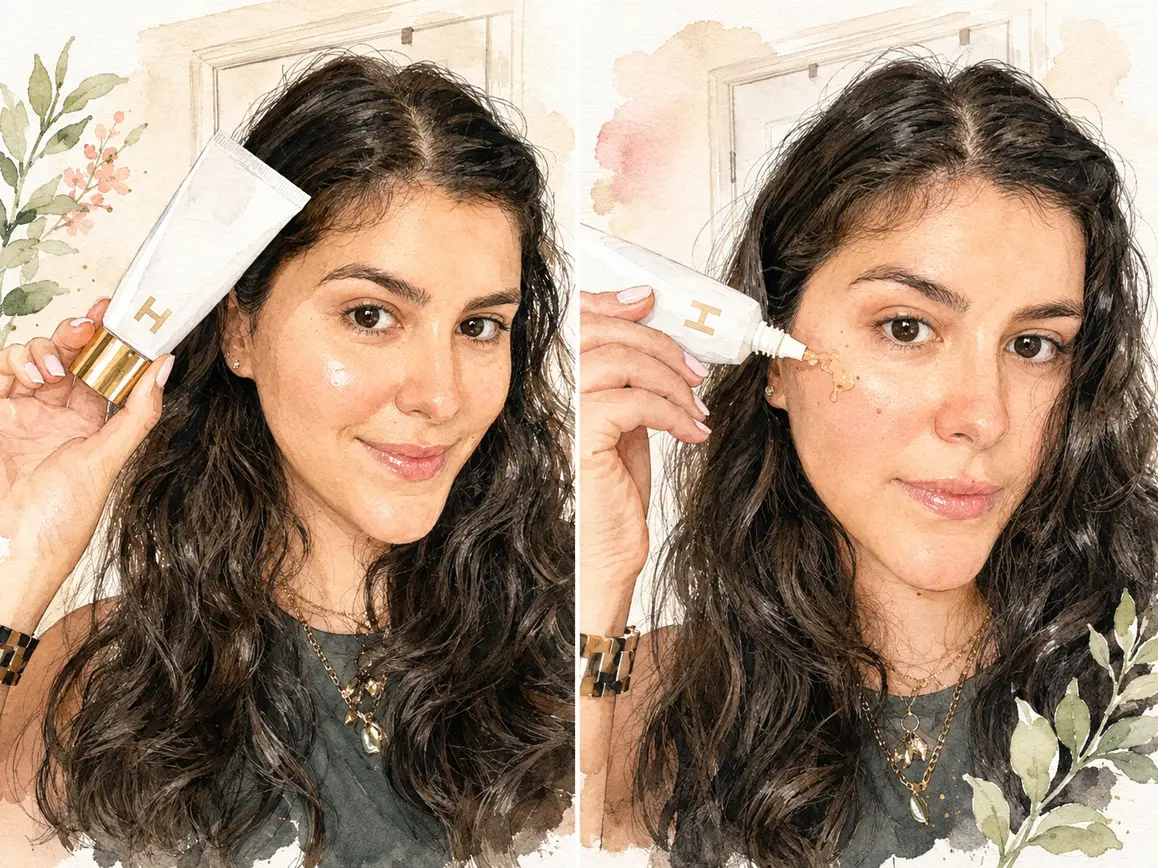
At 9:12 on a warm Saturday morning, I checked my face in the car mirror and saw a clear orange line running from my ear to my chin. The skin tint that had looked soft and glowing under my bathroom light now looked shiny across my forehead, dry around my nose, and much warmer than my neck.
I was taking Bentley and Harley to a school event, so I had no time to wash everything off. I rubbed the edge with a tissue, added powder, and hoped nobody would notice.
The powder made it worse.
By the time we arrived, the tint had gathered around the sides of my nose and settled into a dry area near my mouth. Every time someone lifted a phone for a photo, I turned my face toward the side that looked slightly better.
That was the morning I stopped believing that the words “radiant skin tint” told me anything useful.
I had not bought a bad product. I had bought the wrong finish, the wrong undertone, and the wrong formula for the way my skin looked that week.
More importantly, I had bought it for the person I hoped to look like in a product video. I had not bought it for my real face, my real morning routine, or the Texas heat waiting outside my front door.
I Mistook Shine for Healthy-Looking Skin
The tint had looked beautiful when I first applied it. My bathroom has warm bulbs, and that light softened everything.
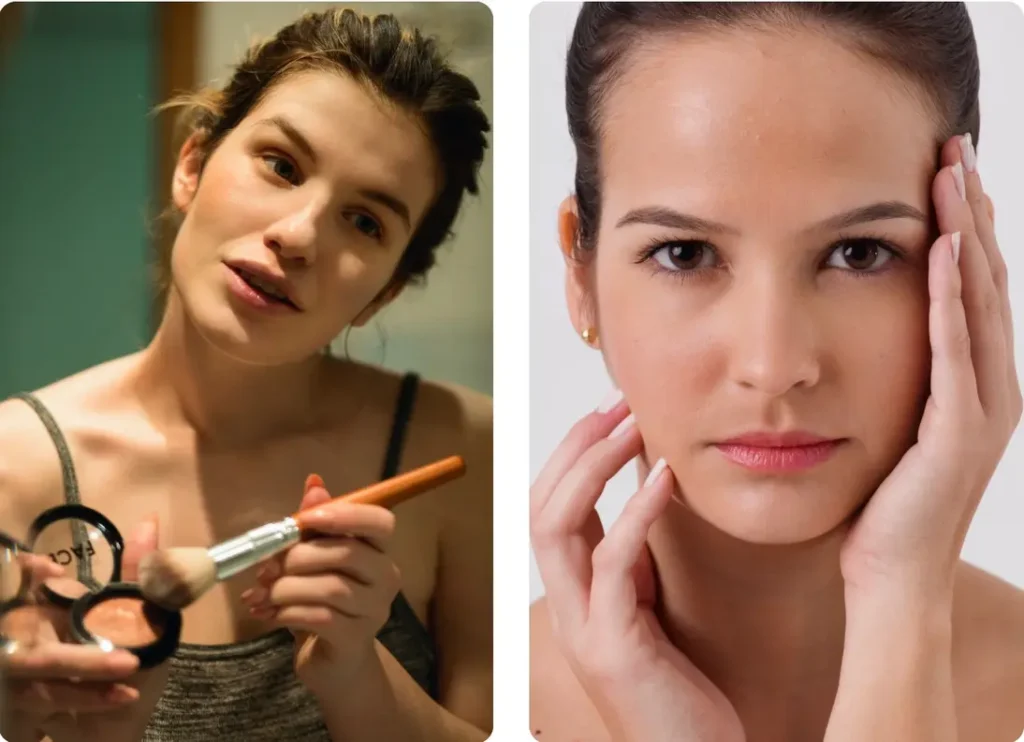
The formula felt silky. My cheeks reflected the light, and the coverage was thin enough to let my freckles show.
I decided that meant it looked natural.
What I failed to notice was that the tint was sitting on top of my sunscreen rather than settling into it. I had also applied more than I needed because the first layer did not cover the redness around my nose.
The second layer gave me more shine but very little extra coverage.
I then added a cream blush, a liquid highlighter, and a face mist because I had seen those products used together in a short beauty video. By the time I finished, nearly every layer on my face had been made to add moisture or glow.
There was nothing to balance them.
The result looked soft for ten minutes and greasy after forty.
That difference matters because radiance is not simply the amount of light bouncing from your face. Healthy-looking makeup still needs balance, evenness, and a finish that suits the skin underneath it.
My skin was slightly dry around my mouth but oily across my forehead and nose. I had treated my whole face as if it had one simple need.
It did not.
The Beauty Assistant Was Technically Right
I returned to the shop a few days later with the bottle in my bag. I expected the assistant to agree that the formula had failed.
Instead, she looked at the shade, checked my jaw in daylight, and said, “This is warmer than your skin, and the product is meant to look very dewy.”
She was right.
The product description had clearly said that the finish was luminous. The shade name had also included the word “warm.”
I had ignored both details because the product looked beautiful on someone online whose skin tone, undertone, routine, climate, and lighting were different from mine.
The assistant asked how I had prepared my skin. I told her about the moisturizer, sunscreen, tint, cream blush, liquid highlighter, and mist.
She paused and said, “That is a lot of glow in one place.”
It was not the answer I wanted, but it was the answer I needed.
I had been judging the product by the first five minutes after application. I had not judged it after an hour, in natural light, while moving through a normal day.
I also had not considered that my skin changes. A formula that suits me during a dry winter week may feel very different during a humid summer afternoon.
That is why I now think about complexion makeup in the same way I think about the small seasonal changes I make to my skincare routine. My face is not a fixed surface with the same needs every month.
The Real Meaning of a Natural Finish
Before this mistake, I thought a natural finish meant sheer coverage.
I now think it means something more practical.
A natural finish is one that lets me stop thinking about my face.
It does not need to make every pore disappear. It does not need to hide freckles, fine lines, or the normal movement around my eyes and mouth.
It should even out the areas I want softened while still looking like skin from a normal talking distance.
The failed tint did not look unnatural because it was sheer. It looked unnatural because the shade was wrong and the finish did not suit the rest of my routine.
A full-coverage product in the correct shade can sometimes look more natural than a sheer tint with the wrong undertone.
That was the distinction I had missed.
Coverage and natural appearance are not the same thing.
The Counter-Example Happened on an Ordinary Tuesday
A few weeks later, I tried again before a normal weekday lunch.
This time, I did not create a full beauty routine around the tint. I used my regular moisturizer, applied sunscreen, and waited before adding makeup.
I tested two shades along my jaw instead of on the back of my hand. Then I stood beside a window and waited for them to dry.
One shade looked slightly pink after twenty minutes. The other almost disappeared into my neck.
I chose the second one.
I applied a thin layer with my fingers and added a small amount only where I had redness. I used powder across the centre of my forehead and beside my nose, but left my cheeks alone.
Before leaving home, I took one photo near the window and another outside.
For the first time, I could see what I had been trying to achieve. My skin looked more even, but it did not look coated.
Three hours later, I checked the mirror in a restaurant bathroom. The tint had faded slightly around my nose, but it had faded cleanly.
There were no orange edges, dry islands, or thick patches.
I did not look dramatically different. I looked rested.
That was the result I had been trying to buy all along.
The Best Skin Tint Is a Job Match
I no longer ask which skin tint is the best before asking what job I need it to do.
Some formulas are made to look very dewy. Others are meant to soften shine or create a blurred finish.
Some offer barely visible pigment. Others can be built toward light or medium coverage.
A product may perform its intended job perfectly and still be wrong for me.
This is the note I now keep under the label 1.Anchor: judge the job before judging the product.
It sounds obvious, but beauty marketing makes it easy to forget. Words such as glow, serum, hydration, blur, clean, fresh, and skin-like can create a mood without explaining how the product will behave after four hours.
The Federal Trade Commission says advertising claims must be truthful, not misleading, and supported by evidence. That does not mean every attractive phrase on a bottle is a measured promise. It means I need to separate clear product facts from the feeling created by the campaign. The FTC’s advertising and marketing rules helped me understand why specific evidence-based claims deserve more weight than soft beauty language.
Shade Comes Before Finish
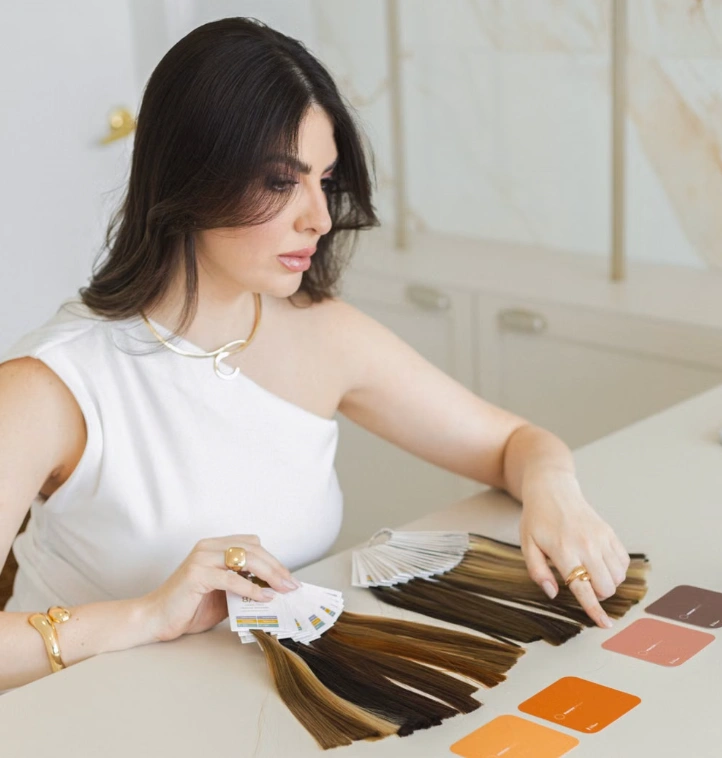
My first mistake was choosing a finish I liked. My bigger mistake was accepting a shade that was only close.
Skin tints can be forgiving because their coverage is sheer, but sheer pigment can still look orange, pink, grey, or yellow when the undertone is wrong.
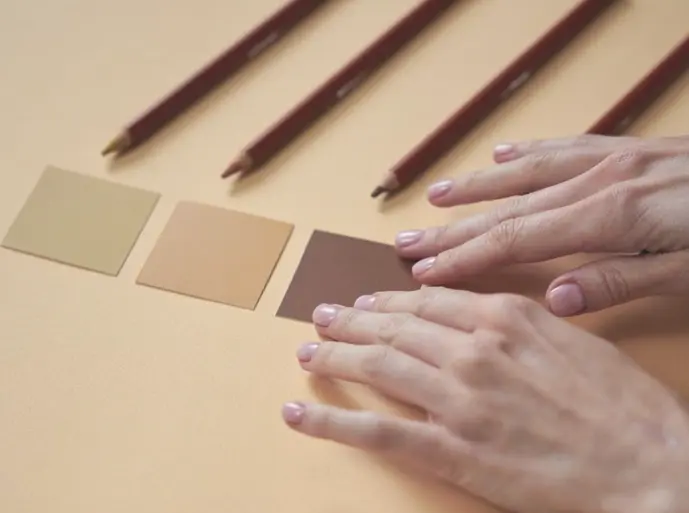
I now test shades along the jaw rather than on my hand. My hands receive different sun exposure and do not always match my face or neck.
I also wait.
Some formulas change slightly as they dry or mix with skin oils. A shade that looks right after thirty seconds may become warmer after fifteen minutes.
Online shade tools can provide a starting point, but lighting affects how skin color appears in a photograph. A selfie taken under a warm lamp can lead to a very different suggestion than one taken beside a window.
When possible, I test two nearby shades and look at them in daylight.
I am not searching for a tint that makes my face lighter, darker, warmer, or more golden. I want the shade that creates the least visible break between my face, jaw, and neck.
Our FsiBlog article about making simple outfits look more put-together makes a similar point about clothing. Small details often matter more than adding another product.
A correct base shade does more for the final look than an extra highlighter ever did for me.
Finish Must Match the Skin I Have That Day
A dewy tint can look fresh on dry or balanced skin. On a humid day, over several rich skincare layers, that same formula may become too reflective.
A blurred or natural-matte tint may last better across an oily forehead. It may also catch around dry areas when the skin has not been prepared gently.
Neither finish is automatically better.
The useful question is where the product will go and what it will sit on top of.
My own face has different zones. My cheeks can feel comfortable with a hydrating finish, while my forehead often needs less shine.
I stopped trying to solve this by buying two completely different bases. Instead, I adjust the preparation and placement.
I use less moisturizer where I become oily. I add powder only where the tint tends to move.
I also resist the urge to place highlighting products everywhere. Light on the high points of the face can look fresh. Light across every pore, fold, and oily area can make the makeup look less controlled.
Four Very Different Tints Taught Me Four Different Jobs
I do not think there is one bottle that deserves to be called the best skin tint for every person. The more useful comparison is what each formula appears designed to do.
| Skin Tint | Main Job | Who May Appreciate It | What I Would Check First |
|---|---|---|---|
| ILIA Super Serum Skin Tint SPF 40 | Strong dewiness with light-to-medium coverage and mineral SPF | People who enjoy a visibly hydrated finish | Whether the glow becomes too much over rich skincare |
| Fenty Beauty Eaze Drop | Natural-looking blur with light-to-medium coverage | People who want less shine and more soft focus | Whether dry areas need extra preparation |
| Hourglass Veil Hydrating Skin Tint | Sheer coverage with a dewy, moisture-focused finish | People whose skin often feels dry or tight | Whether the shade range contains a close undertone match |
| Lisa Eldridge Skin Enhancing Tint | Lightweight evening with a soft luminous effect | People who want very light, quiet coverage | Whether it offers enough coverage for the areas they want softened |
The ILIA Super Serum Skin Tint SPF 40 is currently offered in 30 shades on the brand’s US site. Its mineral-SPF formula is clearly positioned around dewiness, hydration, and light-to-medium coverage. That can be useful for someone who likes a wet-looking glow, but it may not be the easiest match for a very oily day or several rich layers underneath.
The Fenty Beauty Eaze Drop Lightweight Blurring Skin Tint currently has 25 flexible shades. The brand describes it as oil-free, long-wearing, naturally finished, and able to build from light toward medium coverage. That gives it a different job from a very dewy serum tint.
The Hourglass Veil Hydrating Skin Tint is sold in 18 shades and is positioned around sheer coverage, hydration, and a dewy finish. Its purpose is not strong correction or oil control. It is for someone who wants moisture and a light veil of pigment.
The Lisa Eldridge Seamless Skin Enhancing Tint is described by the brand as silky, lightweight, luminous, and made with 78 percent skincare ingredients. It sits closer to the “almost nothing” end of the coverage range, which can be beautiful when a person wants quiet evening rather than clear concealment.
These details do not prove that one formula will look good on a particular face. They simply show that the bottles are designed around different priorities.
My Skin Preparation Was Part of the Failure
I used to blame the tint when makeup separated, but sometimes the layers underneath were the real problem.
I had been applying skincare and makeup one after another without allowing anything to settle. My sunscreen was still moving when I rubbed the tint over it.
I also mixed products with very different textures. A rich cream, slippery sunscreen, serum tint, and face mist created too many moving layers.
Now I keep the routine simple on makeup days.
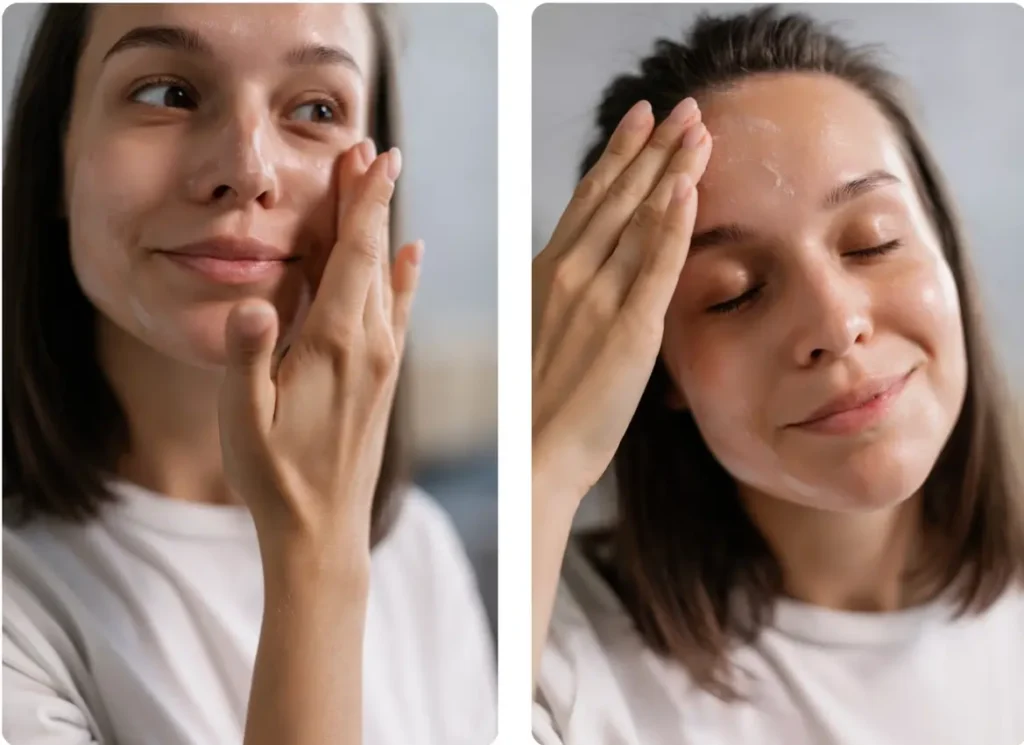
I apply skincare in thin layers and give sunscreen time to form an even layer. I press the tint on rather than rubbing hard across the face.
This does not mean every product must come from the same brand. It means I watch how the textures behave together.
Pilling is not always a sign that a product is low quality. It can happen when too much is applied, when layers are rubbed heavily, or when certain textures do not sit well together.
The same skin tint can look smooth over one sunscreen and break apart over another.
My FsiBlog notes on reducing early signs of skin damage also remind me that makeup should sit on top of a basic care routine. It should not replace daily skin protection.
SPF in a Skin Tint Changed How I Read the Label
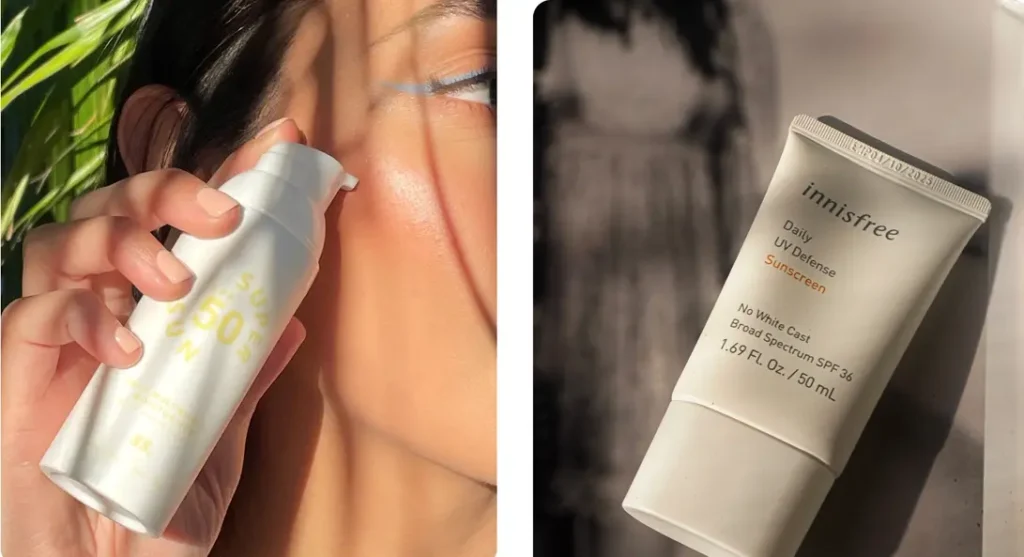
I once treated SPF in makeup as permission to skip a separate sunscreen.
The problem was the amount.
I use only a small amount of skin tint because I want sheer coverage. The amount of sunscreen dermatologists advise using on the face is much greater than the amount of tint I normally apply.
The American Academy of Dermatology advises using about one teaspoon of sunscreen for the face, roughly enough to run along the index and middle fingers. I would never apply that much pigmented skin tint and expect it to look light or natural.
I now treat SPF in a tint as an added layer, not my only plan.
Products carrying SPF claims are regulated differently from ordinary cosmetics in the United States because sunscreen is treated as a drug as well as a cosmetic. The FDA’s explanation of how cosmetics are regulated also explains that ordinary cosmetic products and ingredients, apart from color additives, are generally not approved by the FDA before sale.
Tinted sunscreens containing iron oxides may offer added protection against visible light, which can matter for some people with pigmentation concerns. The Skin Cancer Foundation’s explanation of tinted sunscreen and visible light gives useful context, but a tint still needs to be used according to its label and in a suitable amount.
This was another reframe for me. A skin tint can contain sunscreen without replacing every part of a proper sun-protection routine.
Skincare Ingredients Do Not Guarantee Skincare Results
Many current skin tints include ingredients that people recognise from skincare. Hyaluronic acid, niacinamide, squalane, and plant extracts often appear in product descriptions.
That can make the formula feel more comfortable. It does not mean a tint should be treated as a treatment for a skin condition.
I now read ingredient claims with two questions in mind.
How much of the ingredient is present?
What does the finished product actually promise?
A familiar ingredient name on the front of a bottle does not tell me its amount, its role in the full formula, or whether it will suit my skin.
The word “serum” can describe a light texture. It does not automatically mean the product can replace a separate skincare step.
I also stopped treating “natural” or “clean” as a safety guarantee. The FTC has taken action over misleading natural-product claims, and its wider guidance makes clear that companies should be able to support what they say.
The most useful evidence remains simple: a complete ingredient list, clear product directions, realistic claims, and how my own skin responds.
I Now Test for Irritation Before a Full Face
My original failure was mostly cosmetic, but I have also had products make my skin feel itchy or hot.
A beautiful finish does not matter when I want to wash the product off after twenty minutes.
The American Academy of Dermatology’s method for testing a new skin-care product suggests applying it to a small area twice a day for seven to ten days before broader use. That is more careful than the quick one-hour test I used to consider enough.
I pay more attention when a formula contains fragrance or when my skin barrier already feels irritated.
If a tint causes burning, swelling, a rash, or ongoing irritation, I stop using it. I do not keep applying it because it was costly or popular.
The FDA’s current consumer advice also says to stop using a cosmetic product that causes a reaction and contact a health professional when needed.
Price Told Me Less Than I Expected
I used to assume that an expensive skin tint would be more refined, more natural, and easier to wear.
That has not always been true.
Price can reflect packaging, branding, ingredient choices, distribution, or the cost of developing a larger shade range. It cannot tell me whether the undertone will match or whether the finish will suit my skin.
A lower-priced tint can outperform a luxury one when it offers the correct shade and texture.
A costly formula may still be worth it when the shade is unusually good, the bottle lasts, and I reach for it often. The mistake is treating the price as evidence before testing the product.
I now calculate value in uses rather than the first purchase amount.
A $50 bottle worn three times before being pushed into a drawer is expensive. A $25 tint used several mornings each week may be better value.
Return and exchange policies also matter when buying complexion products online. Shade matching is uncertain, and a flexible return policy reduces the risk of paying for a bottle that cannot be worn.
The Four-Hour Check Replaced the First Impression
Beauty counters, product videos, and bathroom mirrors usually show the first few minutes.
My life happens after those minutes.
A real test includes heat, talking, eating, school runs, errands, and touching my face without noticing.
I now check a tint at three points:
Just After Application
I look for obvious shade problems, streaks, pilling, and areas where the formula will not blend.
After One Hour
I check whether the tint has become warmer, shinier, drier, or more settled than it first appeared.
After Four Hours
I look at where it has faded, gathered, transferred, or separated.
I do not expect perfect makeup after four hours. I look for graceful wear.
A good tint may become lighter, but it should not turn into separate patches across my face.
The four-hour check has saved me from several purchases that looked lovely in the first photograph.
The Product That Finally Worked Was Less Exciting
The tint I kept was not the one with the prettiest campaign or the strongest glow.
It was the one that matched my neck.
Its finish was described as natural rather than radiant. The formula looked almost plain when I first applied it.
After an hour, however, it looked better than it had at the start. It softened into the skin rather than becoming more obvious.
I used a small amount, added concealer only where needed, and left my freckles visible.
At the next school event, I did not check every reflective window. I did not turn away from photographs or try to repair my face with another layer of powder.
I forgot about the tint.
That was the payoff.
The best skin tint did not make me look like a different person. It removed one small distraction from my morning and let me get on with the day.
Summary
I would like to blame beauty marketing for the orange line along my jaw, but the honest answer is that I ignored clear information.
The shade said warm. The finish said dewy. My skin was already shiny through the centre, and I applied several glowing products on top of one another.
The company had explained the product. I had decided that the beautiful result in someone else’s video mattered more than the details on my own face.
That mistake changed the way I judge complexion products.
I no longer search for a bottle that promises radiance by itself. I look for the right undertone, a finish that suits the day, a formula that works over my sunscreen, and wear that becomes less noticeable rather than more noticeable.
Natural radiance was never hiding inside one perfect skin tint.
It appeared when I stopped fighting my real skin and chose a product willing to work with it.