

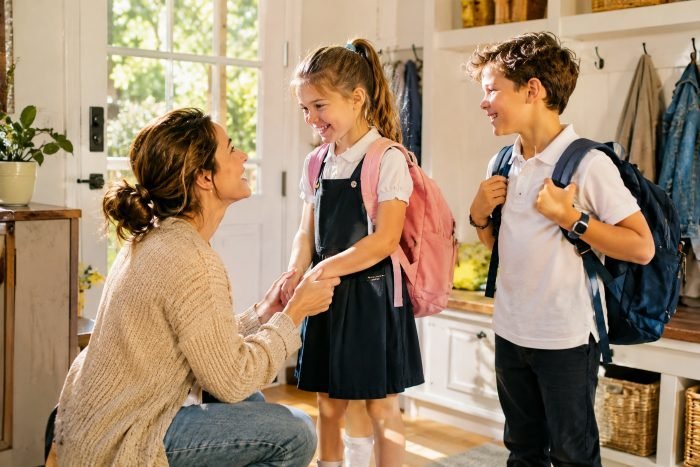
Our mornings used to end with a rushed “have a good day” shouted from the car window. A while ago I added one small thing to our routine. Before the boys climb out of the car at school, we say a few short sentences together. “I am brave. I can do hard things. I am kind to myself and others.” It takes less than a minute, and it has quietly become one of my favorite parts of the day. If you have been curious about positive affirmations for kids, this post shares the exact phrases we use, how we started, and what I have noticed since.
What Are Positive Affirmations For Kids?
Affirmations are short, positive statements a child says about themselves. They are simple sentences like “I am a good friend” or “I learn from my mistakes.” The idea is that the words we repeat often become the voice we hear in our heads when things get hard.
They are not magic, and they do not replace real support from parents and teachers. But they can be a gentle way to help children notice their strengths and talk to themselves with more kindness.
Why Self Esteem Matters So Much
Kids with a healthy sense of self are more willing to try new things, bounce back from mistakes and stand up for themselves. The American Academy of Pediatrics explains how children build healthy self esteem, and much of it comes from feeling loved, feeling capable and having chances to succeed.
Positive affirmations for kids fit into that bigger picture. They work best alongside real experiences of trying, failing and trying again.
Positive Affirmations For Kids We Use Every Day
For Confidence
- I am brave.
- I can do hard things.
- I believe in myself.
- My ideas matter.
- I am proud of who I am.
For Mistakes And Learning
- Mistakes help me learn.
- I keep trying, even when it is hard.
- I do not have to be perfect.
- My brain grows when I practice.
- It is okay to ask for help.
Bentley, who gets frustrated quickly, likes “I keep trying, even when it is hard.” He says it under his breath when he is stuck on homework, and I have heard it out on the soccer field too.
For Kindness And Friendship
- I am a good friend.
- I am kind to myself and others.
- I can share and take turns.
- I make the world a little better.
For Big Feelings
- My feelings are okay.
- I can take a deep breath and calm down.
- I am safe and loved.
- This feeling will pass.
Harley, my quieter son, chose “I am safe and loved” as his favorite. He says it at bedtime, and it seems to settle him on nights when his mind is busy.
For School Days
- I am ready to learn today.
- I can listen and focus.
- I am smart in my own way.
- I will try my best today.
How To Start Using Positive Affirmations For Kids At Home
Keep Them Short And True
Kids sense when something feels fake. “I am the best soccer player in the world” may not land. “I am getting better every time I practice” feels true and still builds them up.
Let Kids Choose Their Own
I wrote about twenty positive affirmations for kids on index cards and let each boy pick three that felt right. When they choose, the words feel like theirs instead of something Mom is making them say.
Tie Them To A Daily Moment
Habits stick when they attach to something that already happens. For us it is the car ride to school and bedtime. Other families do it at breakfast or while brushing teeth.
Say Them Together
I say mine too. My kids see me practicing kindness toward myself, which might be the most important part. If you want ideas for your own routine, my post on daily self care practices that strengthen self worth shares what I do.
Make Them Visible
We put affirmation cards on the bathroom mirror and inside lunchboxes. A sticky note on the mirror is a small reminder each morning.
Fun Ways To Practice Positive Affirmations For Kids
- Affirmation jar. Write phrases on slips of paper, and each child pulls one out in the morning.
- Mirror talk. Kids look in the mirror and say their affirmation with a big smile.
- Art project. Let them decorate a poster with their favorite phrases.
- Affirmation songs. Make up a silly tune. My boys remember anything with a beat.
- Bedtime gratitude. Pair an affirmation with one thing they are thankful for.
Affirmations also pair nicely with simple calming exercises. My guide to simple mind body exercises includes breathing ideas that work well for kids too.
Positive Affirmations For Kids Work Best With Encouragement
Words matter, but actions build confidence too. KidsHealth shares ways to boost a child’s self esteem, including letting kids help others, praising effort and being a good role model. Helping a neighbor or a younger child gives kids proof that they are capable and kind.
A few things I try to do alongside our affirmations:
- Praise effort, not just results.
- Give them real responsibilities at home.
- Let them solve small problems on their own.
- Avoid harsh criticism and comparisons between siblings.
When Affirmations Are Not Enough
Positive affirmations for kids are a supportive tool, not a treatment. If your child seems persistently anxious, withdrawn or down on themselves, talk with their pediatrician or school counselor. The Child Mind Institute has thoughtful resources on confidence and self esteem in children that can help you understand what is going on and when to seek support.
Note: This post shares personal experience and is not a substitute for professional advice.
Positive Affirmations For Kids By Age
Children understand words differently as they grow. Matching affirmations to their age makes them feel natural instead of forced.
Toddlers And Preschoolers
Keep phrases very short and simple. Little ones learn through repetition, songs and your tone of voice.
- I am loved.
- I am safe.
- I am a good helper.
- I can try.
- I am happy to be me.
Say them while cuddling, during bath time or as part of a bedtime song.
Early Elementary Kids
At this age, children start comparing themselves with classmates. Affirmations that focus on effort and growth help.
- I can learn anything with practice.
- I am a good friend.
- I can be brave when things feel new.
- I am proud of my hard work.
- My mistakes help me grow.
Older Kids And Tweens
Older children may roll their eyes at anything that feels babyish. Let them write their own and choose wording that sounds like them.
- I am in charge of my effort.
- I can handle setbacks.
- My worth is not based on grades or likes.
- I choose kindness, even when it is hard.
- I can ask for help without feeling embarrassed.
Teens
Teens face pressure from school, friends and social media. Affirmations at this age work best when they feel honest and private.
- I am enough as I am.
- I can make my own good choices.
- My feelings are valid, and they will change.
- I am growing into who I want to be.
- I can set boundaries that protect my peace.
Teens might prefer writing affirmations in a journal or keeping them on a phone note rather than saying them aloud.
Positive Affirmations For Kids In Tough Moments
Some of the most useful affirmations are the ones kept ready for specific challenges.
Before A Test
- I studied, and I am ready.
- I can take a deep breath and focus.
- One question at a time.
Starting At A New School
- New places become familiar places.
- I can make new friends.
- It is okay to feel nervous and brave at the same time.
After A Hard Day
- Tomorrow is a fresh start.
- One bad day does not make me bad.
- I did my best with what I had today.
Before Sports Or Performances
- I have practiced, and I am ready to have fun.
- Win or lose, I am learning.
- My team needs me, and I need my team.
When Feeling Left Out
- I matter, even when I feel alone.
- The right friends will find me.
- I can be my own good friend today.
How Parents Can Model Positive Self Talk
Children learn more from what we do than what we say. If I call myself stupid after dropping a glass, my boys hear that. If I say “oops, I will clean it up,” they learn that mistakes are normal.
- Speak kindly about yourself in front of your children.
- Say your own affirmations out loud during daily routines.
- Admit mistakes and show how you fix them.
- Avoid harsh comments about bodies, including your own.
- Celebrate effort in yourself, not just success.
Turn Positive Affirmations For Kids Into A Family Habit
Habits stick best when they become part of family life rather than a separate task.
- Breakfast round. Everyone shares one affirmation before eating.
- Car ride ritual. Say affirmations together on the way to school.
- Bedtime reflection. End the day with an affirmation and a moment of gratitude.
- Weekly family card. Choose one family affirmation each week and post it on the fridge.
- Lunchbox notes. Slip a short affirmation into lunch once or twice a week.
Affirmation Activities For Classrooms And Groups
Teachers, coaches and group leaders can use positive affirmations for kids too.
- Start the day with a group affirmation.
- Create an affirmation wall where children add their own sticky notes.
- Use compliment circles, where each child says something kind about the person next to them.
- Pair affirmations with a short breathing exercise before tests.
- Let children decorate affirmation stones to keep on their desks.
Mistakes To Avoid
- Forcing it. If a child resists, step back and try a lighter approach.
- Using untrue statements. Choose phrases your child can believe.
- Replacing real feelings. Affirmations should never be used to dismiss sadness or anger.
- Making it a performance. Some kids prefer to say them quietly or in their head.
- Giving up too soon. Changes in self talk take weeks or months.
Signs Affirmations Are Helping
You may not notice changes overnight, but over time you might see small shifts.
- Your child tries new things with less fear.
- They bounce back more quickly after mistakes.
- They speak more kindly about themselves and others.
- They use affirmations on their own, without reminders.
The day I heard Bentley whisper “I keep trying” while struggling with a tricky puzzle, I knew our small morning habit had taken root. Positive affirmations for kids are simple, free and easy to start today.
Frequently Asked Questions
At What Age Can Kids Start Using Affirmations?
Even preschoolers can repeat simple phrases like “I am loved.” As kids grow, they can choose and write their own.
How Many Affirmations Should A Child Say?
Two or three is plenty. A few meaningful phrases repeated daily work better than a long list.
Do Positive Affirmations For Kids Really Work?
They can help children practice kinder self talk, especially when combined with real encouragement, responsibilities and support from adults.
What If My Child Feels Silly Saying Them?
That is normal. Say them together, keep it light and let your child pick phrases that feel true. Most kids warm up within a week or two.
Can Positive Affirmations for Kids Help With Anxiety?
They can be one calming tool among many, especially when paired with slow breathing and reassurance from a trusted adult. They are not a treatment for anxiety, so speak with a pediatrician or counselor if worries are frequent or intense.
Should Positive Affirmations for Kids Be Said Out Loud?
Saying them aloud can make them feel more real, but quiet repetition or writing them down works too. Let your child choose the way that feels comfortable.
How Long Does It Take for Positive Affirmations for Kids to Make a Difference?
Every child is different. Some parents notice small changes in self talk within a few weeks, while for others it takes months. Consistency matters more than the exact words.
Where Can I Display Positive Affirmations for Kids?
Bathroom mirrors, bedroom doors, lunchboxes, the fridge and the inside cover of a school notebook all work well. Choose places your child sees every day.