


The British kids desk and chair set decision is more ergonomically consequential than either piece purchased independently — the relationship between the desk surface height and the chair seat height determines whether the British child’s study posture is correctly supported or progressively strained across the concentrated autumn and winter study sessions that Britain’s October-to-March indoor season concentrates. This Q4 2026 October guide addresses the specific ergonomic pairing requirements, the quality specifications that distinguish genuinely beneficial matched sets from coordinated aesthetic sets, and the British autumn context that makes October the most practically motivated purchase month.
Why the Desk-Chair Pairing Is More Important Than Either Piece Alone
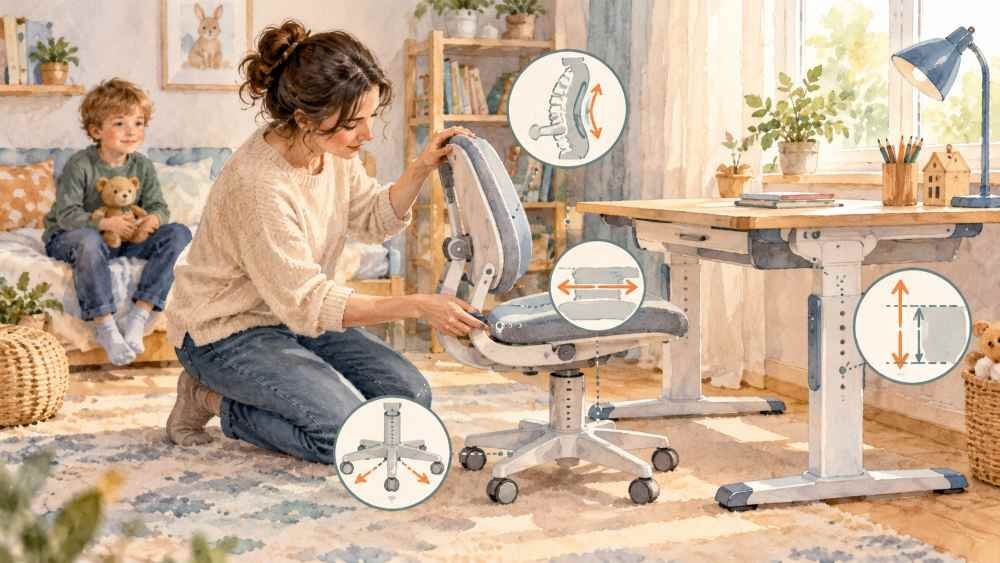
What specific ergonomic relationship between the British kids desk and chair determines study posture quality?
The ergonomic relationship between a British kids desk and chair is governed by one fundamental measurement: the difference between the desk surface height and the chair seat height — the ‘desk-to-seat differential’ — which should equal the British child’s seated elbow height above the seat surface. For most British primary school children, this differential is 22 to 30 cm: a British Year 4 child with a seated elbow height of 26 cm above the chair seat should have a desk surface 26 cm above their specific chair seat height. A desk-chair combination where this differential is significantly larger — the desk is too high relative to the chair — causes the British child to raise their shoulders to reach the desk surface, creating the trapezius and upper back strain that accumulates across the autumn term’s homework sessions. A combination where the differential is significantly smaller — the desk is too low relative to the chair — causes trunk forward flexion and lower back strain. A quality matched British kids desk and chair set specifies both heights explicitly and confirms the differential is within the ergonomically correct range for the stated age group.
Autumn Term Posture Stakes in Britain
Why does the British autumn term make the desk-chair pairing the most consequential ergonomic decision of the year?
The British autumn term — running from September through December with the highest assessment concentration of the school year — produces the longest sustained daily study periods that most British school children experience. A British Year 6 student who completes 45 to 60 minutes of daily homework on an incorrectly specified desk-chair combination from October through December accumulates approximately 50 to 70 hours of postural strain in the 10 weeks before Christmas. A Year 10 student completing 90 to 120 minutes of daily GCSE coursework on an incorrect combination accumulates 90 to 120 hours across the same period. The autumn term’s assessment concentration makes these accumulated postural consequences most directly linked to study performance — a British child experiencing shoulder, neck, or back discomfort at their desk is less likely to sustain concentration for the extended study sessions that autumn’s assessment demands require.
| British School Year | Desk Height | Chair Seat Height | Desk-to-Seat Differential | Autumn Term Daily Study (approx) |
| Year 1-2 (age 5-7) | 52-56 cm | 30-32 cm | 22-24 cm | 15-20 min |
| Year 3-4 (age 7-9) | 56-62 cm | 32-35 cm | 24-27 cm | 20-35 min |
| Year 5-6 (age 9-11) | 60-66 cm | 34-38 cm | 26-28 cm | 35-60 min |
| Year 7-9 (age 11-14) | 64-72 cm | 38-43 cm | 26-29 cm | 60-90 min |
| Year 10-11 (age 14-16) | 68-76 cm | 40-46 cm | 28-30 cm | 90-120 min |
| Year 12-13 (age 16-18) | 70-76 cm | 42-48 cm | 28-30 cm | 120-240 min |
Quality vs Aesthetic Matching: What British Parents Must Distinguish
What distinguishes a genuinely ergonomic British kids desk and chair set from a coordinated aesthetic set?
The British kids desk and chair market contains two distinct product types that appear similar in marketing but perform very differently in the British autumn study context. The genuinely ergonomic matched set specifies both the desk surface height and the chair seat height explicitly, confirms the desk-to-seat differential falls within the ergonomically correct range for the stated age group, and uses a study chair with back support — lumbar curvature support and adjustable back height — that maintains the British child’s spinal posture through extended autumn study sessions. The coordinated aesthetic set produces a visually matched desk and chair in complementary colours or materials without specifying either height explicitly, using a decorative chair design that may not provide adequate lumbar support for extended British autumn study sessions. British families should request both specific height measurements — desk surface and chair seat — from the UK retailer before purchasing any matched set marketed for study use.
Chair Quality Test for British Autumn Study
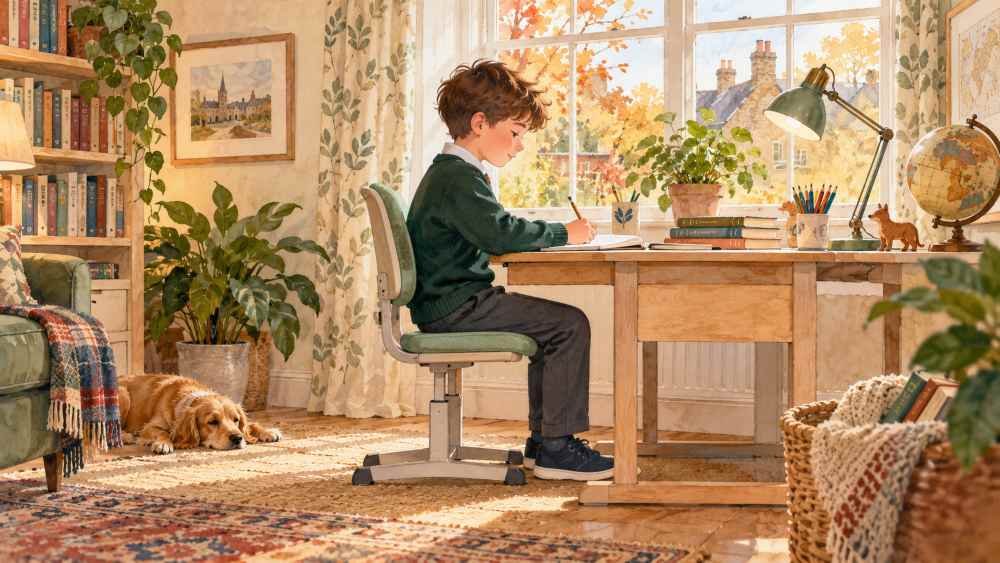
What chair quality tests should British parents apply to any kids desk and chair set in October 2026?
Three specific chair quality tests distinguish a genuinely study-appropriate British kids desk chair from a decorative alternative. First, the back support test: the chair back should contact the British child’s lumbar region — the lower back curve — when the child is seated with their feet flat on the floor and their back against the chair back. A chair back that is too short (ending at mid-back rather than lower back) or too straight (no lumbar curvature) does not provide adequate spinal support for extended British study sessions. Second, the seat depth test: the seat should leave 3 to 5 cm of clearance between the seat front edge and the seated child’s knee — insufficient depth means the thighs are unsupported; excessive depth means the child cannot sit back to the lumbar support. Third, the stability test: the chair should not tip when the British child leans back at a moderate angle during the restless seating positions that concentrated autumn homework produces in primary school-aged British children.
Frequently Asked Questions
Should British families buy a matched desk and chair set or purchase pieces separately?
A matched British kids desk and chair set from the same manufacturer provides the most reliable ergonomic pairing — both pieces are designed with the desk-to-seat differential and the study posture support requirements specified together. Mixing a quality desk from one British brand with a chair from another introduces the risk of a desk-to-seat differential that falls outside the ergonomic range without either brand’s specification being individually incorrect. For British families purchasing separately, confirm both the desk surface height and the chair seat height independently and verify the differential falls within the 22 to 30 cm range appropriate for the specific British child’s age and seated elbow height before purchasing.
How often should a British kids desk and chair set be ergonomically reassessed?
A British kids desk and chair set should be ergonomically reassessed annually — most practically at the start of the autumn term or in October at the beginning of the study-intensive British indoor season. British primary school children grow an average of 5 to 8 cm annually, shifting the correct desk surface height by 2 to 4 cm per year. An adjustable British kids desk and chair set addresses this annual reassessment by providing height adjustment within a range that serves multiple consecutive school years — the most practical long-term solution for British families who want to avoid the repeated purchase disruption of replacing fixed-height study furniture annually.
Is a gaming chair appropriate as a British kids study chair?
A gaming chair — designed for the reclined, screen-distance posture of extended gaming sessions — is not ergonomically appropriate as a British kids study chair for homework and writing tasks. Gaming chairs typically have excessive recline, poor lumbar support at the upright study position, and arm rests that raise the shoulders above the correct elbow-desk-surface position for a writing and typing posture. A purpose-designed British study chair with correct lumbar support, appropriate seat depth, and height adjustment within the specific child’s ergonomic range is the appropriate choice for British autumn term study sessions, regardless of the gaming chair’s appeal to the British child.
Does the Consumer Rights Act 2015 cover a British kids desk and chair set that causes postural discomfort?
A British kids desk and chair set that is marketed as ergonomically appropriate for a specific age range but does not provide adequate postural support — confirmed by a qualified ergonomics assessment — may be considered not of satisfactory quality or not fit for its stated purpose under the Consumer Rights Act 2015. The practical challenge is establishing that the postural discomfort results from the product’s specification rather than incorrect assembly or use. British families who experience this issue should contact the specific UK retailer with the specific ergonomic concern and request assessment against the product’s stated ergonomic claims before escalating to the Consumer Rights Act 2015 statutory remedies.
Final Thoughts
The British kids desk and chair set’s value in Q4 2026 is most fully realised when both the desk surface height and the chair seat height are confirmed against the specific British child’s ergonomic requirements — producing the correctly specified desk-to-seat differential that supports study posture through the British autumn term’s most demanding assessment weeks. British families can browse current kids desk and chair set options at boori.co.uk/collections/study-desks-chairs