

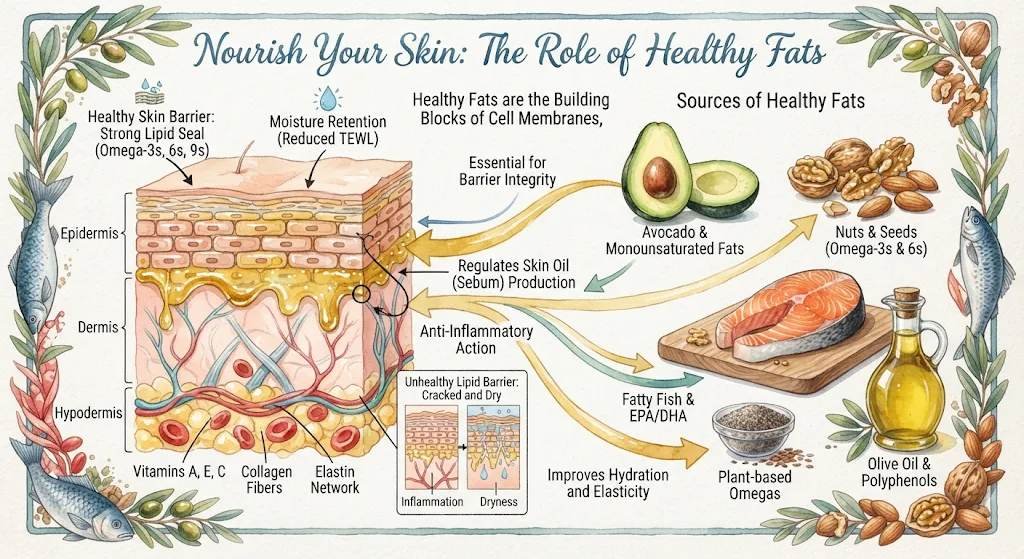
Skin reflects more than the products applied to its surface. The fats, proteins, and colorful plant compounds on your plate supply materials that support the skin barrier, help it retain moisture, and protect cells from everyday oxidative stress. Marine foods are especially useful because they combine omega-3 fatty acids with protein and micronutrients in a form that fits easily into lunch or dinner.
Food cannot replace sunscreen or medical skin care. Still, a consistent eating pattern built around nutrient-dense seafood, vegetables, and healthy fats can support smoother, more comfortable skin over time.
Science of Dermal Hydration
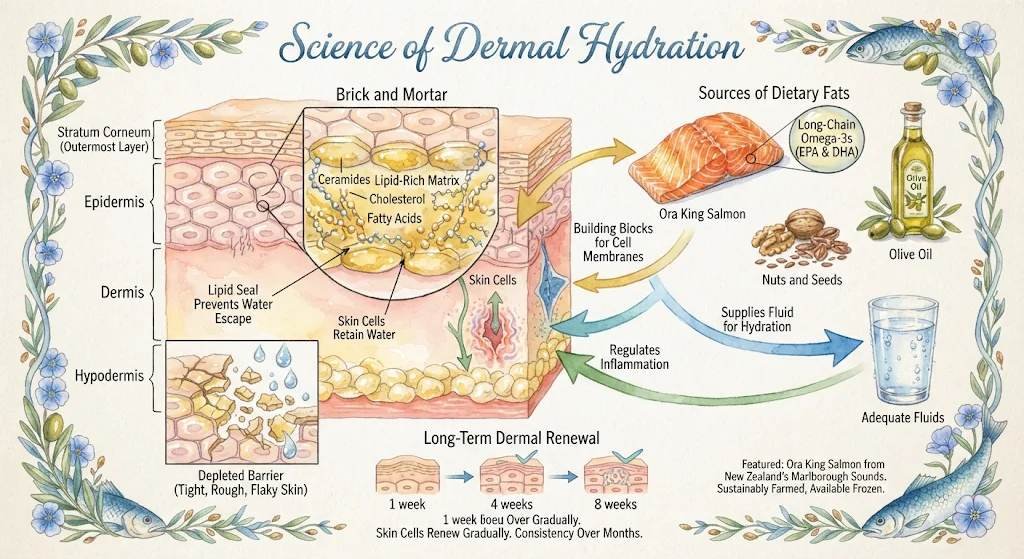
Healthy skin keeps water inside while limiting exposure to irritants. Its outermost layer, the stratum corneum, contains skin cells surrounded by a lipid-rich matrix. Ceramides, cholesterol, and fatty acids in this matrix function like mortar around bricks. When that barrier becomes depleted or disrupted, water escapes more readily, and skin may feel tight, rough, or flaky.
Dietary fats provide building blocks that the body can use across cell membranes and signaling pathways. The long-chain omega-3 fats EPA and DHA, found primarily in marine foods, also help regulate inflammatory responses. That may matter when dryness occurs alongside redness or sensitivity, although diet alone won’t diagnose or treat an ongoing skin condition.
Hydration still begins with enough fluids. Dietary fat supports the barrier that retains water, while water supplies the body with the fluid it needs. A practical meal could include a four- to six-ounce fish portion, roasted vegetables, whole grains, and a drizzle of olive oil. For a richer salmon option, Ora King Salmon from Maine Lobster Now offers an 8.5-ounce, boneless, skin-on fillet with rich marbling and a buttery texture. The salmon is sustainably farmed in New Zealand’s Marlborough Sounds and supplied frozen, making it convenient to keep on hand for a nutritious home-cooked meal.
Give dietary changes time to become routine. Skin cells renew gradually, so a balanced meal today won’t transform your complexion tomorrow. Think in terms of regular weekly meals over several months and continue using a fragrance-free moisturizer if your skin tends to lose water easily.
Astaxanthin and Its Potential Role in Skin Health
Astaxanthin is the red-orange carotenoid associated with the color of salmon and certain other marine organisms. As an antioxidant, it helps neutralize unstable molecules produced through normal metabolism and exposure to environmental stressors. That role has led researchers to examine possible effects on skin moisture, elasticity, and the response to ultraviolet light.
The phrase “internal sun shield” needs careful interpretation. Astaxanthin does not block ultraviolet rays the way a broad-spectrum sunscreen does. It may support the body’s antioxidant defenses, but it cannot prevent sunburn or replace shade, protective clothing, and sunscreen. A review of astaxanthin science notes that human research remains limited by small studies, varying doses, and potential industry involvement.
Some studies have reported changes in moisture or elasticity after several weeks of supplementation. A closer look at the proposed skin hydration benefits can help explain why the compound has attracted attention, though these findings don’t establish a guaranteed cosmetic result.
Food offers a measured way to include astaxanthin as part of a broader diet. If you’re considering a concentrated product, treat a supplement comparison as a starting point and discuss dose, testing standards, and medication interactions with a qualified clinician. Supplements can vary in source, concentration, and added ingredients.
Prioritizing Fat-Rich Cold Water Fillets
Cold-water fish with naturally higher fat levels offer a useful combination of EPA, DHA, complete protein and fat-soluble nutrients. Salmon, trout, sardines and Atlantic mackerel are familiar examples. Their fat content also helps them stay moist during cooking, which makes them forgiving choices for people who don’t prepare fish often.
Aim for two seafood meals per week if that suits your dietary needs and medical guidance. Variety matters because each species has a different nutrient profile. One dinner might feature baked salmon with sweet potato and spinach, while another could pair trout with lentils and roasted peppers. Canned sardines can work in a quick lunch with whole-grain toast, sliced tomato, and lemon.
Cooking method affects both flavor and texture. Try roasting a fillet at 400°F until it flakes at the edges and remains moist in the center. The exact time depends on thickness, so check it early and use a food thermometer when needed. Poaching and steaming are gentle alternatives. High heat for an extended period can dry the fish and make a nutrient-rich meal less appealing.
Fresh and frozen fillets can both be sound choices. Frozen fish is often processed soon after harvest, and individually wrapped portions make serving sizes easier to manage. Check labels on seasoned products because sauces and marinades may add substantial sodium or sugar. Plain portions let you control the final flavor with citrus, herbs, garlic, or spices.
People with seafood allergies should avoid these foods and seek another source of essential fats with professional guidance. Pregnant people, young children, and anyone with specific medical concerns should also follow current advice about species selection and portion frequency.
Pair Healthy Fats With Fat-Soluble Vitamins
Vitamins A, D, E, and K require dietary fat for effective absorption. A very low-fat plate may contain plenty of colorful produce yet fail to provide the best conditions for using some of its nutrients. Pairing vegetables with fish, avocado, nuts, seeds, or olive oil creates a more nutritionally complete meal.
This doesn’t require a heavy sauce or a large serving of oil. A spoonful of tahini on roasted carrots, a small handful of walnuts in a spinach salad, or olive oil brushed over vegetables can supply enough fat to make the meal satisfying. When fish is already the centerpiece, its natural lipids contribute to the same process.
Color can guide your grocery choices. Orange produce such as carrots and squash contains carotenoids that the body can convert into vitamin A. Leafy greens provide vitamin K and several antioxidant compounds. Almonds, sunflower seeds, and avocado contribute vitamin E. Mushrooms exposed to ultraviolet light can add vitamin D, though amounts vary by product.
Build the plate around ingredients you’ll realistically eat each week. For example, serve roasted salmon with broccoli tossed in olive oil and a baked sweet potato. Another option is a grain bowl with trout, kale, avocado and pumpkin seeds. These combinations supply protein, fiber, and several types of fat without relying on a single “beauty food.”
Diet is just one part of maintaining healthy skin. Combining balanced meals with consistent skincare, sun protection, and adequate hydration can also help. These practical ways to reduce premature skin aging offer additional ideas for supporting skin health.
Keep expectations grounded. Persistent itching, cracking, rashes, or sudden changes in skin texture deserve medical attention because allergies, eczema, medication effects, and other conditions may be involved. For everyday nourishment, regular meals with marine lipids and colorful plants provide a sensible foundation. A well-cooked fillet alongside oil-dressed vegetables is a specific, practical place to begin.