

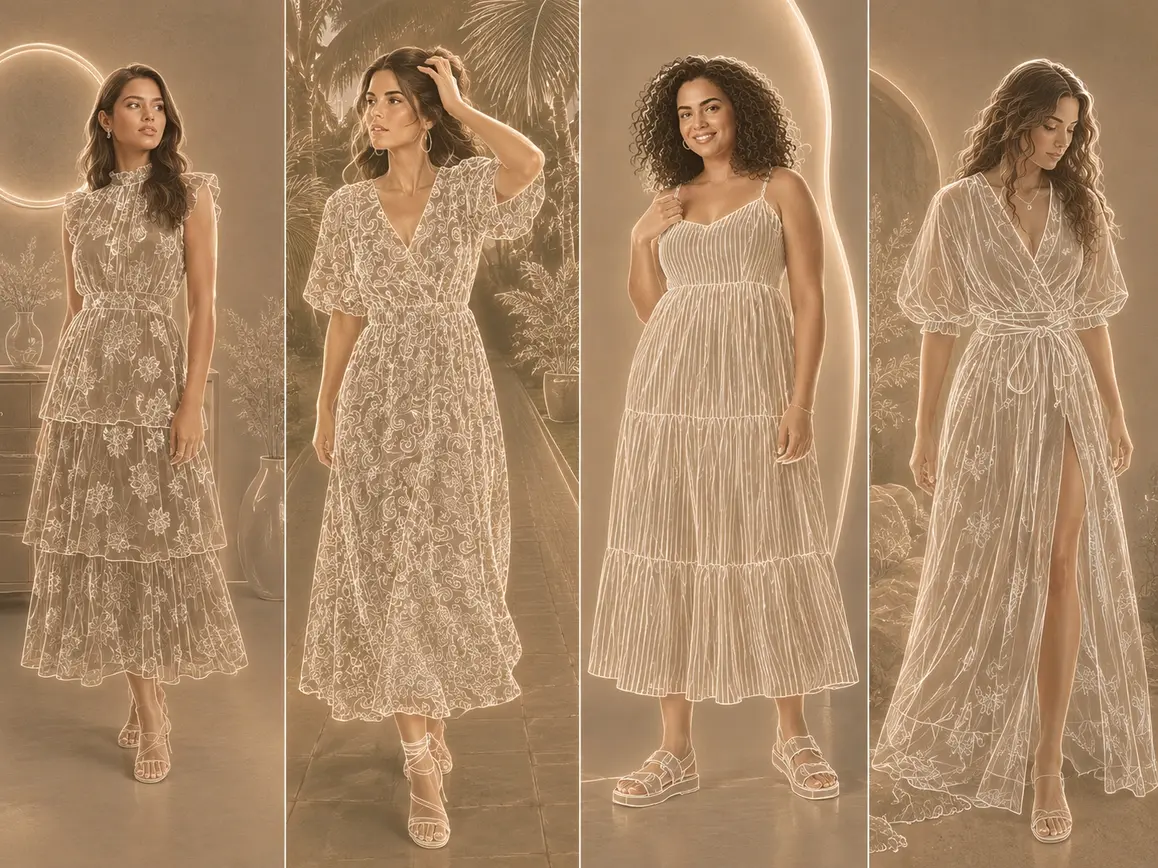
The best style dresses to hide tummy areas are not dresses that squeeze, punish, or change your body. They are dresses that give you enough room to move, sit, eat, breathe, and enjoy your day without pulling at the fabric every few minutes.
A soft wrap dress, raised-waist dress, shirt dress, fit-and-flare shape, or dress with gentle gathering can create a smooth line across the middle. The right choice depends on the fabric, length, waist placement, and how the whole dress feels on your body.
There is nothing wrong with having a soft stomach. Bodies change with age, hormones, pregnancy, stress, health, meals, and normal daily life. Fashion has also changed its idea of the “ideal” body many times, showing that these rules are created by culture rather than fixed truths. The Museum at the Fashion Institute of Technology has documented how clothing and undergarments have been used throughout history to create changing fashionable shapes.
This FsiBlog guide is for days when you simply want a dress that does not cling around your middle. The aim is comfort and personal style, not hiding because you feel that your body is wrong.
Start With Comfort Instead of a Smaller Size
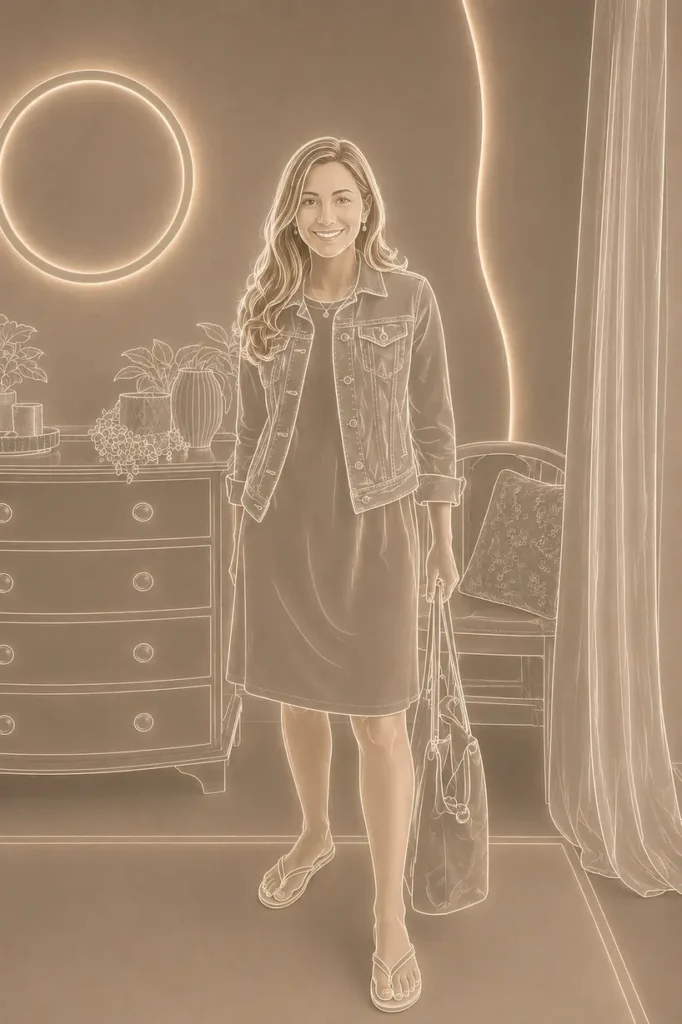
A dress can be beautiful on a hanger and still feel wrong once you sit down. Many fitting problems happen because shoppers focus only on the standing view in a mirror.
Your body changes position when you walk, bend, eat, drive, work, or sit at a table. A dress needs to work during those moments too.
Before buying, sit in the dress for a few minutes. Raise your arms, walk around, bend gently, and check whether the fabric pulls across your stomach.
A good dress should not require you to hold your breath. It should not create pain, deep marks, rubbing, or pressure.
Clothing size is only a label. Two brands may use very different measurements for items marked with the same size.
Choose the dress that fits comfortably today. Do not buy a tight size as a promise to yourself that it will fit later.
The National Eating Disorders Association’s body-image guidance explains how narrow appearance ideals in media can affect body confidence. Limiting comparison and questioning unrealistic images can help protect the way we see ourselves.
The Best Dress Shapes for a Softer Middle
No single dress shape works for everyone. Height, shoulder width, bust, hip shape, fabric preference, and personal style all affect how a dress sits.
The most useful shapes usually have one thing in common. They create space or structure instead of stretching tightly across the stomach.
| Dress Style | Why It Can Feel Comfortable | What to Check Before Buying |
|---|---|---|
| Wrap dress | Adjustable front and diagonal neckline | Make sure the wrap stays closed while sitting |
| Faux-wrap dress | Gives the wrap look without loose ties | Check that the front seam does not pull |
| Raised-waist dress | Fabric falls from above the natural waist | Avoid a seam that sits too tightly under the bust |
| Fit-and-flare dress | Fitted upper area with more room below | Check where the flare begins |
| A-line dress | Gently widens from the upper body | Avoid stiff fabric that stands away too much |
| Shirt dress | Button front and adjustable waist options | Test the buttons while sitting |
| Shift dress | Falls in a straighter line without a tight waist | Choose enough shoulder and hip room |
| Ruched dress | Gathering can reduce visible pulling | Keep the gathering soft rather than very tight |
| Tiered dress | Loose sections create movement | Check that the tiers do not add unwanted bulk |
| Draped dress | Fabric falls in soft folds | Look for draping that stays in place as you move |
The right style is the one you enjoy wearing. You do not need to follow a rule that says your shape must wear only one type of dress.
Wrap Dresses Create a Soft Diagonal Line
A wrap dress crosses one side of the fabric over the other. This creates a diagonal line rather than a straight band across the stomach.
That diagonal can guide the eye across the outfit while the skirt falls away from the middle. The tie also allows some control over how loose or fitted the dress feels.

A true wrap dress can be adjusted, which is helpful when your comfort changes through the day. However, it may open at the chest or skirt if the overlap is too small.
Sit down and cross your legs during the fitting. Check that the dress still covers the areas you want covered.
A small hidden snap or fashion tape may help the neckline, but a dress that needs constant fixing is not a practical purchase.
A faux-wrap dress has the same crossing shape but is sewn closed. It may feel safer for work, travel, or busy family days.
When choosing a wrap dress, look for:
- A tie long enough to sit comfortably
- Fabric that falls rather than sticks
- Enough overlap at the neckline and skirt
- A waist position that matches your body
- Sleeves that allow free arm movement
- A print that continues neatly across the front
A patterned wrap dress can be especially easy to wear because the print makes small folds less noticeable. The print does not need to be dark or tiny.
Raised-Waist Dresses Give the Middle More Room
A raised-waist dress has a seam above the natural waist, often below the bust. The skirt then falls from that higher point.
This can be comfortable when you dislike waistbands sitting across your stomach. It also leaves more space for sitting and moving.
The seam should rest gently rather than cutting into the skin. If it rides upward or feels tight under the bust, try another size or brand.
Some raised-waist dresses have a very full skirt. Others fall in a cleaner, straighter line.
A less gathered skirt may suit you when you prefer a simple shape. A fuller skirt may suit you when you enjoy movement and a softer look.
Avoid choosing an item only because the product page calls it flattering. Read the fabric details, waist measurements, length, and customer comments about fit.
FsiBlog’s guide to building a capsule wardrobe that matches your personal style can help you choose dresses that work with shoes, jackets, bags, and layers you already own.
Fit-and-Flare Dresses Balance Shape and Movement
A fit-and-flare dress follows the upper body before opening into a wider skirt. The flare may begin at the natural waist, slightly above it, or lower near the hips.
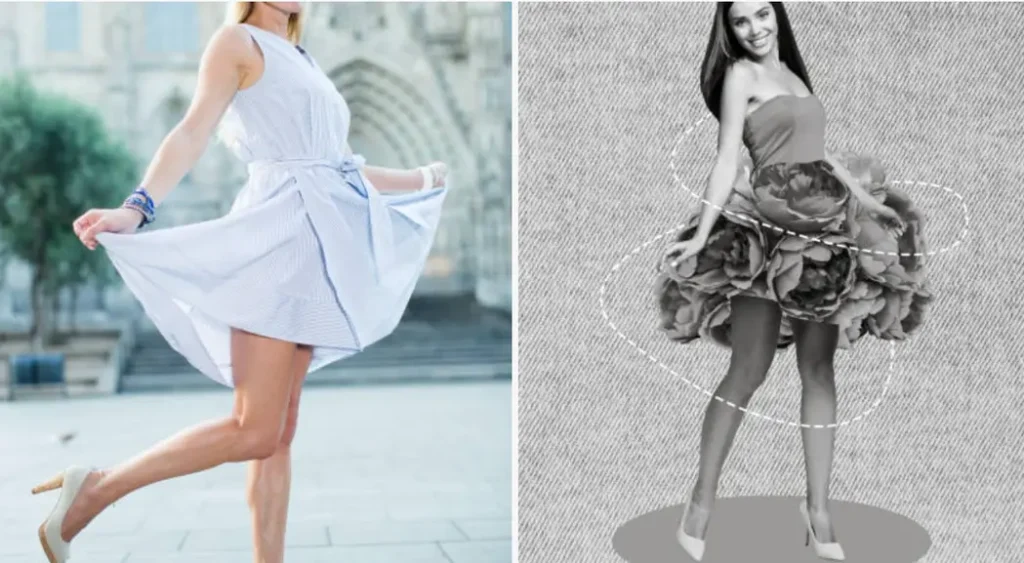
For less focus on the stomach, look for a dress where the skirt begins to open before the fabric starts pulling.
The upper section does not need to be very tight. A softly shaped bodice can give the same effect without feeling restrictive.
Check the side view as well as the front. A dress may look loose from the front while pulling around the back or waist.
A fit-and-flare dress can work for:
- Work
- Lunch
- Weddings
- Family events
- Dinner
- Holidays
- School events
- Everyday errands
Change the shoes, jacket, and jewelry rather than buying a separate dress for every type of event.
A simple solid dress can look casual with sneakers and a denim jacket. The same dress can look smarter with a neat bag, low heel, or light blazer.
A-Line Dresses Keep the Shape Simple
An A-line dress is narrower at the top and becomes wider toward the hem. The widening may be very soft or more noticeable.
A gentle A-line often works well when you want a clean outline without a fitted waistband. It allows the fabric to move over the middle rather than holding tightly against it.
The fabric makes a large difference. Soft cotton, jersey with enough weight, crepe, and woven blends may fall smoothly.
Very thin jersey can show every seam from underwear. Very stiff fabric can create a tent-like shape.
Hold the fabric in your hand and release it. Notice whether it falls back softly or stays pushed outward.
When shopping online, look for side and back photos. A single front photo may not show how the dress truly hangs.
Shirt Dresses Can Be Worn Loose or Shaped
A shirt dress usually has a collar, buttons, and a shape based on a long shirt. It may come with a fabric belt, separate waist tie, or no belt at all.
This style gives you several choices. You can wear it loose, add a belt above the natural waist, tie the belt at the back, or leave the lower buttons open over trousers.
Do not feel that the belt must sit at the smallest part of your waist. Move it until the outfit feels balanced and comfortable.
A belt tied at the back can add a little shape without placing pressure across the front. A narrow tie placed slightly higher can also change the line.
Buttons are the main fitting test. Sit down and check for gaps between them.
If the buttons pull while the rest of the dress fits, consider sizing up and having another area adjusted. A local tailor may be able to add a hidden snap or improve the fit.
For more ways to make simple clothing feel finished, FsiBlog’s fashion techniques for styling basic clothes explains how proportion, layering, fabric, and small adjustments can improve an outfit without replacing the full wardrobe.
Shift Dresses Avoid a Tight Waist
A shift dress usually falls from the shoulders in a straight or gently shaped line. It does not depend on a fitted waist.
This can make it a useful option for hot days, travel, meals, or times when comfort is the main concern.
The risk is buying a shift dress that is too narrow around the hips. When that happens, the fabric may pull forward and collect around the stomach.
Choose enough room through the hips and seat. Check that the dress falls back into place after you stand up.
Length also matters. A short, wide shift can sometimes look more like a long top than a dress.
A knee-length or midi shift may create a longer line while giving you more coverage for sitting and walking.
Add shape through a long necklace, open jacket, or structured bag rather than forcing a belt around the waist.
Ruching and Draping Can Reduce Fabric Pulling
Ruching means that fabric is gathered into small folds. Draping uses larger, softer folds.
Both can add movement and reduce the look of fabric being stretched tightly across one area.
The placement matters more than the amount. Gentle side ruching can help a dress move with the body, while heavy gathering directly in front may feel bulky.
Look for folds that fall naturally when you stand and sit. They should not need to be pulled into place repeatedly.
Draped dresses often work well in soft fabrics such as jersey, crepe, or stretch blends. The fabric should have enough weight to fall down rather than cling.
Avoid material that creates static and attaches itself to underwear. A light slip may help, but the dress should still be wearable without a long list of extra fixes.
Tiered Dresses Offer Room Without a Waistband

Tiered dresses are made from sections of fabric joined in horizontal rows. They are often loose, soft, and easy to move in.
A tiered dress can be useful when you want no pressure at the waist. It may also work during warm weather because the skirt has space for airflow.
The position of the first tier can change the whole look. A seam placed directly across the widest part of the stomach may draw more attention there.
Look for a first seam that sits higher, lower, or blends naturally into the print.
The amount of gathering matters too. Very heavy gathering can add a lot of volume.
Choose smaller, softer gathers when you want a cleaner line. A tiered dress does not need to be oversized to feel comfortable.
Fabric Matters as Much as Dress Shape
Two dresses with the same pattern can look completely different when they are made from different fabrics.
A good fabric for a softly skimming dress usually has enough weight to fall smoothly. It should not be so heavy that it feels stiff or so light that it sticks to every layer underneath.
Useful fabrics may include:
- Medium-weight cotton
- Cotton poplin
- Crepe
- Linen blends
- Viscose blends
- Ponte knit
- Medium-weight jersey
- Soft woven rayon
- Lightweight denim
- Wool blends for cooler weather
Every fabric has benefits and limits. Linen feels airy but creases. Cotton can feel comfortable but may shrink when cared for incorrectly.
Jersey moves well but may cling if it is very thin. Ponte is thicker and smoother but may feel warm in hot weather.
Always check the fiber and care label before paying. In the United States, most textile clothing must carry information about fiber content, origin, and the business responsible for the product.
Prints Can Change the Whole Outfit
You do not have to wear dark colors to feel confident. A well-cut light dress can feel better than a poorly fitting black dress.
Prints are useful because they break up one large area of color. They can also make creases, seams, and small marks less obvious.
Good options include:
- Soft floral prints
- Broken stripes
- Small geometric patterns
- Watercolor effects
- Abstract shapes
- Mixed-scale prints
- Vertical details
- Prints with several repeated colors
A very large single shape placed directly across the stomach may become the main focus. Look at where the print falls on the exact dress you are buying.
Pattern placement can differ from one item to another, especially when fabric is cut from a large repeat.
Vertical stripes can create a long line, but they are not a rule. Curved, uneven, or mixed patterns may feel more natural and less strict.
Choose a print because you enjoy it. A dress that stays in the wardrobe because the color does not feel like you is not a useful purchase.
Necklines Draw Attention Toward the Face
The neckline affects where the eye goes first. A V-neck, open collar, square neck, scoop neck, or soft wrap neckline can bring attention toward the face and upper body.
You do not need a low neckline. Even a small V shape or open shirt collar can create a clear vertical line.
A neckline should still feel secure when you bend or sit. Check it in natural light and from several angles.
Useful neckline choices include:
- Soft V-neck
- Shallow scoop neck
- Open shirt collar
- Square neck
- Split neck
- Wrap neckline
- Simple boat neck
- One-shoulder style for events
Choose based on comfort, bra coverage, shoulder movement, and where you plan to wear the dress.
A statement earring or short necklace can also bring attention upward. FsiBlog’s article on using accessories to change simple outfits gives practical ideas for using jewelry, scarves, belts, and bags without making an outfit feel crowded.
Sleeve Shape Can Help the Dress Feel Balanced
Sleeves affect the visual weight of the upper part of a dress. They also affect comfort, movement, and temperature.
A soft flutter sleeve can add movement near the shoulders. A three-quarter sleeve can give structure while leaving the wrist visible.
A rolled shirt sleeve can make a shirt dress feel relaxed. A sleeveless dress can work well under an open jacket or cardigan.
Do not select sleeves only to cover your arms. Choose the sleeve that allows you to move and suits the weather.
Test whether you can raise your arms without the whole dress moving upward. Tight armholes can pull the front of a dress and create bunching across the middle.
Use Layers to Create Long Lines
An open layer creates two vertical lines down the front of an outfit. This can make a plain dress look more structured while giving you coverage without closing the layer around your body.
Useful layers include:
- Open blazer
- Long cardigan
- Light button-up shirt
- Denim jacket
- Soft vest
- Longline waistcoat
- Light coat
- Kimono-style layer
The layer should end at a useful point. A jacket that stops at the widest part of the stomach may create a strong horizontal line.
Try a slightly shorter jacket that shows the dress shape or a longer layer that falls beyond the hip.
Keep the layer open when you want the vertical effect. Closing a small jacket over a dress may create pulling that was not present before.
FsiBlog’s simple habits for making daily outfits look more put-together includes more advice on layering, clean lines, clothing care, and outfit balance.
Underwear Should Support the Dress, Not Hurt You
The correct bra, briefs, slip, or shorts can help a dress fall more smoothly. However, underwear does not need to change the size or shape of your body.
Seamless underwear may reduce visible lines under soft fabric. A light slip can stop a skirt from sticking and may provide extra coverage.
Soft shorts can help prevent thigh rubbing. Choose breathable fabric and enough room for comfortable movement.
Shapewear is optional. It is not required for wearing a fitted, formal, or light-colored dress.
When shapewear is painfully tight, rolls down, causes numbness, or makes breathing and eating uncomfortable, it is not the correct fit. Cleveland Clinic advises choosing the right size and warns that very tight shapewear worn for long periods can create physical discomfort and other problems.
Comfortable underwear should let you:
- Sit normally
- Take a full breath
- Eat a meal
- Walk without rubbing
- Use the bathroom without a struggle
- Wear the outfit for the planned length of time
Never size down in shapewear in the hope of creating a stronger effect. A soft slip or no shaping layer may give a better result.
Try the Dress With Real-Life Movement
A fitting-room mirror only shows a small part of the story. Complete a short movement test before removing the tags.
Walk across the room. Sit in a chair and stand again.
Raise your arms, bend slightly, and turn to each side. Check whether the hem rises, buttons open, or seams twist.
Take a quick photo from the front, side, and back. Phone photos often show fit issues that are easy to miss while moving in a mirror.
Natural posture matters. Do not suck in your stomach during the fitting.
A dress should fit when you are standing in the normal way you will stand during the day.
Use this fitting check:
| Area | A Good Fit Usually Means | Sign to Try Another Size or Style |
|---|---|---|
| Shoulders | Seams sit close to the shoulder edge | Fabric pulls toward the neck |
| Bust | Fabric lies smoothly without gaps | Buttons open or seams strain |
| Stomach | Fabric falls without strong tension lines | Dress rides upward or sticks |
| Hips | You can walk and sit normally | Pockets pull open |
| Armholes | Arms move without rubbing | Whole dress lifts when arms rise |
| Back | Fabric falls in a clean line | Deep horizontal pulling |
| Hem | Length stays suitable when sitting | Front or back rises too far |
Tailoring Can Improve an Almost-Right Dress
A dress does not need to fit perfectly straight from the shop. Small tailoring changes can improve an item you already like.
A tailor may be able to:
- Shorten the hem
- Adjust the shoulder
- Improve sleeve width
- Move or replace a waist tie
- Add a hidden snap
- Reduce extra fabric at the back
- Open a tight side seam when allowance exists
- Add a small side slit
- Improve the lining
Buy for the largest area that needs room, then ask whether other areas can be adjusted.
Do not buy a dress that is much too small because you hope a tailor can rebuild it. Seam allowance may be limited.
Ask for the alteration price before buying an expensive sale item. A low sale price may not be a good deal when the dress needs major work.
Online Dress Shopping Needs a Measuring Tape
Online size labels are not reliable enough on their own. Use the brand’s measurement chart for each dress.
Measure your bust, waist, hips, shoulder area, and preferred dress length. Keep the tape level and do not pull it tightly into the skin.
Compare the measurements with the garment chart, not only a general site chart. Some product pages list the body size, while others list the finished clothing size.
Read reviews from people discussing:
- Fabric thickness
- Stretch
- Waist position
- Button gaps
- Sleeve size
- Dress length
- Shrinkage
- Lining
- See-through fabric
- Whether the item runs small or large
Check the return policy before ordering. Consumer Reports recommends reviewing a shopping site’s return policy, terms, and other important details when buying clothing online.
Keep the packaging and tags until you have completed the full movement test.
Build Outfits Around Dresses You Already Own
A new dress is not always the answer. A dress that feels plain or awkward may work better with a small styling change.
Try the dress with:
- A different bra
- A light slip
- An open jacket
- A longer necklace
- A shorter necklace
- A scarf tied away from the waist
- A different shoe shape
- A structured bag
- Sleeves rolled or pushed up
- A belt tied at the back
- A small hem adjustment
Take photos of the different versions. Choose the outfit that feels balanced rather than the one with the most accessories.
FsiBlog’s guide to looking polished without buying expensive new clothing can help you work with pieces already in your wardrobe.
Choose Dresses for the Event and Weather
A dress that feels powerful at an indoor dinner may not work for a hot outdoor wedding. The best style must support the real event.
For a workday, consider movement, sitting, pockets, and dress rules. For travel, think about creasing, washing, and comfortable shoes.
For a wedding, check the venue, weather, length, and whether you can dance and eat comfortably. For daily use, choose easy care and a fabric that can handle regular washing.
Everyday Dress
Look for breathable fabric, useful pockets, and shoes you can walk in. Shirt dresses, shifts, and soft A-line dresses often work well.
Work Dress
Check the neckline when bending and the skirt when sitting. A faux wrap, structured A-line, or softly tailored shirt dress may feel secure.
Party Dress
Draping, gentle ruching, rich color, or an interesting neckline can make the dress feel special without tight compression.
Wedding Guest Dress
Choose a dress that works for several hours. Test sitting, eating, walking, and dancing before the event.
Holiday Dress
Use a fabric that packs well and works with the shoes already in your bag. A patterned wrap or raised-waist dress can change with simple accessories.
Care for the Dress So It Keeps Its Shape
A dress may shrink, fade, stretch, or lose its finish when washed incorrectly. Read the care label before the first wash.
The Federal Trade Commission requires care instructions on covered garments so shoppers know the regular cleaning method needed to maintain the clothing.
International clothing labels may also use care symbols. GINETEX explains the common washing, bleaching, drying, ironing, and professional-care symbols used on garment labels.
Good care habits include:
- Treat stains soon
- Close zips before washing
- Follow water-temperature instructions
- Avoid overcrowding the washing machine
- Air-dry when the label permits
- Use padded hangers for delicate shoulders
- Fold heavy knit dresses
- Steam only when the fabric allows it
- Store dresses away from strong sunlight
- Repair small seams before they become large tears
Wool dresses need special care. The Woolmark garment-care guide advises following the garment’s specific care claim and using a suitable wool detergent when washing is allowed.
Keep, Alter, Sell, or Donate Unworn Dresses
A dress should not remain in your wardrobe only because it was expensive or once fitted differently.
Try it on without judging your body. Ask why it is not being worn.
The problem may be:
- Wrong size
- Uncomfortable lining
- Poor sleeve movement
- Difficult care
- Wrong color
- Unsuitable length
- No matching shoes
- Fabric that clings
- A style that no longer feels like you
An alteration may fix some problems. Other dresses may be better sold, swapped, or donated.
The U.S. Environmental Protection Agency notes that clothing reuse happens through activities such as donation and secondhand use. Keeping clothing in use is preferable to treating every unwanted item as rubbish.
Keep the dresses that support your current life and current body.
Common Dress Mistakes That Create More Stress
Buying Only Black Dresses
Black can look smart, but it is not the only color that creates a clean outfit. Navy, burgundy, forest green, chocolate, cream, blue, and prints can all work.
Fit and fabric matter more than darkness.
Choosing Fabric That Is Too Thin
Thin stretch material may cling and show every layer underneath. Look for lining, a heavier knit, or a woven fabric.
Do not blame your body for a poor fabric choice.
Pulling a Belt Too Tightly
A belt should shape an outfit gently. It should not make sitting or breathing uncomfortable.
Try moving it higher, tying it at the back, or removing it.
Wearing a Dress That Needs Constant Adjustment
A neckline that opens, a skirt that rides upward, or a waist that rolls will make you think about the dress all day.
Choose clothing that lets you focus on the event instead.
Keeping the Wrong Size as Motivation
Clothing is not a test of discipline. An unworn dress can create guilt every time you see it.
Keep clothing that fits and supports your life now.
Depending on Shapewear
A dress should not require painful compression to look acceptable.
Start with the correct dress size and fabric. Treat smoothing underwear as optional.
Following Every Body-Shape Rule
Style rules can be useful starting points, but they are not laws.
Wear the dress that feels like you.
Frequently Asked Questions About Dresses That Skim the Tummy
What Dress Style Is Best for a Tummy?
Wrap dresses, raised-waist dresses, fit-and-flare shapes, A-line dresses, shirt dresses, and shifts can all provide space around the middle.
The best choice depends on where the waist sits, how the fabric falls, and whether you can move comfortably.
Are Loose Dresses Always Better?
No. A dress that is much too large may bunch, twist, or feel heavy.
Look for a dress that follows part of your shape while leaving comfortable space where you need it.
Do Wrap Dresses Work for Every Body?
Wrap dresses are adjustable and useful for many people, but the neckline and skirt overlap do not work for everyone.
A faux-wrap dress may provide a more secure option.
What Fabric Is Least Likely to Cling?
Medium-weight cotton, crepe, ponte, woven rayon blends, and lined fabrics often fall more smoothly than very thin stretch jersey.
Static, lining, humidity, and underwear also affect how fabric behaves.
Should I Size Up to Hide My Stomach?
Choose the size that fits your largest measurement comfortably. Sizing up can help when a dress pulls, but an item that is too large everywhere may need tailoring.
Ignore the number and judge the fit.
Can I Wear a Belt?
Yes. Try a soft belt, narrow tie, or belt placed slightly above the natural waist.
You can also tie a shirt-dress belt at the back to add shape without pressure across the front.
Are Prints Better Than Plain Dresses?
Both can work. Prints may make small folds or creases less noticeable, while a well-cut solid dress can create a clean line.
Choose colors and patterns you enjoy wearing.
Is Shapewear Necessary Under a Fitted Dress?
No. Shapewear is optional.
Correctly fitted underwear, a slip, lining, or a better dress fabric may provide all the comfort and coverage you need.
How Can I Make an Old Dress Feel Better?
Try another underlayer, open jacket, different shoes, simple tailoring, or a new accessory.
Check whether the dress truly fits before buying more items to fix it.
What Makes a Dress Feel Powerful?
A powerful dress lets you stand naturally, move easily, and take part in the day without worrying about every fold.
Confidence often comes from comfort, personal style, and knowing that you chose the dress for yourself.