

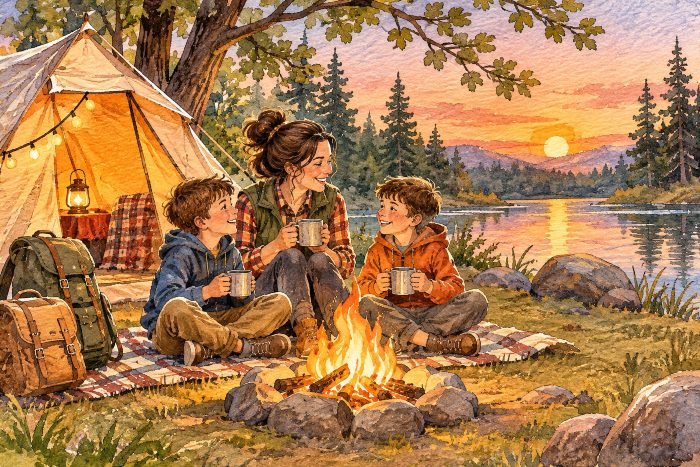
I love the outdoors, and I grew up believing a weekend in nature could fix almost anything. Then I tried camping with kids for the first time. Within an hour, one boy was covered in mud, the other was crying about a bug, and I was wrestling a tent that refused to cooperate. By the end of the weekend, though, something had shifted. We had slowed down in a way that never happens at home.
This post is about what our family learned from camping near Austin, what we pack now, and why we keep going back even when it does not go to plan.
Why We Started Camping as a Family
We started camping with kids because our life in Austin moves fast. Work, school, activities, and screens fill every hour. I noticed Bentley was restless and Harley was anxious more often than usual. My husband and I wanted a reset that did not involve a plane ticket or a big budget.
Camping felt like the answer. It was close, affordable, and it forced all of us to unplug. What I did not expect was how much it would change the way we talk to each other.
Starting Close to Home
For our first trip, we chose a state park inside the city limits. That way, if things fell apart, we could be home in twenty minutes. McKinney Falls State Park in south Austin was perfect for beginners, with creek views, short trails, and restrooms close to the campsites.
Camping With Kids Is Not a Vacation, It Is an Adventure
I had to adjust my expectations quickly. Camping with kids is not relaxing in the traditional sense. You are cooking over a small stove, keeping track of small people near water, and listening for every rustle in the dark.
But it is an adventure, and kids love adventures. Bentley turned every rock into a mountain to climb. Harley found a quiet spot by the water and spent an hour watching minnows. Both of them were fully present in a way I rarely see at home.
What Slowing Down Looked Like
- Meals took twice as long, and nobody minded
- We talked around the fire instead of scrolling on the couch
- The boys invented games with sticks and leaves for hours
- Bedtime happened naturally when it got dark
- My husband and I actually sat still for more than ten minutes
Our First Trip Was Not Perfect
I want to be honest. Our first night was rough. The air mattress leaked. Harley woke up scared of an owl. Bentley announced at 6am that he was “done camping forever.” By breakfast he had changed his mind, but I was running on very little sleep.
If you feel nervous about trying it alone, Texas has a helpful option. The state’s Texas Outdoor Family program runs guided weekends where rangers teach families the basics, and their FAQ explains costs, tent sizes and the youngest recommended age. I wish I had known about it before our first trip.
What We Pack for Camping With Kids
After several trips, our packing list has gotten smarter. Here is what we never leave without now:
- A tent one size bigger than we think we need
- Sleeping pads instead of air mattresses
- Headlamps for each person, including the kids
- Extra socks and a full change of clothes per child
- Easy vegetarian meals that need little cooking, like wraps and pasta salad
- A first aid kit with bandages, tweezers, and any family medications
- Insect repellent and sunscreen
- A small bag of comfort items, like a favorite stuffed animal and a book
For longer trips, I also use some of these family travel tips to keep packing simple and avoid the classic “we forgot the spoons” moment.
Staying Safe Outdoors
Safety is the part of camping with kids I take most seriously. Ticks are common in grassy and wooded areas, so we do daily tick checks after hiking. The CDC’s advice on preventing tick bites is clear and practical, and it covers repellent, clothing, and what to check after you come inside.
We also set simple rules. No going near water without an adult. Stay where you can see the tent. Wear shoes at all times. Kids handle rules better when they understand the reason, so we explain each one before we arrive.
Keeping Everyone Healthy on the Trip
Camping with kids can wear everyone out. Late nights, long hikes, and too many marshmallows add up fast. We plan rest breaks, pack plenty of water, and keep snacks with real protein on hand. If you travel often, these tips on staying healthy while traveling and avoiding fatigue apply surprisingly well to weekend camping too.
Our Simple Camp Routine
- Morning walk and breakfast before the heat sets in
- Midday shade break with books, cards, or a nap
- Afternoon exploring, swimming where allowed, or fishing
- Early dinner and cleanup before dark
- Campfire stories, stargazing, and bed
What Camping Taught Our Family
Every time we go camping with kids, I come home with something new. The biggest lesson is that kids do not need much to be happy. A creek, a stick, and an adult who is paying attention are usually enough.
Camping with kids also showed me how different my sons are. Bentley wants to explore every trail. Harley wants to sit and notice things. Out in nature, both are valued. Nobody is too loud or too quiet. They are just themselves.
Lessons I Bring Back Home
- We plan one screen free evening a week
- We eat outside on the patio whenever the weather allows
- We let the boys get dirty without stressing about it
- We give ourselves permission to do less
Tips for Your First Time Camping With Kids
If you are planning your first trip, start small. One night, close to home, with a short list of goals. Bring more food and clothes than you think you need. Expect something to go wrong, and decide ahead of time to laugh about it.
Most importantly, let go of the picture perfect version. The muddy, imperfect trip is usually the one your kids will remember most.
Frequently Asked Questions
What age is good for camping with kids?
Families camp with children of all ages, but many beginner programs suggest age five and up because younger kids need much closer supervision outdoors.
Where should beginners camp near Austin?
Choose a state park close to home with restrooms, marked trails, and drive up campsites. That makes it easy to adjust or head home if needed.
How do I keep kids entertained while camping?
Nature does most of the work. Bring a few simple extras like a magnifying glass, a nature checklist, or a deck of cards for quiet time.
What is the most important safety step?
Supervise closely near water, use insect repellent, and check everyone for ticks after time outdoors.
Camping with kids did not give us a perfectly peaceful weekend. It gave us something better. A chance to slow down, pay attention to each other, and remember that the simplest days are often the best ones.