


The moment that changed how I thought about One Life to Live was painfully ordinary.
I was sitting at my desk one evening with my laptop open and dinner already finished. I had told my family, “Give me five minutes. I just need to finish this.”
Five minutes became twenty.
Twenty became almost an hour.
When I finally closed the laptop and walked into the other room, the plates had been cleared, the conversation had ended, and the little moment I had assumed would wait for me was already over.
Nothing terrible happened.
Nobody was angry.
There was no dramatic argument or major family crisis.
That almost made it worse.
I had not missed an important moment because of an emergency. I had missed it because I considered something on a screen urgent enough to borrow time from people I love.
I stood there for a few seconds holding my phone, feeling slightly foolish.
There would always be another email.
Another task.
Another page to edit.
Another thing I could improve before tomorrow.
That exact evening would never happen again.
That is what One Life to Live has come to mean to me. It is not permission to become reckless because life is short. It is almost the opposite. It is the reminder that my time is limited enough to deserve thoughtful decisions about where my attention, health, money, energy, and love actually go.
One Life to Live Does Not Mean Doing Everything

For a long time, the phrase One Life to Live sounded adventurous to me.
Go somewhere.
Buy the ticket.
Say yes.
Take the opportunity.
Make the memory.
There is something attractive about that interpretation, especially online. A limited life can easily be turned into an argument for squeezing more experiences into every available space.
I have started thinking about it differently.
If I have one life to live, I cannot do everything.
That is precisely the point.
Every yes takes time from another possible yes.
Every hour spent working cannot also be an hour spent having dinner with my family. Every dollar spent on something forgettable cannot be used for something I value more. Every evening filled with obligations cannot also be a quiet evening at home.
Time is unusual because I cannot store it.
The U.S. Bureau of Labor Statistics runs the American Time Use Survey specifically to measure how people divide ordinary days among work, childcare, household responsibilities, socialising, leisure and other activities. Its current data is a useful reminder that life is not lived in vague ideas about priorities. It is lived in hours that actually go somewhere.
That was uncomfortable for me because I had become very good at saying what mattered.
Family mattered.
Health mattered.
Rest mattered.
Relationships mattered.
Being present mattered.
But if someone had quietly observed where my attention went every day, I am not sure my schedule would always have told the same story.
I Was Busy With Things I Had Chosen Myself

This was the part I initially resisted.
I liked telling myself that life was simply busy.
There is work to do.
A home needs attention.
Children have schedules.
Messages arrive.
Plans need arranging.
Bills need paying.
Meals do not make themselves.
All of that is true.
But I eventually noticed that some of my busyness was not being forced on me.
I was creating it.
I would finish what genuinely needed doing and then add another task because I could see how it might be improved.
I would check a message during family time even though nobody had asked me to reply immediately.
I would agree to something before asking whether I had room for it.
I would open my phone to check one thing and return twenty minutes later having checked twelve things that had not mattered before I saw them.
That distinction changed everything.
There is unavoidable responsibility, and then there is self-created urgency.
I had been mixing the two together.
The American Psychological Association’s guidance on work stress and boundaries specifically discusses the pressure to remain available outside normal work time and recommends establishing clearer boundaries around things such as evening email.
I recognised myself immediately.
Nobody had officially declared that every message deserved access to every part of my day.
I had simply stopped protecting the borders.
The Most Important Things Rarely Behave Like Urgent Things
A strange problem with adult life is that genuinely important things are often quiet.
My health does not send a calendar invitation saying, “Please go for a walk today.”
A relationship usually does not announce, “This ordinary dinner conversation will become one of the memories you miss later.”
Sleep does not send an angry email because I have postponed it again.
My body does not immediately punish me every time I spend too long sitting at a desk.
The people I love may understand when I say, “I just need another ten minutes.”
That patience can make the wrong priorities surprisingly easy to maintain.
Urgent things behave differently.
They flash.
They buzz.
They display red numbers.
They have deadlines.
Someone is waiting.
The result is that I can spend my best attention on the loudest parts of life rather than the most valuable ones.
That evening when I missed the family moment made me realise I was often using urgency as a shortcut for importance.
They are not the same thing.
I Started Looking at My Calendar as Evidence
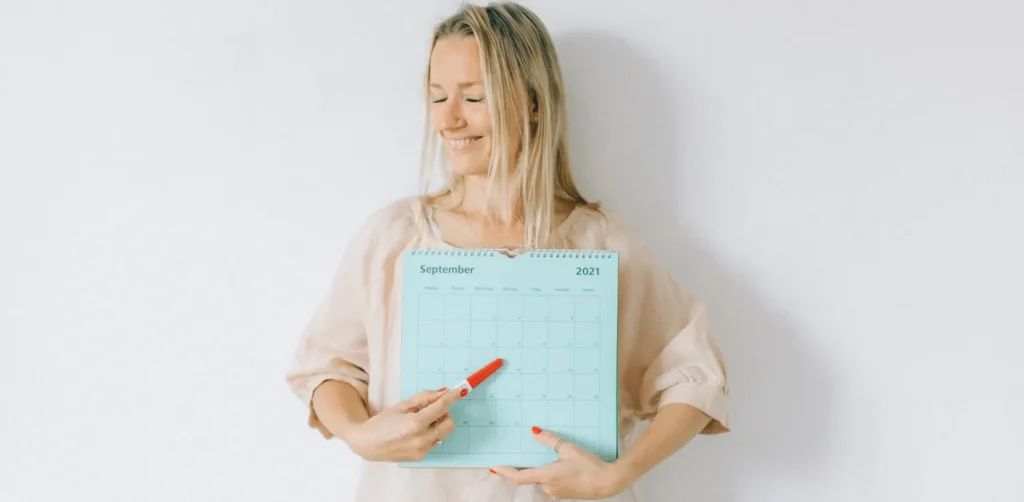
I did not create a complicated productivity system.
I did something more uncomfortable.
I looked backward.
Instead of planning another perfect week, I examined the week I had actually lived.
Where had my evenings gone?
What kept being postponed?
Which plans made me glad I had said yes?
Which commitments left me wondering why I had agreed in the first place?
When had I felt present?
When had I been physically with someone while mentally working somewhere else?
That last question hurt a little.
I could remember conversations where I had been holding my phone.
I could remember opening my laptop “for a minute.”
I could remember family time in which part of my mind was quietly arranging the next work task.
The U.S. Surgeon General’s work on social connection treats relationships as more than a pleasant extra. Strong social connection is associated with meaningful health and well-being benefits, while social disconnection is associated with poorer outcomes. The Surgeon General’s practical guidance also encourages people to invest intentional time in relationships and reduce distraction during conversations.
That gave research language to something my family had already been teaching me.
Being in the same room is not automatically the same as being available to each other.
I Stopped Calling Every Work Sacrifice Ambition
I care about my work.
That is important to say because the lesson I learned was not “work does not matter.”
Work can give structure, purpose, independence, creativity and financial security.
I am proud of work I have done well.
I want my children to see that effort matters.
But I had started using ambition to defend choices that were actually poor boundaries.
Working after dinner once because something truly matters is different from making every evening available to work by default.
Finishing an important project is different from compulsively checking whether there is something else I could be doing.
That difference became clearer when I read the APA’s reporting on work-life harmony and personal boundaries. Their work highlights autonomy, predictable time and respect for boundaries between working and nonworking hours as meaningful parts of employee well-being.
It made me reconsider the strange pride I sometimes attached to being permanently reachable.
Availability is not the same as value.
Exhaustion is not proof that the work mattered.
And being busy is not a personality.
The Sentence I Keep Coming Back To
At one point I wrote 1.Anchor in my notes beside this sentence:
If something truly matters to me, some evidence of that should eventually appear in the way I spend my ordinary days.
Not every day.
Life is too unpredictable for that.
There are hard weeks.
Deadlines happen.
Children need things unexpectedly.
People get sick.
Money becomes tight.
Travel disrupts routines.
Sometimes survival mode really is survival mode.
I am talking about the larger pattern.
If I say my health matters but never leave room to move, sleep or eat properly, eventually there is a mismatch.
If I say my relationships matter but every conversation competes with a phone, there is a mismatch.
If I say financial peace matters but repeatedly spend to impress people, there is a mismatch.
If I say rest matters but treat exhaustion as a moral achievement, there is a mismatch.
I started looking for those gaps.
Not to judge myself.
To stop lying to myself.
My Definition of Success Became Less Photogenic
There was a time when success felt mostly visible.
A completed project.
A beautiful home.
A good trip.
A purchase I had wanted.
Something new.
Something achieved.
Something that could be pointed to.
Now some of the things I consider successful are almost impossible to photograph.
A calm evening.
Enough sleep.
A conversation where I actually listened.
A day in which I did not feel hurried from the moment I woke up.
Money left unspent because I realised I did not really want the thing.
A family walk that did not need to become content.
An afternoon when I finished work at the time I said I would.
That version of success looks less impressive from the outside.
It feels much better from inside my actual life.
Research around the long-running Harvard Study of Adult Development has repeatedly found a strong association between close relationships and happiness and well-being. Harvard Health’s summary of lessons from the study on happiness and connection places good relationships near the centre of a satisfying life.
I do not need a decades-long study to tell me I love my family.
But I did need the reminder that relationships deserve to be treated as part of a good life, not as the background scenery around everything I am trying to accomplish.
That thought fits naturally with what I have written before about the simple things strong relationships need. Relationships usually become stronger through ordinary attention, honesty and repair rather than occasional grand gestures.
“Later” Became a Word I Started Questioning
I am not against planning for later.
I save things for later.
I make future plans.
I work toward goals that may take years.
Responsible adulthood requires some delayed gratification.
The problem was not later itself.
The problem was assuming that later was unlimited.
I would say:
Later I will rest.
Later I will organise the photos.
Later we will take the trip.
Later I will call.
Later I will read that book.
Later I will slow down.
Later I will take better care of myself.
I realised I was sometimes using the future as a storage room for everything that supposedly mattered but did not fit into today.
Eventually that room becomes very crowded.
There has to be a balance between preparing for tomorrow and refusing to live until tomorrow arrives.
One Life to Live now reminds me to look for things that have been waiting in that imaginary storage room for too long.
I Changed the Way I Spend Money Before I Changed the Amount
This was an unexpected part of the lesson.
Thinking seriously about what matters changed my shopping habits.
Not because I decided that buying things is bad.
Money is a tool.
Some purchases genuinely make my life easier, safer, healthier or more enjoyable.
But I began noticing how often I bought for an imagined version of life.
The dress for an event that did not exist.
The home item that was supposed to make the room feel finished.
The organisational product for a system I was never going to maintain.
The inexpensive thing bought because it was on sale rather than because I needed it.
I began asking a different question.
What am I hoping this purchase gives me?
Sometimes the real answer was convenience.
Fine.
Sometimes it was genuine enjoyment.
Also fine.
Sometimes it was time.
That could be extremely valuable.
But sometimes the answer was approval, novelty or the tiny emotional lift of ordering something new.
That did not automatically mean I could not buy it.
It meant I wanted to know what transaction I was actually making.
The Consumer Financial Protection Bureau describes financial well-being partly in terms of having security and enough freedom of choice to enjoy life, and its Your Money, Your Goals resources encourage spending decisions that support personally meaningful goals.
That definition appeals to me much more than simply accumulating things.
I want money to support the life I value.
I do not want maintaining purchases to become the life.
It is the same idea behind FsiBlog’s simple money habits for reducing everyday financial stress. Awareness matters because small spending patterns eventually become part of a much larger lifestyle pattern.
Experiences Are Not Automatically Better Than Things Either

This is another place where I stopped accepting easy advice.
“Buy experiences, not things” sounds wise.
Sometimes it is.
A meaningful family trip may stay with me far longer than another decorative purchase.
But experiences can become another form of consumption when I start collecting them.
A weekend does not need an attraction every day.
A holiday does not fail because we did not book every popular activity.
Children do not need every season filled with expensive memories.
I do not need to prove that I am living fully by constantly going somewhere.
One of the best changes I have made is giving ordinary life more credit.
Cooking together.
Taking walks.
Sitting outside.
Going somewhere familiar.
Watching a film.
Talking in the car.
Doing absolutely nothing impressive on a Sunday afternoon.
There is a kind of insecurity underneath the belief that a meaningful life must always look interesting.
I do not want to live for the evidence that I lived.
I want to actually live it.
I Had to Stop Treating Rest as Something I Earned
This one took longer.
I was much more comfortable resting after I had exhausted myself.
Then rest felt justified.
If the house was reasonably tidy, the work was done, messages had been answered and tomorrow had been prepared, I could sit down without guilt.
The obvious problem is that those conditions can always be extended.
There is always another thing to do.
Rest cannot depend on reaching the mythical point where nothing remains unfinished.
That point does not exist.
The CDC describes sleep as important for mood, attention, memory, heart health and everyday functioning. Its current sleep guidance makes clear that sleep is a health behaviour, not wasted time removed from productive life.
That changed the language I use with myself.
Going to bed is not quitting early.
Resting is not failing to maximise the evening.
There are days when sleep is the responsible choice.
My own thinking on this has become much more consistent with FsiBlog’s article on how better sleep supports physical recovery and mental sharpness.
If I have one life to live, I do not want to spend most of it tired because I was afraid to stop.
Health Stopped Being a Future Project
I used to think about health in bursts.
A new routine.
A fresh start.
A challenge.
A plan for Monday.
Then normal life returned.
The idea of One Life to Live helped me think more quietly.
I do not need every walk to be a workout.
I do not need every meal to demonstrate perfect nutrition.
I do not need an extreme plan.
I do need to remember that my body is carrying me through every other priority I claim to have.
The World Health Organization’s physical activity guidance notes that regular movement supports physical and mental health and that even some activity is better than none.
That “some is better than none” idea suits my life much better than perfection.
A twenty-minute walk still happened.
Stretching for a few minutes still happened.
Going to bed earlier still happened.
Choosing water because I was thirsty still happened.
Health became less of a project I planned to complete and more of a relationship with my ordinary habits.
The Phone Was Taking More Than Minutes
I could easily calculate screen time and decide the problem was the number.
The deeper issue was fragmentation.
I might spend only thirty seconds checking something.
But those thirty seconds could interrupt a conversation.
They could interrupt reading.
They could break the quiet moment in which I might have had an original thought rather than consuming somebody else’s.
They could pull me from one room mentally while I remained there physically.
I started becoming more protective of uninterrupted attention.
Not every minute.
I use technology.
I work online.
I enjoy my phone.
The goal is not to pretend I am going to live like it is 1995.
I simply do not want every empty second automatically filled.
Research on mindfulness often defines it around intentionally bringing attention to present experience. An NIH-hosted review of mindfulness and psychological health describes present-focused attention as a central element of mindfulness practice.
I am not trying to turn every family dinner into formal mindfulness practice.
I just understand the value of attention differently now.
Attention is one of the clearest ways I show another person that this moment matters.
Saying No Became Less About Rejection and More About Capacity
I used to feel guilty saying no when the request itself was reasonable.
Could I help?
Probably.
Could I attend?
Technically.
Could I squeeze it in?
Yes.
That last question caused trouble.
I could squeeze almost anything into a week if I was willing to steal enough time from rest, family, meals or quiet.
Capacity is not measured only by whether a free rectangle exists on my calendar.
I can have an empty hour and still need that hour empty.
Mayo Clinic Health System’s guidance on setting boundaries for well-being describes boundaries as part of maintaining healthier relationships and protecting personal well-being.
I began thinking of a good no as protection for a more important yes.
No to one more unnecessary commitment might mean yes to an unhurried dinner.
No to checking work again at night might mean yes to sleep.
No to spending money on something forgettable might mean yes to a future plan that actually matters.
No to being available every second might mean yes to being fully available when I choose to be.
That reframe removed some of the guilt.
I Started Paying Attention to What I Envy
This may sound strange, but envy became useful information.
I noticed the lives that triggered something in me.
Sometimes it was obvious material envy.
A beautiful home.
A trip.
Clothes.
Success.
But underneath some of it was something else.
I envied calm.
I envied people who seemed able to finish work and leave it finished.
I envied families who appeared to spend slow time together.
I envied people who had hobbies with no obvious productive outcome.
I envied homes that looked lived in rather than constantly prepared for inspection.
That was useful.
Instead of asking only, “How do I get what they have?” I started asking, “What feeling do I think their life contains that mine does not contain enough of?”
Sometimes the answer was space.
Sometimes ease.
Sometimes confidence.
Sometimes financial freedom.
Sometimes connection.
Those are very different problems from needing the same sofa, holiday or wardrobe.
The more accurately I named the need, the less likely I was to shop for the wrong solution.
I Stopped Waiting for a Major Wake-Up Call
There is a temptation with a phrase like One Life to Live to make it dramatic.
People imagine some huge event that suddenly reveals what matters.
I do not think I need one.
I do not want to need one.
My missed evening was enough.
The empty room was enough.
The unfinished conversation was enough.
The tired mornings were enough.
The times I noticed that I had been scrolling while somebody was talking were enough.
The purchases I barely remembered making were enough.
The weeks that looked full but somehow felt thin were enough.
Small dissatisfaction can contain useful information.
I do not have to wait until a part of my life completely breaks before admitting that I want to change how I am using it.
My Children Changed My Understanding of Time Without Trying
Children make time visible.
Shoes stop fitting.
Voices change.
Interests change.
Something they once needed help doing becomes something they do alone.
A phrase they used to say disappears without anyone announcing that they have said it for the final time.
Parenthood has made me notice how rarely we know when an ordinary thing is happening for the last time.
That does not mean I need to become sentimental about every breakfast.
That would be exhausting.
It means I want to be careful about constantly treating the present as an inconvenience standing between me and the future.
I have spent enough evenings thinking:
Once this project is finished, things will calm down.
Once this busy month ends, we will have more time.
Once everything is organised, I will relax.
Life keeps happening during the “once.”
That may be one of the most important lessons motherhood has given me.
I Do Not Want My Children to Remember Me as Permanently Busy
This thought arrived quietly and stayed.
When my children think about home one day, I do not need every memory to be extraordinary.
I hope there are trips and celebrations and beautiful moments.
But I also want them to remember access.
That they could tell me something.
That I looked up.
That ordinary conversations had room to wander.
That home was not always rushing toward the next task.
That their mother worked hard but was not permanently unavailable because of work.
I will not achieve that perfectly.
There will be missed moments.
I will be distracted again.
I will say “just a minute” and accidentally turn it into twenty.
The lesson is not perfection.
It is noticing quickly enough to keep correcting the direction.
Relationships Need Time That Does Not Look Efficient
Some conversations cannot be scheduled into fifteen-minute slots.
Children often tell you the important thing after twenty minutes of talking about completely unrelated things.
Friends sometimes need space before they say what is actually wrong.
Partners cannot build an entire relationship around household logistics.
There has to be inefficient time.
Time when nothing is being optimised.
Time when a conversation is allowed to take the long route.
The APA’s guidance on strengthening social support notes that supportive relationships can help people cope with stress and strengthen resilience.
The health evidence interests me.
The human reality matters even more.
People need people.
I do too.
That is why I no longer see time spent maintaining relationships as time taken away from more serious work.
Relationships are serious work, just not always in the economic sense of the word.
I Became More Careful With “Someday” Purchases
There is a certain type of purchase I know well.
It belongs to a future self.
The exercise equipment for the routine I will begin.
The kitchen item for the meals I imagine making.
The outfit for a future social life.
The storage system for the highly organised person I am definitely becoming.
Sometimes these purchases are useful.
Sometimes I am buying props for a life rather than living it.
Now I try to wait long enough to see whether the behaviour exists before buying equipment for it.
Have I actually been walking regularly before I need specialised accessories?
Have I been cooking enough to justify the new appliance?
Have I genuinely needed more storage, or do I need fewer unused things?
That small pause saves money and space.
More importantly, it keeps me focused on behaviour rather than identity shopping.
What Truly Matters Is Not the Same for Everyone
This is where I am careful with advice.
I can tell you what became important to me.
I cannot write your hierarchy for you.
One person may care deeply about building a business.
Another may value a slower family schedule.
One person feels alive travelling.
Another genuinely prefers home.
Someone wants a large social circle.
Someone else needs only a few close relationships.
A person may choose to spend heavily on a hobby that looks pointless to everybody else because it gives them genuine joy.
That can be completely reasonable.
Intentional living does not mean we all end up with the same minimalist calendar and the same beige house.
It means the life being funded, scheduled and protected actually belongs to the person living it.
The Consumer Financial Protection Bureau’s research into financial well-being is helpful here because it includes freedom of choice and the ability to pursue personally meaningful goals rather than defining success using only one external number.
I like that.
A good life needs room for personal values.
I Have Become Suspicious of Advice That Makes Life Another Performance
There are endless systems for living better.
Morning routines.
Night routines.
Habit trackers.
Goal planners.
Digital detoxes.
Minimalism challenges.
Productivity methods.
Gratitude journals.
Fitness schedules.
Some of these can help.
I have used some.
The danger comes when the method becomes another thing I perform.
I do not need a six-part morning routine to prove that mornings matter.
I do not need to track every conversation to prove that family matters.
I do not need a beautiful planner to prove that time matters.
A tool earns its place when it helps me live.
Once maintaining the tool becomes another source of pressure, I question it.
That idea connects with FsiBlog’s daily self-care practices for a more balanced life. The useful part of self-care is not creating another standard against which to judge myself. It is making room for practices that actually support daily well-being.
The Life I Want Is Surprisingly Ordinary
When I strip away what sounds impressive, my answer is simple.
I want meaningful work.
Enough financial stability to breathe.
A home that feels comfortable rather than constantly unfinished.
Health that I take care of before it demands all my attention.
Time with people I love.
A marriage with room for actual conversation.
Children who know they matter beyond what they achieve.
Friendships that survive busy seasons.
Travel sometimes.
Quiet sometimes.
Good food.
Long walks.
Sleep.
Laughter.
Faith.
Work I am proud to attach my name to.
The ability to put that work down.
None of this sounds revolutionary.
That is probably why it took me so long to appreciate it.
I had been searching for a bigger definition of a good life when my real definition was sitting around the dinner table.
I Still Have Goals
Choosing what matters has not made me less ambitious.
It has made my ambition more specific.
I want to do good work rather than simply more work.
I want to earn money without making money the only measure of whether something deserved my time.
I want a home that supports our life rather than one that keeps demanding upgrades.
I want trips we remember without spending the months before and after them stressed about paying for them.
I want to look after my health without making my body another endless improvement project.
I want to be available to people without becoming available to everyone at all times.
That is a different kind of ambition.
It has edges.
Limits.
Trade-offs.
And those limits are part of what makes it real.
I No Longer Think Balance Means Every Area Gets Equal Time
This was another idea I had to release.
Life balance sounds like everything should remain beautifully even.
Work.
Family.
Health.
Friends.
Rest.
Home.
Money.
Personal interests.
Every category receiving its perfect daily portion.
Real life does not work that way.
Sometimes work needs more.
Sometimes family needs nearly everything.
Sometimes illness changes the whole schedule.
Sometimes an exciting opportunity deserves unusual effort.
Sometimes rest becomes the priority.
Balance, for me, is no longer a daily equation.
It is the ability to notice when temporary imbalance has quietly become the permanent default.
A deadline week can be intense.
Six months of living as though every week is deadline week is another issue.
That is the pattern I watch now.
My New Measure Is Whether I Would Choose the Pattern Again
Individual days can be misleading.
A hard Tuesday does not mean something is wrong with my life.
So I started asking a longer question.
If the last month repeated twelve times, would I be comfortable calling that my year?
That question cuts through a lot of excuses.
If the answer is yes, wonderful.
If the answer is no, I want to know why.
Maybe work is temporarily intense.
Maybe we are dealing with something unusual.
Maybe nothing needs fixing.
But maybe I have allowed a temporary compromise to become the way we live.
That question is now more useful to me than asking whether I had a productive day.
One Life to Live Changed How I Think About Regret
I am not trying to create a life with no regret.
That would be another impossible standard.
I will choose incorrectly sometimes.
I will spend money I wish I had saved.
I will miss opportunities.
I will say yes when I should have said no.
I will say no and later wonder what would have happened.
I will waste entire afternoons.
I will misunderstand people.
I will lose things.
I will change.
A meaningful life is not a perfectly optimised life.
What I want is fewer regrets caused by repeatedly ignoring what I already knew mattered.
That distinction gives me much more peace.
I Still Catch Myself Saying “Just Five Minutes”
I have not become a completely different person since that evening.
Sometimes my laptop is still open later than I intended.
Sometimes somebody speaks to me while I am reading something and I have to say, “Sorry, tell me again.”
Sometimes I realise I have spent too long looking at my phone.
Sometimes I add too much to a week and complain about a schedule I created myself.
The difference is that those moments bother me sooner.
I notice the direction.
That is enough to correct it.
I close the laptop.
Put the phone away.
Cancel something.
Move something.
Go to bed.
Take the walk.
Sit down.
Listen again.
That is what intentional living has become for me.
Not one dramatic decision.
A large number of small corrections.
The Phrase Means Something Quieter to Me Now
One Life to Live once sounded like a challenge to make my life bigger.
Now it reminds me to make it more honest.
I do not need to visit every place.
Own every beautiful thing.
Accept every opportunity.
Build the biggest possible career.
Fill every weekend.
Photograph every memory.
Finish every task tonight.
I need to know what matters enough that I am willing to let less important things remain undone.
That is harder than adding another goal.
Choosing something means allowing something else not to be chosen.
There will always be more possibilities than one life can hold.
Perhaps wisdom is not finding a way to fit them all.
Perhaps it is becoming peaceful about which ones I am willing to leave outside.
I think back to that evening sometimes.
The laptop.
The promise of five minutes.
The quiet room afterward.
Nothing about it was dramatic enough to become a traditional life-changing event.
Yet it changed something in me.
I realised I had been waiting for the meaningful parts of life to announce themselves before giving them my full attention.
Most of them never will.
They will look ordinary.
Dinner.
A walk.
A conversation.
Sleep.
A quiet morning.
Someone wanting to tell me something.
Work worth doing.
The decision not to work anymore tonight.
Money saved.
Money spent on something genuinely useful.
A familiar face across a table.
One more completely normal day.
That is the life.
Not the preparation for it.
Not the version I will start living once everything becomes less busy.
This one.
And because I have One Life to Live, I am finally becoming more careful about what I allow to fill it.