

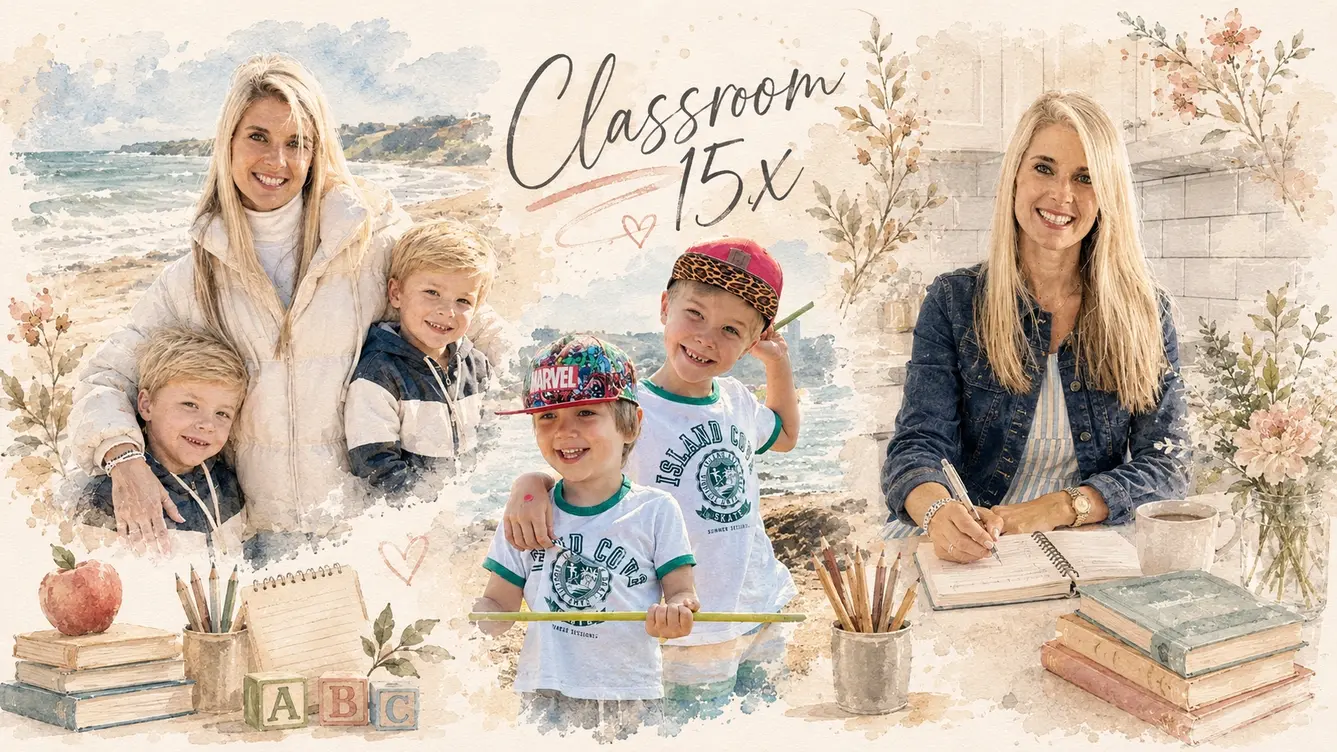
Hi, I’m Shenne, a proud mom to two amazing kids, Bentley and Harley. They are the reason I became a mom and the inspiration behind everything I share here.
Through Classroom 15x, I write about family life, learning, parenting, and the everyday moments that help us grow together. I’m so happy you’re here, and I hope our journey brings you ideas, encouragement, and a smile along the way.
For me, Classroom 15x is not a perfect schoolroom, a strict teaching system, or a promise that every day will go according to plan. It is the name I give to the learning that happens throughout our family life.
It happens when Bentley asks a question I was not expecting. It happens when Harley wants to try something alone, even though it would be much faster for me to do it.
It happens when we read, travel, make mistakes, clean up, talk about feelings, solve small problems, or laugh because something has gone completely wrong.
Our classroom is not limited to a desk. It can be the kitchen, the car, the garden, the grocery store, a museum, a waiting room, or the few quiet minutes before bedtime.
Motherhood Changed What Learning Meant to Me
Before becoming a mom, I thought learning was mostly connected to books, lessons, tests, and classrooms. I knew children also learned at home, but I did not understand how often it happened.
Then Bentley came into my life, and everything changed.
I began to notice how much a child learns simply by watching. A small child studies the way we speak, react, listen, share, wait, and handle disappointment.
Later, Harley brought another personality and another way of seeing the world into our family. I learned that two children can grow up in the same home and still need very different kinds of support.
That was one of my first big lessons as a mom. Fair parenting does not always mean doing the exact same thing for both children.
It means noticing what each child needs and finding a way to meet that need while keeping the home loving, safe, and steady.
The Centers for Disease Control and Prevention describes parenting as a process of nurturing, protecting, guiding, and preparing children for independence. Its positive parenting information includes age-based ideas that parents can use as children grow.
I like that idea because it reminds me that the goal is not to control every step Bentley and Harley take. My job is to guide them while slowly helping them become able to make good choices for themselves.
What Classroom 15x Means in Our Home
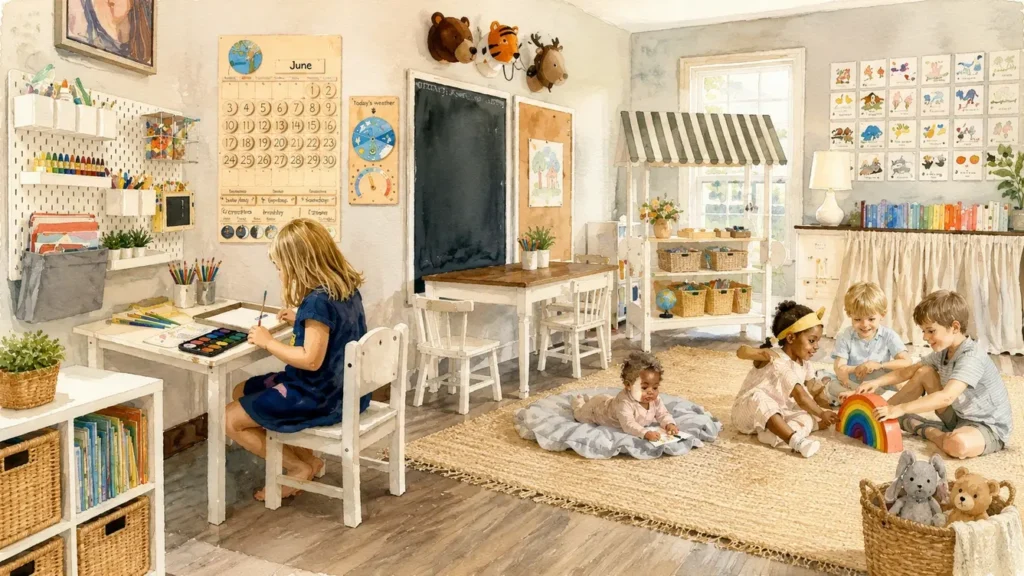
People may find different meanings for the term Classroom 15x online. In this post, I am using it as the name of our personal family learning journey.
It is not about making home feel like school all day. Bentley and Harley already have teachers, schoolwork, schedules, and responsibilities.
Home should still feel like home.
Classroom 15x is about noticing that useful learning can happen fifteen different ways before dinner. A question, mistake, chore, game, trip, disagreement, book, recipe, or family conversation can all teach something.
It may teach patience, reading, counting, kindness, confidence, planning, responsibility, communication, or the courage to try again.
| Everyday Family Moment | What Bentley and Harley May Learn | What I Learn as Their Mom |
|---|---|---|
| Preparing a simple meal | Measuring, following steps, patience, and safety | To allow extra time instead of taking over |
| Packing a school bag | Planning, memory, and responsibility | To give reminders without doing every task |
| Reading together | Language, imagination, questions, and listening | Which subjects currently interest them |
| Losing a game | Managing disappointment and respecting rules | When to comfort and when to let feelings settle |
| Visiting a museum | Curiosity, observation, and new words | That children notice details adults often miss |
| Helping at home | Teamwork, care, and practical skills | That effort matters more than a perfect result |
| Talking after a hard day | Emotional language and problem-solving | To listen before trying to fix everything |
| Planning a family outing | Time, choices, weather, cost, and preparation | To leave space for rest and changing moods |
This kind of learning is often quiet. It does not always produce a worksheet, certificate, or perfect photo.
Sometimes the result is simply that one of my children tries again without being asked.
Bentley Has Taught Me to Respect Curiosity
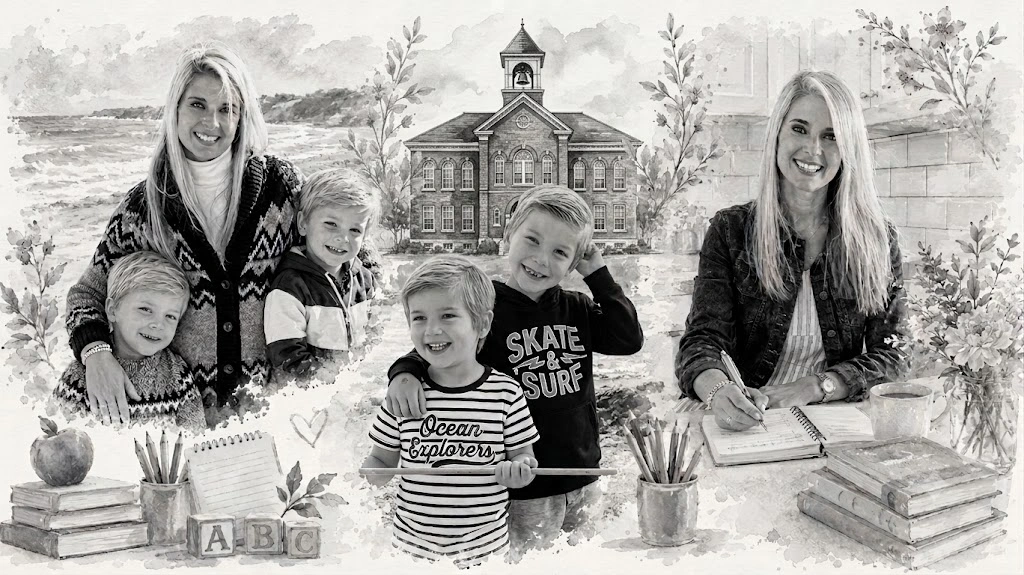
Bentley has helped me see how powerful questions can be. Children do not always ask questions at a convenient time, and they do not always ask about subjects parents know how to explain.
My first reaction used to be finding the correct answer as quickly as possible. Over time, I started to understand that the conversation can matter as much as the answer.
Now I try to pause and ask what he already thinks. I may ask, “What made you wonder about that?” or “What do you think is happening?”
This helps me understand the question behind the question.
Sometimes Bentley is looking for a fact. Sometimes he is trying to understand another person, a rule, a feeling, or something he saw during the day.
The Center on the Developing Child at Harvard University explains that responsive back-and-forth exchanges between children and caring adults help support development. This is often called “serve and return” interaction.
The idea is simple. A child communicates through a question, sound, expression, gesture, or action, and the adult responds with attention.
I do not have to turn every question into a long lesson. I can look at him, listen, answer honestly, and stay interested.
When I do not know the answer, I can say so. Looking for an answer together teaches something valuable too.
It shows Bentley that adults are still learning and that not knowing something is not a reason to feel embarrassed.
Harley Has Taught Me to Slow Down
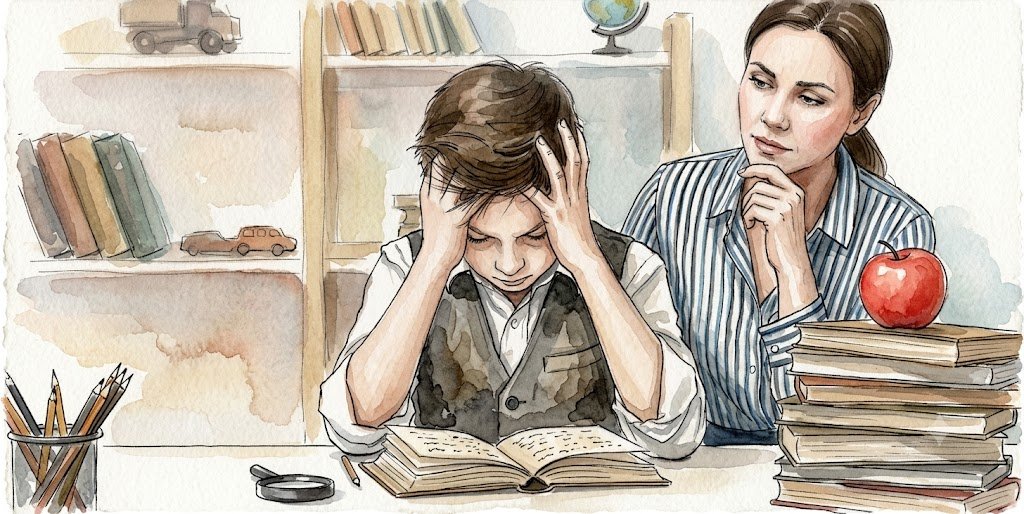
Harley has taught me a different lesson. Progress does not need to happen at the speed that is most convenient for the parent.
There are moments when children want to complete a small task without help. As a busy mom, it can be tempting to step in because I know I can finish it quickly.
However, every time I take over, I may remove an opportunity to practise.
This does not mean I stand back when help or safety is needed. It means I try to understand the difference between a child being unable to do something and a child simply needing more time.
Harley reminds me that learning can look slow from the outside.
A child may repeat the same action several times. They may become frustrated, change their mind, ask for help, refuse help, and then try again five minutes later.
That is not wasted time.
It is part of learning how effort feels.
HealthyChildren.org, a website from the American Academy of Pediatrics, notes that routines and age-appropriate responsibilities can help children understand what to expect while supporting growing independence.
In our home, this can mean allowing Bentley and Harley to make simple choices, take care of personal items, or help with an ordinary family task.
The result may not look perfect. A folded towel may be uneven, a shelf may need to be checked again, or a bag may need one final reminder.
The goal is not to get free work from my children. The goal is to help them feel that they are able to contribute.
Our Home Is Not a Perfect Classroom
I never want Classroom 15x to create the impression that our family spends every day calmly reading books, doing crafts, and having meaningful talks.
Real life is much less organised.
Some mornings feel rushed. Someone cannot find what they need. A drink spills after the floor has been cleaned, and a peaceful plan can fall apart before breakfast is over.
There are days when I feel patient and prepared. There are other days when I am tired, distracted, or trying to manage too many things at once.
That is part of the story too.
One reason I created this space is that I do not believe parents need more content that makes them feel as though everyone else is managing family life perfectly.
We need practical ideas, but we also need honesty.
My article about the real side of running a family lifestyle blog shares a similar belief. Family stories should include snack stops, tired children, changing plans, and the small details that make an experience real.
A home can be loving and still be noisy. A parent can be caring and still need a break.
A child can have a hard day without being a difficult child.
Learning Often Starts With Listening
As a mom, I naturally want to solve problems. When Bentley or Harley tells me that something went wrong, my mind can quickly begin making a plan.
I may think about what they should say, what they should do next, or whether I need to contact someone.
Sometimes that is useful. Other times, they need me to listen before I start giving advice.
I am learning to ask a simple question:
“Do you want help, or do you want me to listen?”
That question gives them a small amount of control. It also stops me from turning every feeling into a project.
UNICEF’s parenting resources bring together expert information on communication, development, health, play, and family wellbeing. The guidance recognises that parenting can be difficult and that parents also need trustworthy support.
Listening does not mean agreeing with everything. It means making enough room to understand what happened from the child’s point of view.
After listening, I can still set a boundary or explain why a choice was not acceptable.
However, the conversation usually goes better when Bentley or Harley feels heard first.
Reading Is Part of Our Family Connection
Reading can support school learning, but that is not the only reason I value it.
Books give us a reason to sit together, slow down, and enter a story that belongs to no one else in the room.
Sometimes we talk about the characters. Sometimes we predict what will happen next.
Sometimes we laugh at a strange picture, change the character voices, or stop because one sentence has created a completely different conversation.
Reading Rockets advises parents to read with children regularly and keep the experience enjoyable. Its reading-at-home guidance also reminds families that parents can provide types of support that a classroom cannot always give.
The goal in our home is not to test Bentley and Harley after every page.
I may ask a question, but I do not want reading together to feel like another assignment. Some nights, enjoying the story is enough.
A comfortable reading corner can help, but it does not need to look like a picture from a home magazine. A chair, a small basket of books, and a soft blanket are enough.
For younger readers or relaxed family story time, something like the Animal Hooded Name Blanket from the FsiBlog shop can make a reading corner feel playful and personal.
Our Best Lessons Do Not Always Look Educational
Some of the most useful family activities do not begin with the words “Today we are going to learn.”
They begin with an ordinary need.
We need to make lunch. We need to tidy a room. We need to choose what to take on a trip. We need to work out whether we have enough time before leaving.
These situations naturally create chances to practise thinking.
Cooking can include reading, measuring, counting, safety, patience, and cleaning. Shopping can include comparing prices, reading labels, planning meals, and understanding that a family budget has limits.
A trip can include maps, weather, history, time, packing, and respectful behaviour in a new place.
Our family day at the Montshire Museum of Science is an example of how a normal family outing can become a learning day without feeling like school.
Children can touch, observe, ask questions, move their bodies, and talk about what they see. Parents may also learn which displays hold a child’s attention and which ones do not.
I try to remember that the activity does not need to be costly or far from home. A local park, library, garden, market, or short walk can create just as many questions.
Simple Routines Help Our Days Feel Safer
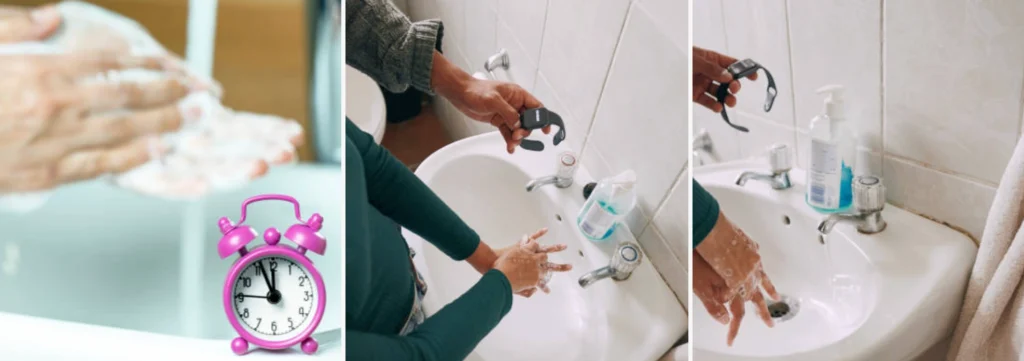
I enjoy spontaneous family moments, but I have also learned that children often feel more settled when they know what usually happens next.
A routine does not mean every minute is controlled. It creates a few steady points in the day.
In our home, routines may cover getting ready, school items, meals, homework, reading, baths, or bedtime.
HealthyChildren.org explains that family routines can support organisation, communication, responsibility, and a sense of belonging. The routines may differ between children because ages and needs are not always the same.
The most useful routines in our home are simple enough to repeat.
A complicated chart may look good for three days and then become another task for me to manage. A short routine that everyone understands has a better chance of lasting.
| Part of the Day | Our Simple Aim | What I Try Not to Do |
|---|---|---|
| Morning | Get ready with less rushing | Give ten instructions at the same time |
| After school | Allow food, rest, and a chance to talk | Ask every school question at the door |
| Homework time | Create a clear place and reduce distractions | Complete the work for them |
| Family meal | Talk without making every topic serious | Correct every small habit during the meal |
| Evening | Prepare a few things for tomorrow | Leave every task until morning |
| Bedtime | Use a familiar order that helps everyone slow down | Add screens or exciting activities at the end |
Keeping the house reasonably organised also supports these routines. Our home organisation tips focus on giving important items a regular home instead of expecting a family to keep every space perfect.
When bags, shoes, papers, and everyday supplies have a place, children have a better chance of managing their own things.
I Am Learning Not to Rescue Too Quickly
This may be one of the hardest parts of motherhood for me.
When I see Bentley or Harley struggling, I want to make the struggle stop. That response comes from love, but stepping in too quickly can sometimes send the wrong message.
It can suggest, “You cannot handle this without me.”
I am trying to replace that message with, “I am nearby, and I believe you can try.”
That may mean waiting while a child searches for a missing item instead of finding it immediately. It may mean asking what their plan is instead of giving my own plan first.
It may also mean allowing a safe, natural result to happen.
If something was forgotten, the next step may be working out what to do rather than blaming, shouting, or quietly fixing everything.
I still help. Parenting is not about leaving a child alone with problems that are too big for them.
The change is that I try to provide the amount of help needed, not the amount of help that makes the situation fastest for me.
Bentley and Harley Do Not Need the Same Parenting Every Time
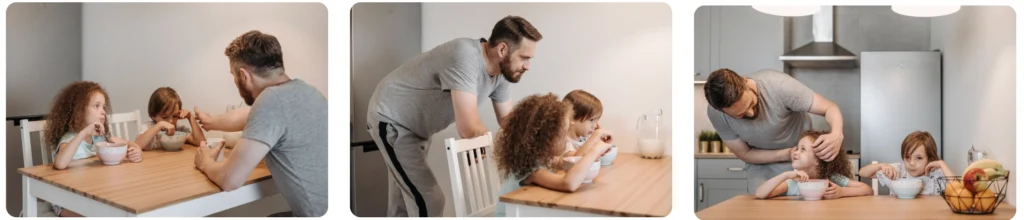
Children have different temperaments, interests, fears, strengths, and ways of communicating.
One child may want to talk immediately after a hard moment. Another may need quiet time before words are possible.
One may enjoy a busy family outing. Another may have a better time when the day includes breaks.
I cannot learn these differences from a general parenting list alone. I learn them by paying attention to Bentley and Harley.
This is where parenting feels less like following a fixed guide and more like building a relationship.
I still use trusted information. Good advice can help me recognise what may be normal at a certain age and when a problem needs more support.
However, I try not to compare my children with each other or with another family online.
Comparison can make parents miss the child standing in front of them.
School and Home Work Better as Partners
I do not see myself as replacing my children’s teachers. Teachers have professional knowledge, classroom experience, and a view of my children that I do not have at home.
At the same time, I know things about Bentley and Harley that may help a teacher understand them.
A strong school relationship works in both directions.
The National PTA’s family-school partnership standards encourage schools and families to communicate, support student success, and treat families as partners.
For me, helpful communication with school means being respectful and clear.
I try to avoid contacting a teacher only when I am angry. When possible, I gather the facts, listen to my child, and then ask the teacher for their view.
Children do not always tell a story in the exact order adults need. That does not mean they are being dishonest.
It may mean they are still trying to understand the event themselves.
A calm conversation can help everyone see the full picture.
I Want Technology to Be a Tool, Not the Centre of Family Life
Screens are part of modern childhood. Bentley and Harley may use technology for school, creativity, communication, entertainment, and information.
I do not believe every screen activity is equal.
Watching a useful tutorial, creating something, speaking with family, completing schoolwork, and endlessly scrolling do not have the same purpose.
Our rules need to consider what the device is being used for, not only how many minutes it has been switched on.
I also have to look at my own habits. It is difficult to ask children to put phones away while I am checking mine every few minutes.
The lesson children receive may come from what I do more than what I say.
We try to create screen-free points in family life, such as certain meals, conversations, or parts of bedtime. The routine is not perfect, but it gives us times when attention belongs to the people in the room.
Family Responsibilities Are Learning Too
Chores may not look connected to education, but they teach skills children will need throughout life.
Bentley and Harley need to know that a home is shared by the people who live in it. Clean clothes, food, organised rooms, and prepared school items do not appear by themselves.
Age-appropriate responsibilities can help children practise reliability and care.
HealthyChildren.org advises parents to make chores part of family routines while keeping expectations suitable for a child’s ability. It also warns against criticising children so heavily that helping becomes discouraging.
I am still working on this balance.
I want a task completed properly, but I also need to remember that children are learning. If I redo every task immediately in front of them, they may decide their effort never counts.
A better response can be thanking them first and teaching one improvement at a time.
Our Family Adventures Are Part of Classroom 15x

Travel has taught me that children learn a place through much more than its famous attraction.
They notice the hotel breakfast, the different road signs, unfamiliar food, how people speak, the weather, the plants, the sounds, and the way the family handles a changed plan.
A trip also teaches patience because not every part of travel is exciting.
There may be queues, long drives, delays, packing, tired feet, or a meal that nobody likes.
Those moments can still become part of the family story.
On FsiBlog, I try to write family travel stories with the real details included. Parents need more than a list of pretty places.
They need to know whether a day is too long, where children can rest, what to pack, and what may go wrong.
The most successful family trip is not always the one with the most activities. It is often the one where everyone has enough food, rest, flexibility, and time to enjoy being together.
Some Learning Happens Through Play
Adults sometimes separate play from serious learning, but children often use play to practise what they see in life.
A made-up shop may involve counting, choices, conversation, and turn-taking. Building with blocks may involve balance, planning, and patience.
A pretend family game may help children work through things they have noticed.
I try not to control every play idea or correct every detail. Children need room to lead.
My role may be providing safe materials, answering questions, or joining when invited.
An outdoor area can also give children space to move, make up games, and spend time with family. Our ideas for building an outdoor space that supports relaxation and family gathering can help parents make better use of a garden, patio, or small yard.
The space does not need expensive play equipment. Chalk, water, a ball, safe containers, and imagination can create a full afternoon.
I Try to Praise the Process, Not Only the Result
It is easy to praise a high mark, a finished picture, a goal, or a tidy room. These are visible results.
However, I also want Bentley and Harley to notice what helped them reach that result.
I may talk about how they kept trying, asked for help, corrected a mistake, or stayed patient.
This does not mean praising everything in an exaggerated way. Children often know when praise is not honest.
I try to be specific.
Instead of saying, “You are the best,” I might say, “I saw that you went back and checked your work.”
Instead of focusing only on whether something was won, I can notice teamwork, practice, or a respectful response.
The aim is to help my children understand that effort and choices are things they can control.
Hard Days Are Part of the Journey
Not every family problem needs to become a lesson while it is happening.
When a child is tired, embarrassed, hungry, or overwhelmed, a long speech may make the situation worse.
Sometimes the first need is food, rest, space, comfort, or a calmer room.
The teaching can happen later.
This is something motherhood keeps showing me. Timing matters.
A child who cannot listen in the middle of a strong emotion may be able to have a thoughtful conversation twenty minutes later.
I also need this kindness for myself.
When I handle a moment badly, I can return and repair it. I can apologise without giving up my role as the parent.
Saying “I was too sharp with my words” teaches Bentley and Harley that adults are responsible for how they behave too.
It also teaches that one hard moment does not need to damage the whole day.
Writing Helps Me Notice What Matters

Family life moves quickly. A small thing that feels unforgettable today may become difficult to remember a year from now.
Writing helps me slow the moment down.
Through Classroom 15x and FsiBlog, I can record what we tried, what worked, what did not work, and what Bentley and Harley taught me.
I do not need every story to be dramatic.
Some of the stories I value most begin with an ordinary afternoon, a funny sentence, a small act of kindness, or a question asked from the back seat.
Writing also helps me see patterns.
I may realise that our evenings go better when school items are prepared earlier. I may notice that one child talks more during a walk than during a direct face-to-face conversation.
These are practical details that help me become a more thoughtful parent.
What I Choose Not to Share
Writing about children comes with responsibility. Bentley and Harley are part of my story, but they also have stories of their own.
I do not believe every private moment belongs online.
A child’s fear, mistake, health concern, friendship problem, or embarrassing moment may receive attention from readers, but that does not mean it should be published.
Before sharing, I try to consider whether the story is mine to tell.
I can write about what I learned as a mom without giving every personal detail about my child.
I can protect names, places, school information, schedules, and private conversations when needed.
As Bentley and Harley grow, their comfort with what I share matters more.
A family blog should not require children to give up privacy so that the parent always has new content.
Simple Classroom 15x Ideas Other Moms Can Try
Every family has a different schedule, budget, home, and set of needs. These ideas are not rules.
They are small starting points that can fit into normal family life.
- Ask one open question during dinner instead of asking only about grades
- Let a child help choose and prepare one family meal
- Read together without testing every page
- Visit a library, park, market, museum, or garden
- Give children one clear home responsibility
- Allow extra time for a child to complete a task alone
- Keep a family question notebook for things you want to look up
- Ask children to help plan part of a day trip
- Talk about prices and choices during shopping
- Create a simple reading or homework corner
- Let children see adults correct mistakes
- Take a short walk and allow the child to choose the route
- Use family photos to talk about people, places, and memories
- Invite children to explain something they understand well
- End a difficult day with a short repair conversation
Parents do not need to complete all of these.
Choose one idea that solves a real need in your home.
Mistakes I Am Learning to Avoid
Turning Every Moment Into a Lesson
Children need time to play, rest, be silly, and enjoy something without an adult explaining its educational value.
Learning often happens naturally when I stop trying to force it.
Asking Too Many Questions at Once
After school, I may want to know everything. A tired child may hear those questions as pressure.
Food, rest, and one gentle question can lead to a better conversation later.
Comparing Bentley and Harley
Comparison can make one child feel behind and the other feel responsible for staying ahead.
I try to talk about each child’s own progress.
Fixing Every Problem Immediately
Some safe problems give children a chance to think and build confidence.
I can stay close without taking over.
Expecting a Routine to Work Forever
Children grow, school schedules change, and family needs move with each season.
A routine should support the family, not trap it.
Believing Good Parenting Always Looks Calm
Loving families can have disagreements, rushed mornings, mistakes, and tired parents.
What matters is how we return, repair, and keep caring for one another.
Forgetting My Own Needs
A parent who never rests may become less patient and less present.
Looking after myself is not separate from looking after my family. It supports the way I show up for Bentley and Harley.
Frequently Asked Questions About My Classroom 15x Journey
What Does Classroom 15x Mean in This Post?
Classroom 15x is the name I use for the learning that happens throughout our family life. It is not a formal school, course, or fixed teaching method.
It includes home routines, books, travel, play, responsibilities, conversations, and everyday problem-solving.
Is Classroom 15x a Homeschooling Program?
No. I am not using Classroom 15x as the name of a homeschooling curriculum.
Bentley and Harley have school experiences and teachers. Classroom 15x describes how I support learning, growth, and family connection outside formal lessons.
Do I Plan Educational Activities Every Day?
No. Much of our learning grows from things we already need or want to do.
Cooking, reading, shopping, cleaning, travelling, playing, and talking can all offer useful lessons without becoming formal activities.
How Do I Support Two Children With Different Needs?
I try to watch how each child responds, communicates, rests, and asks for help. The same rule may apply to both, but the support needed to follow it may differ.
I avoid treating one child’s speed or personality as the standard for the other.
What Is the Most Important Part of Learning at Home?
For me, it is the relationship.
Children are more likely to ask questions, admit mistakes, and try difficult things when they feel safe, loved, and heard.
How Do I Encourage Independence Without Withdrawing Support?
I stay nearby, give clear instructions, and allow time for the child to try. I help when the task is unsafe, too difficult, or genuinely requires adult support.
The goal is to reduce help slowly as confidence and skill grow.
How Do I Handle a Child Who Does Not Want to Talk?
I avoid forcing a full conversation at the most emotional moment. I may offer food, quiet time, a walk, or a simple reminder that I am ready to listen.
Some children speak more easily while doing another activity rather than sitting face-to-face.
Why Share This Journey on FsiBlog?
I share it because motherhood can feel lonely when everything online looks perfect.
I want FsiBlog to hold honest stories, useful ideas, and the reminder that growth often happens in small, ordinary moments.
Will Classroom 15x Change as Bentley and Harley Grow?
Yes. It has to change.
Their questions, responsibilities, interests, privacy needs, and relationship with me will continue to develop. My role is to keep learning alongside them rather than expecting one parenting method to fit every age.