

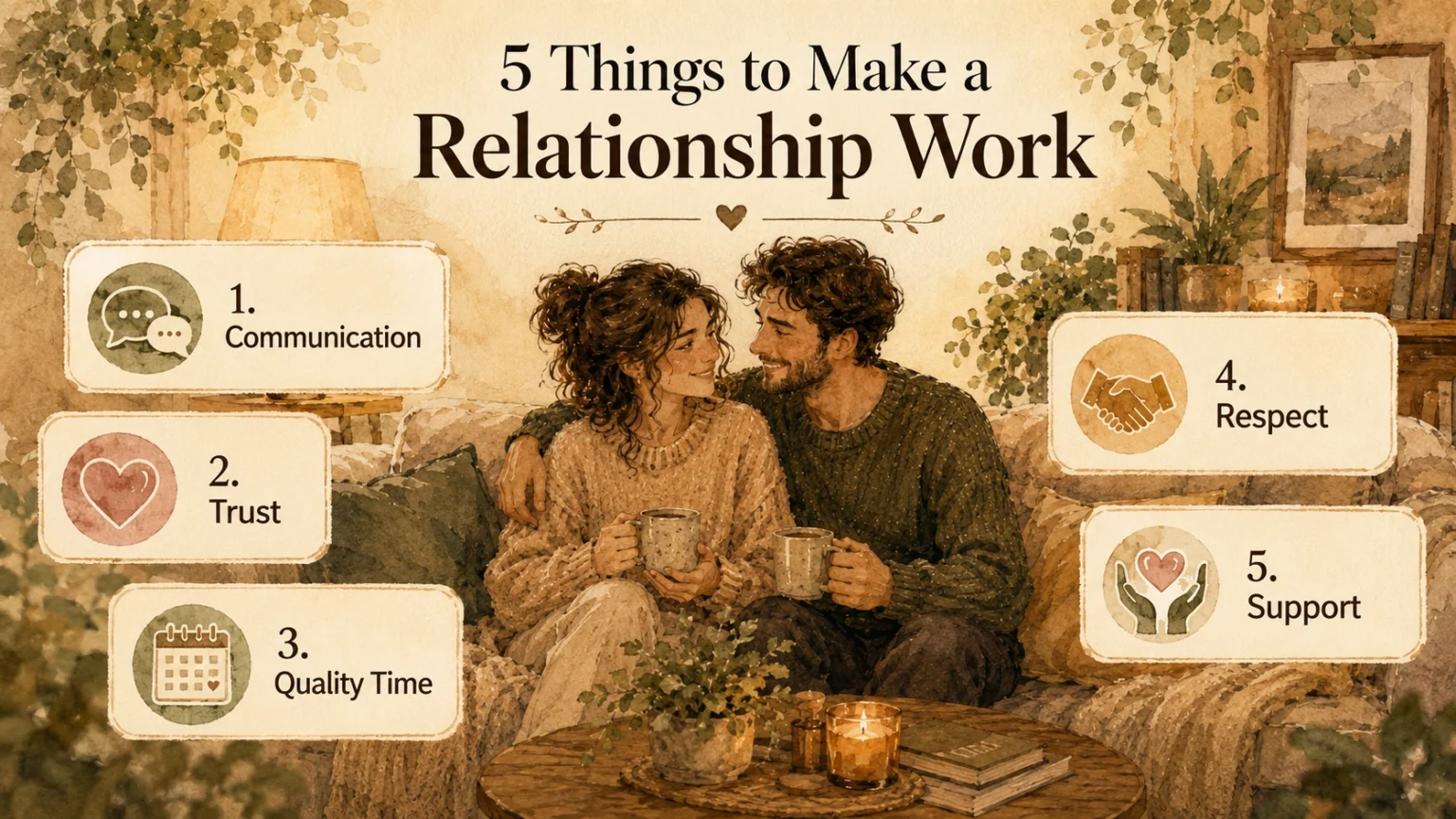
A successful relationship is not built from big words, perfect photos, or sweet messages only. It is built in normal daily moments. It is built when you listen, speak honestly, respect each other, solve problems calmly, and keep showing care even on boring days.
Many people think a good relationship should feel easy all the time. That is not true. A good relationship feels safe, honest, and steady. It gives both people room to be real, not perfect.
| What people think matters most | What usually matters more |
|---|---|
| Expensive gifts | Daily respect |
| Long messages | Honest communication |
| Always agreeing | Solving problems well |
| Looking happy online | Feeling safe in private |
| Spending all day together | Giving healthy space |
| Never fighting | Fighting fairly |
| Big promises | Small actions repeated |
Talk honestly, even when it feels uncomfortable

Good communication is one of the strongest parts of a healthy relationship. It does not mean talking all day. It means saying what is true in a kind and clear way.
Many relationships become weak because people hide small feelings until they become big problems. One person feels ignored, but says nothing. Another person feels hurt, but acts normal. Later, a small issue turns into a huge argument.
Honest talking helps both people understand what is really happening. It also stops guessing. Nobody can read your mind, even if they love you.
What honest communication looks like
- Saying how you feel without blaming.
- Asking questions instead of making guesses.
- Listening without interrupting.
- Speaking before anger gets too big.
- Telling the truth kindly.
- Not using silence as punishment.
- Saying what you need clearly.
| Poor communication | Better communication |
|---|---|
| “You never care about me” | “I feel ignored when my messages are not answered” |
| “Fine, do whatever you want” | “I am upset and need a little time” |
| “You should already know” | “This is what I need from you” |
| “Nothing is wrong” | “Something is bothering me, but I need time to explain” |
| “You always ruin things” | “This situation hurt me” |
Simple phrases that can help
- “Can we talk about something?”
- “I am not angry, but I want to be honest.”
- “I felt hurt when that happened.”
- “I want to understand your side too.”
- “Let us talk calmly, not fight.”
- “I need you to listen before replying.”
- “I care about us, so I do not want to hide this.”
| Situation | Helpful words |
|---|---|
| You feel ignored | “I miss feeling close to you” |
| You feel misunderstood | “That is not what I meant. Let me explain better” |
| You need space | “I need some quiet time, but I am not leaving the relationship” |
| You made a mistake | “I was wrong, and I am sorry” |
| You are confused | “Can you explain what you meant?” |
Build trust with small actions every day
Trust is not built from one big promise. It is built from many small actions that match your words. When someone says they will call and they call, trust grows. When someone says they are honest and then hides things, trust breaks.

Trust makes a relationship feel safe. Without trust, even small things can feel scary. A late reply becomes a worry. A changed plan becomes a doubt. A private phone becomes a problem.
The best way to build trust is simple: be consistent. Do what you say. Be honest about what you cannot do. Do not make promises just to keep someone happy for the moment.
Habits that build trust
- Keeping your word.
- Being honest about your plans.
- Apologizing when you are wrong.
- Not hiding important things.
- Respecting privacy.
- Showing up when it matters.
- Being the same person in public and private.
| Trust-building action | Why it matters |
|---|---|
| Replying with honesty | It reduces confusion |
| Keeping promises | It shows reliability |
| Admitting mistakes | It shows maturity |
| Respecting boundaries | It creates safety |
| Avoiding lies | It protects peace |
| Being consistent | It lowers fear |
Habits that damage trust
- Lying about small things.
- Breaking promises often.
- Flirting with others while hiding it.
- Sharing private talks with other people.
- Acting kind in public but cold in private.
- Blaming instead of apologizing.
- Making the other person feel foolish for trusting you.
| Damaging habit | Better choice |
|---|---|
| Hiding the truth | Speak clearly before it becomes worse |
| Making fake promises | Promise only what you can do |
| Blaming every time | Take responsibility for your part |
| Sharing secrets | Protect private matters |
| Changing stories | Be honest from the start |
Trust is easy to damage and slow to repair. That is why small choices matter so much.
Respect each other’s space and personal life

A successful relationship does not mean both people must be together every second. Healthy love gives room. Each person still needs family, friends, study, work, hobbies, rest, and personal time.
Some people think space means distance. That is not always true. Space can actually make the relationship stronger because both people can breathe. When there is no space, love can start to feel like pressure.
Respecting space means you do not control the other person’s whole day. You do not demand every password, every reply, every minute, or every detail. You trust them enough to let them have a life.
Signs of healthy space
- Both people can spend time with friends.
- Both people can rest without guilt.
- Both people can study or work without constant interruption.
- Both people can have private thoughts.
- Both people can say, “I need time.”
- Both people feel trusted, not watched.
- Both people miss each other in a healthy way.
| Healthy space | Unhealthy control |
|---|---|
| “Enjoy your time with your family” | “Why are you not talking to me?” |
| “Reply when you are free” | “Reply right now” |
| “I trust you” | “Send proof” |
| “Take your time” | “You do not care about me” |
| “We both need personal time” | “Your time should belong to me” |
Ways to give space without losing connection
- Agree on normal reply times.
- Let the other person rest.
- Do not panic over every delay.
- Keep your own hobbies.
- Do not make love feel like a job.
- Share your plans honestly.
- Check in with care, not pressure.
| Need | Healthy way to handle it |
|---|---|
| You miss them | Send a kind message and let them reply later |
| You feel worried | Ask calmly instead of accusing |
| You need attention | Say it honestly without demanding |
| They are busy | Respect their time |
| You feel insecure | Talk about the feeling, not control their life |
Love should feel close, but not trapped.
Handle arguments with maturity

Every relationship has disagreements. The goal is not to avoid every argument. The goal is to handle arguments without hurting each other deeply.
A mature argument focuses on the problem. An immature argument attacks the person. This difference matters. You can solve a problem together, but it is hard to feel close after mean words, insults, or threats.
When emotions are high, take a pause. A pause is not running away. It is a way to stop the argument from becoming cruel. Calm people solve problems better than angry people.
What fair arguments look like
- Talking about one issue at a time.
- Not using insults.
- Not bringing up old mistakes every time.
- Letting each person speak.
- Taking short breaks when needed.
- Saying sorry when wrong.
- Looking for a solution, not a winner.
| Unhealthy argument | Healthy argument |
|---|---|
| “You are always like this” | “This situation hurt me” |
| Shouting | Taking a pause |
| Insulting | Explaining feelings |
| Blaming only | Owning your part |
| Threatening to leave every time | Talking about what needs to change |
| Silent treatment | Asking for time, then returning to talk |
What to avoid during conflict
- Name-calling.
- Mocking the other person.
- Posting private issues online.
- Comparing them to someone else.
- Bringing family into every fight.
- Using past mistakes as weapons.
- Saying hurtful things just to win.
| Harmful action | Why it hurts |
|---|---|
| Insults | They leave emotional marks |
| Silent treatment | It creates fear and distance |
| Threats | They make the relationship feel unsafe |
| Public drama | It breaks privacy |
| Blame only | It blocks growth |
| Refusing to listen | It keeps the problem alive |
A good relationship does not need perfect people. It needs two people who are willing to repair after hard moments.
Keep showing care in simple daily ways
Many relationships start with effort, then slowly become lazy. At first, people speak kindly, notice small things, and make time. Later, they may stop trying because they feel too comfortable.
Comfort is good, but laziness is not. A successful relationship needs small care again and again. You do not need expensive plans. You need steady kindness.
Small acts can mean a lot. A kind message. A real apology. Listening properly. Remembering something important. Helping without being asked. These things keep warmth alive.
Small ways to show care
- Ask how their day was and listen to the answer.
- Remember important dates.
- Say thank you for small things.
- Notice when they seem tired.
- Speak kindly in front of others.
- Support their goals.
- Celebrate small wins.
- Apologize without pride.
- Give time without always checking your phone.
- Make them feel valued, not taken for granted.
| Small action | What it shows |
|---|---|
| Listening fully | “You matter to me” |
| Saying thank you | “I notice your effort” |
| Keeping your phone away | “This time is for us” |
| Asking about their day | “Your life matters to me” |
| Supporting their goals | “I want you to grow” |
| Being kind during stress | “I respect you even when life is hard” |
Common mistakes that make care disappear
- Only giving attention when there is a problem.
- Assuming they already know you care.
- Making jokes that hurt.
- Forgetting to say thank you.
- Being polite to others but rude to your partner.
- Letting phones take over every moment.
- Stopping effort after the relationship feels secure.
| Mistake | Better habit |
|---|---|
| Taking them for granted | Thank them often |
| Half-listening | Put the phone down |
| Only talking about problems | Share happy moments too |
| Waiting for them to plan everything | Make effort yourself |
| Saying “you know I care” | Show care through actions |
Love stays strong when care becomes a daily habit, not only a special-day event.
Extra habits that make a relationship stronger

A good relationship is not only about love. It also needs patience, honesty, respect, and teamwork. Both people should feel like they are on the same side.
You do not have to agree on everything. You do need to care about how your choices affect each other.
Helpful habits to practice
- Speak with respect during stress.
- Check in before problems become big.
- Make time for fun.
- Support each other’s personal growth.
- Do not compare your relationship to online couples.
- Keep private things private.
- Be honest about money, time, and expectations.
- Learn what makes the other person feel loved.
- Say sorry without adding excuses.
- Forgive when the other person truly changes.
| Strong habit | Why it helps |
|---|---|
| Regular check-ins | Small problems get solved early |
| Respectful tone | Both people feel safe |
| Shared effort | One person does not carry everything |
| Privacy | Trust stays protected |
| Patience | Mistakes become lessons |
| Appreciation | Love feels noticed |
Signs your relationship is becoming healthier
A healthy relationship should not make you feel scared all the time. It should not make you feel small. It should not make you lose yourself.
A strong relationship helps both people become better, calmer, and more honest. You may still have hard days, but the relationship does not feel like constant pain.
Healthy signs to notice
- You can speak honestly.
- You feel respected.
- You are not afraid to say no.
- You both apologize when wrong.
- You both make effort.
- You trust each other more over time.
- You feel supported, not controlled.
- You can enjoy time together and time apart.
| Healthy sign | What it means |
|---|---|
| You feel safe talking | Communication is improving |
| Arguments end with repair | Conflict is handled better |
| Effort comes from both sides | The relationship is balanced |
| Space is respected | Trust is present |
| You can be yourself | The relationship is emotionally safer |
Warning signs that should not be ignored

Some problems are not just normal relationship struggles. They are warning signs. A relationship should not be built on fear, control, insults, threats, or pressure.
If someone keeps hurting you and then says sorry without changing, pay attention. Real love includes changed behavior, not only sweet words after damage.
Red flags to take seriously
- They control who you talk to.
- They check your phone without respect.
- They insult you often.
- They make you feel guilty for having friends or family.
- They threaten to leave whenever you disagree.
- They blame you for everything.
- They make you feel afraid to be honest.
- They shame you in public or private.
- They pressure you to do things you are not comfortable with.
- They never take responsibility.
| Red flag | Why it matters |
|---|---|
| Control | It takes away freedom |
| Insults | They damage self-worth |
| Threats | They create fear |
| Constant blame | It blocks fairness |
| Pressure | It ignores consent |
| Public shame | It breaks respect |
If a relationship makes you feel unsafe, speak to a trusted adult, counselor, family member, or local support service. You deserve care that does not harm you.
FAQs about a successful relationship

What is the most important thing in a successful relationship?
Respect is one of the most important things. Love without respect can become painful. Respect helps both people feel safe, heard, and valued.
- Respect in words.
- Respect in actions.
- Respect for space.
- Respect during arguments.
- Respect for personal choices.
| Without respect | With respect |
|---|---|
| Fear grows | Safety grows |
| Arguments become cruel | Problems can be solved |
| One person feels small | Both people feel valued |
| Trust becomes weak | Trust becomes stronger |
Can a relationship work without trust?
A relationship without trust becomes very hard. Both people may feel worried, watched, or unsure. Trust can be rebuilt sometimes, but only when there is honesty and changed behavior.
- Be honest.
- Stop hiding things.
- Keep promises.
- Apologize properly.
- Give trust time to heal.
| Broken trust needs | Why |
|---|---|
| Truth | Lies keep the wound open |
| Time | Trust does not return instantly |
| Consistency | Actions must match words |
| Patience | The hurt person may need space |
| Real change | Sorry is not enough alone |
How often should couples communicate?

There is no perfect amount for every couple. What matters is that both people feel respected and not pressured. Some people talk often. Some need more space.
- Agree on what feels healthy.
- Do not demand instant replies all day.
- Share important updates.
- Respect busy time.
- Talk clearly when needs change.
| Good communication | Poor communication |
|---|---|
| Honest and calm | Full of pressure |
| Gives space | Demands constant replies |
| Solves problems | Creates fear |
| Feels safe | Feels forced |
Is arguing normal in a relationship?
Yes, disagreements are normal. But hurting each other is not something to accept as normal. A healthy argument should focus on solving the issue, not destroying the person.
- Avoid insults.
- Listen properly.
- Take breaks if needed.
- Say sorry when wrong.
- Return to the topic calmly.
| Normal conflict | Harmful conflict |
|---|---|
| Different opinions | Insults |
| Need for space | Silent punishment |
| Strong feelings | Threats |
| Honest talk | Public shame |
| Repair after fight | Same harm repeated |
How do I know if someone truly cares about me?
Someone who truly cares will show it through steady actions. They will not only say sweet things. They will respect your feelings, time, limits, and personal life.
- They listen.
- They respect your no.
- They support your goals.
- They apologize when wrong.
- They do not make love feel like control.
- They care about your peace.
| Real care | Fake care |
|---|---|
| Respects boundaries | Pushes past limits |
| Listens | Only talks |
| Supports growth | Creates fear |
| Acts consistently | Changes only for a short time |
| Makes you feel safe | Makes you feel confused |
Can a relationship survive a big mistake?

Sometimes yes, but only if the person who made the mistake takes real responsibility. A big mistake cannot be repaired with words alone. There must be honesty, patience, and changed behavior.
- Admit the truth.
- Stop the harmful action.
- Give the other person time.
- Do not demand quick forgiveness.
- Show change through behavior.
| Real repair | Fake repair |
|---|---|
| “I was wrong” | “You made me do it” |
| Changed actions | Repeated harm |
| Patience | Pressure to forgive |
| Honesty | More hiding |
| Respect for healing | Anger at the hurt person |
What should I do if I feel lonely in my relationship?
Feeling lonely in a relationship can hurt deeply. Start by speaking honestly. Tell the person what you miss and what you need, without attacking them.
- Say how you feel.
- Ask for more quality time.
- Share what would help.
- Notice if they make effort.
- Do not ignore the feeling for too long.
| Lonely feeling | Helpful action |
|---|---|
| You feel ignored | Ask for focused time |
| You feel unheard | Ask for a calm talk |
| You feel unimportant | Explain what would help |
| You feel distant | Plan simple time together |
| You feel alone often | Look at whether effort is one-sided |
What makes a relationship last?

A lasting relationship usually has respect, honesty, trust, patience, care, and teamwork. It also needs two people who are willing to grow.
- Keep talking.
- Keep listening.
- Keep learning each other.
- Keep showing respect.
- Keep solving problems together.
- Keep choosing kindness in small moments.
| Lasting habit | Result |
|---|---|
| Honest talks | Fewer hidden problems |
| Daily respect | More safety |
| Shared effort | Less resentment |
| Trust | More peace |
| Healthy space | Less pressure |
| Repair after conflict | Stronger connection |